Arroz a la Valenciana (Valencian Rice)

Arroz a la Valenciana (Valencian Rice)

Hello Everyone! Festive Filipino Foods Day 02 of 12 is here with a Latin American dish known as Arroz a la Valenciana, also considered as a part of Filipino cuisine, to share. Arroz a la Valenciana is quite commonly known as a poor man’s paella as the ingredients used to make this is is far less lavish than that of paella, where wine is used for a flavourful Spanish rice dish and a lot of seafood ingredients. The main ingredients in Arroz a la Valenciana consists of glutinous (sticky rice), regular rice, tomatoes, tomato paste, potatoes, carrots, capsicum, chicken, and chorizo – a complete meal, a one-dish meal of meat, rice, and vegetables. It is a great dish for Noche Buena, Christmas, Fiestas, weddings, birthdays, and family get-togethers.

Well, that’s pretty much all I can talk about for this dish, so let’s move on to the recipe shall we?

Arroz a la Valenciana (Valencian Rice) Ingredients

PREP TIME 10 MINS | COOKING TIME 30-45 MINS | SERVES 6-8

INGREDIENTS

  • 3 cups water
  • 2 cups plain rice, half-cooked*
  • 1 cup glutinous rice, half-cooked**
  • 1/4 cup raisins
  • 12 pcs chicken wings, cut into 3 (drumette, mid-wing, and tip)
  • 2-3 garlic cloves, minced
  • 1 brown onion, diced
  • 1 carrot, peeled and sliced diagonally
  • 1 chorizo sausage, sliced diagonally
  • 1 potato, cut into chunks
  • 1 tomato, diced
  • 1/4 red, yellow, and green capsicum, sliced
  • 1 tbsp tomato paste
  • 1 tsp achuete powder
  • 1 tsp chicken stock powder
  • Ground black pepper, to taste

*/**Cook the rice together in a rice cooker; what I usually do for every one cup of rice, I add one cup of water. But in this instance, you want your rice to still be a bit tough and half-done because it will absorb the sauce from when you sauté your chicken.

METHOD

  1. Heat about 2-3 tablespoons of vegetable oil in a large pot over medium-high. Fry the chorizo slices, about a minute per side until slightly browned. Remove from the pot and transfer to a plate lined with a paper towel.
  2. In the same pot, sauté the garlic until fragrant and golden brown. Next add in the onions and cook until soft, about 2 minutes altogether. Add in the tomatoes and then cook until soft, about a further 2-3 minutes.
  3. Add the chicken and season with chicken stock powder and ground black pepper. Give it a good mix and then leave your chicken to cook for about 5 minutes.
  4. Dissolve the achuete powder in a cup of hot water, then add this into the chicken together with the other two cups of water. Stir in the tomato paste and let the chicken cook for a further 5 minutes.
  5. Add in the potatoes and carrots and allow to cook for a further 5 minutes. Once done, remove the chicken, potatoes, and carrots, leaving the sauce in the pot, and set aside.
  6. Add the half-cooked rice into the pot and give it a good mix until it is well coated in the sauce. Leave to cook further, until all the sauce has been absorbed.
  7. Lastly, add the raisins and capsicum and cook for a further 2 minutes. Turn the heat off and then return the chicken, potatoes, and carrots, together with the chorizo sausage sliced you fried earlier, to the pot and give it a good mix.
  8. Transfer to a serving dish; serve, share, and enjoy!

Arroz a la Valenciana (Valencian Rice)

Arroz a la Valenciana (Valencian Rice)

BON APPÉTIT

– Ally xx

myTaste.com

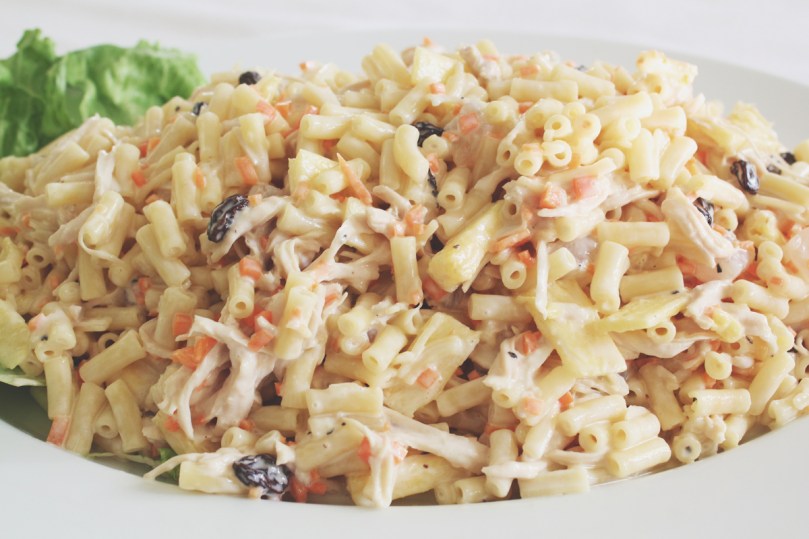
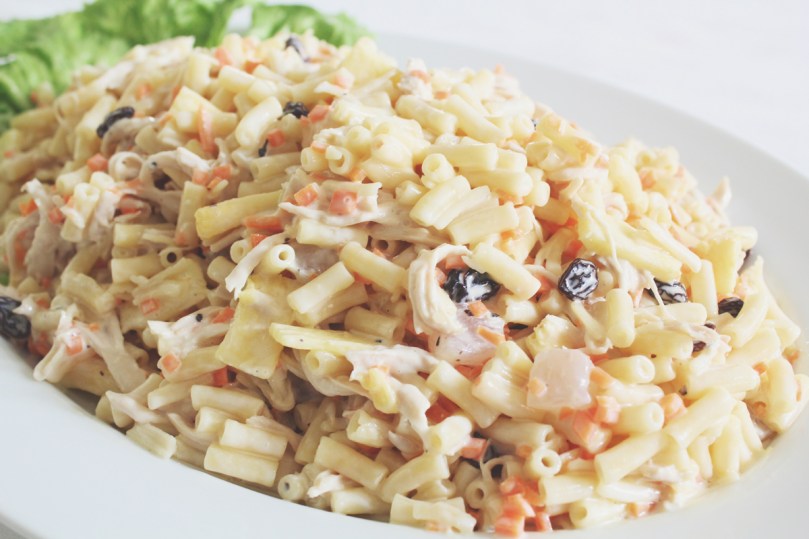
Filipino-style Chicken Macaroni Salad

Filipino-style Chicken Macaroni Salad

Hello Everyone! It’s been a while since my last post – but if you are a regular reader, you would’ve picked up from my last post that I’d be taking a short break. It’s not because I needed some time to recover from my mental exhaustion (because let’s face it, I’m still always mentally drained by the end of a long day), but more for the theme for this month’s recipes. From today onwards, you will be expecting a recipe every single day leading up to Christmas – you read that right! I will be sharing with you Festive Filipino Dishes that can be found on the tables of a Filipino family during Noche Buena, some of the recipes that I will be sharing have been influenced by Spanish cuisine. So let’s kick off Day 01 of 12 days to Christmas with a sweet (or savoury?) one: Filipino-style Chicken Macaroni Salad.

First off, for those of you who don’t know, Noche Buena is the Spanish word for the night of Christmas Eve. In Latin American cultures, including Spain and the Philippines, Noche Buena is an annual traditional family feast. The traditional dinner is celebrated at midnight after attending the late evening Mass known as Misa de Gallo. In the Philippines, a whole roasted pig known as lechón, is the centre of all dishes during the feast. It is believed that the tradition dates back to the 15th century when Caribbean colonists hunted down pigs and roasted them whole as the family gathered for Christmas Eve. However, a whole roasted pig isn’t always served in other cultures. For example, in Peru, a large juicy turkey is the star for Noche Buena while in Venezuela, hallacas are quite popular. Actually, I think I may have explained what Noche Buena is in a post last Christmas? I’m not sure. Oh well!

Tonight’s dish is one of the many that can be found on the table during Noche Buena, but it doesn’t stop there. This dish is also typically served during Filipino fiestas and also during family outings and picnics. It is actually a very simple dish that doesn’t require a lot of cooking and complicated steps. The main “cooking” is basically cooking the macaroni until tender, and the chicken to be boiled and shredded. When those core ingredients are ready, all you have to do next is toss all the ingredients together and voilà! Chill it in the fridge for a couple of hours and you’ve got a tasty chicken macaroni salad.

Filipino-style Chicken Macaroni Salad Ingredients

PREP TIME 15 MINS | COOKING TIME 30 MINS | SERVES 10-12

INGREDIENTS

  • 500g macaroni*
  • 1 jar (400g) Nata de Coco, drained
  • 300ml dollop cream
  • 250g chicken breast
  • 100ml condensed milk
  • 1 cup cheddar cheese, diced
  • 1 cup fresh pineapple, diced
  • 3/4 cup carrots, minced
  • 3/4 cup mayonnaise
  • 1/4 cup raisins
  • Ground salt and pepper to taste

*Aside from macaroni, you can use other types of short cut pasta. Here are some examples: Mostaccioli, Penne, Rigatoni, Cellentani, Rotini, Cavatappi, Fideuà, and Maccheroncelli.

METHOD

  1. Bring a medium-sized pot of salted water to a boil. Once boiling, add in the chicken breasts and cook for about 15 minutes, or until cooked all the way through depending on the size of your breasts (yes I meant to say it that way *cheeky grin*). Once done, drain and set aside to completely cool down.
  2. Meanwhile, mix the condensed milk, cream, mayonnaise, salt, and pepper in a large mixing bowl. Taste and adjust accordingly to your liking. Set aside.
  3. Then, bring a large pot of salted water to a boil. Once boiling, add the macaroni and cook according to packet instructions (mine was about 10-11 minutes). Once done, drain and transfer to a large mixing bowl together with the dressing.
  4. When the chicken breasts have completely cooled down, shred the chicken meat and add it into the mixing bowl together with the macaroni.
  5. Add all the other remaining ingredients and toss thoroughly until well combined. Cover the bowl with cling wrap and refrigerate for about and hour or two before serving.
  6. Serve chilled and enjoy!

Filipino-style Chicken Macaroni Salad

Filipino-style Chicken Macaroni Salad

BON APPÉTIT

– Ally xx

myTaste.com

Penang Char Kway Teow (Stir-fried Rice Cake Strips)

Penang Char Kway Teow (Stir-fried Rice Cake Strips)

Penang Char Kway Teow (Stir-fried Rice Cake Strips)

Hello Everyone! First off, I just want to say that this is the last noodle dish for the month of November! There’ll be one more post going up on Sunday on one of my designs, and after that I’ll be taking a 2-week break from blogging. There’s no particular reason for it – well okay, I guess you can say it’s for me to take a short break since I have been complaining for the past however so many posts about being mentally tired. It’s also mainly to go with the theme I have planned for next month; more will be revealed after my 2-week break 🙂

Okay, so before I dive into the recipe for tonight, I’d like to say sorry for a later than usual upload – I just came home from an evening with friends. We met up and did an escape room challenge together; well we split into two teams and did a different room from each other, CSI and Prison Break. Sadly I was in the losing team but they did say that CSI was definitely harder than the other one. Anyway, it was a fun night altogether but we didn’t get to talk much about our experiences over dinner because we didn’t want to ruin it for each other. Instead we vaguely talked about what we encountered and then all unanimously decided to go back again next week and do the rooms that we didn’t get to do tonight. All I can say that our brains were frazzled and scrambled after we got out of the CSI room – but in the end, we all had a great time. (I actually still can’t believe that I’m still mentally capable to write this post after a long day, and then a difficult escape room challenge).

Anyway! Back to tonight’s recipe – I don’t actually eat this dish that often, be it ordering it at a restaurant or making it at home. It’s not that I don’t like this dish, I actually enjoy it but not as much as the other noodle dishes. Char Kway Teow literally means stir-fried rice cake strips and is a national favourite in Malaysia and Singapore.

Here’s a fact that some of you may not know (I didn’t know myself too until I did my research), Char Kway Teow has a reputation of being unhealthy due to its high saturated fat content. It is this way because it made it attractive, in terms of it being a cheap source of energy and nutrients, to labourers since it was mainly served to them. When the dish was first served, it was sold by fishermen farmers and cockle-gathers who doubled as char kway teow hawkers in the evening to supplement their income.

Over time, the dish became increasingly popular and many cooks have developed their own interpretations while still using the same basic ingredients of ricecake strips/flat rice noodles fried with anything from eggs (chicken or duck), onions, garlic, prawns, cockles, Chinese sausage, chives, etc. Pork fat was predominately used to stir-fry char kway teow, but over the years, ordinary cooking oil is now used for health or religious reasons.

I based this recipe from Rasa Malaysia, so go check out the original recipe if you get the chance to!

Penang Char Kway Teow (Stir-fried Rice Cake Strips)

PREP TIME 10 MINS | COOKING TIME 15 MINS | SERVES 4-6

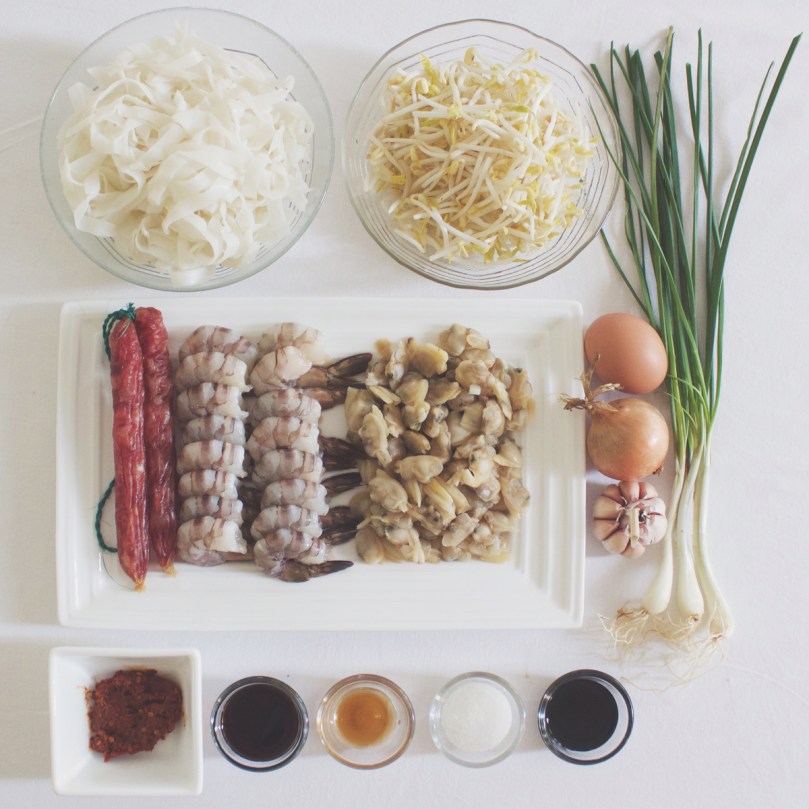
INGREDIENTS

  • 400g kway teow noodles (rice cake strips)
  • 250g prawns, peeled and deveined
  • 100g baby clam meat
  • 100g beansprouts
  • 4-6 large free range eggs, sunny side-up
  • 2-3 garlic cloves, minced
  • 2 Chinese sausages, sliced diagonally
  • 1 small brown onion, diced
  • Chilli paste
    • 30g dried red chillies, seeded and soaked in water until soft
    • 3 small shallots, diced
    • 2 fresh red chilies, seeded
    •  1 tsp oil
    • Pinch of salt
  • Spring onions

Sauce Mix

  • 5 tbsp soy sauce
  • 2 dashes white pepper powder
  • 1 & 1/2 tbsp dark soy sauce
  • 1 tbsp sugar
  • 1/2 tsp fish sauce
  • 1/2 tsp salt

METHOD

  1. Grind all the ingredients of the chilli paste together using a mini food processor until fine. Heat about a teaspoon of oil in a small frying pan, over medium-high. Stir-fry the chili paste until aromatic, about 3-5 minutes and then transfer to a heatproof bowl. Set aside.
  2. Mix all the ingredients for the sauce together in a small bowl and set aside.
  3. Next, heat up about a tablespoon or two of oil in a large frying pan, or wok, over medium-high. Sauté the garlic until fragrant and golden brown, then add in the onions and cook until soft, about 2 minutes altogether.
  4. Add in the Chinese sausage slices and cook until you can smell the aroma coming from the sausages. Then, add in your prawns and cook until they start to change colour, about 5 minutes altogether.
  5. Add in the baby clam meat, followed by a half portion of the beansprouts and give it a quick mix. The add in the rice cake strips, making sure that you untangle the clumps when you’re adding them to the pan, followed by the sauce mix and chilli paste. Give it a good stir and make sure that all the noodles are covered with the sauce.
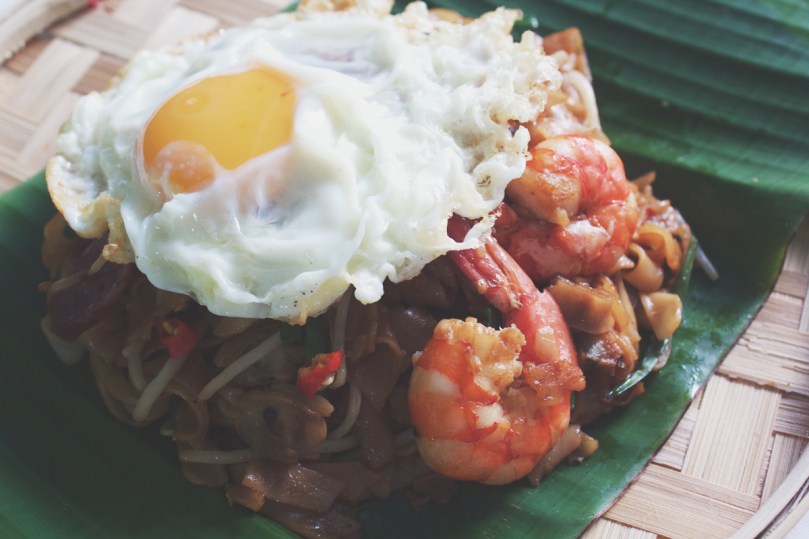
  6. Turn the heat off, and then mix in the rest of the beansprouts and the spring onions. Serve immediately with or without a sunny side-up egg on top. Enjoy!

Penang Char Kway Teow (Stir-fried Rice Cake Strips)

Penang Char Kway Teow (Stir-fried Rice Cake Strips)

BON APPÉTIT

– Ally xx

myTaste.com

Malaysian Curry Laksa (Spicy Noodle Soup)

Malaysian Curry Laksa (Spicy Noodle Soup)

Hello Everyone! So, I’ve been told that I don’t write as much as I used to, and that’s only because there’s really nothing much to tell. Well okay, maybe a part of the reason is also that I’m always mentally tired by the end of the day when I get around to writing my blog posts. I try to write them in advance so that I could at least add some enthusiasm to my posts, but I always end up procrastinating – and I’m sorry for that! Just bare with me until the end of the year and hopefully my content will be much better when the New Year kicks in 🙂

Anyway, let’s get down to business for tonight’s post; the last week of Noodle Month! Again, the month just flew right by! December is just around the corner, and sooner or later it’ll be Christmas and then the New Year! Tonight, I am sharing with you a popular dish in Brunei, Singapore, Indonesia, and Malaysia – Laksa! I wouldn’t say that this dish is at the top of my favourite noodle dish (only because there are many other noodle dishes that I prefer than laksa), but if I want it, I’ll have it!

The plan was to make my own laksa paste from scratch, and I know it’s no excuse, but time was short on my hands and I just made the decision to buy a ready-made, packeted paste from the stores. Also, if I made my own paste, we’d have a lot of left over ingredients (that is, if we didn’t end up using all of it), or a surplus of paste that would’ve ended up sitting in the freezer for a long time, and eventually in the trash since we don’t eat laksa that often at home. However, feel free to make your own paste and just follow the ingredients from the recipe below 🙂

Before I dive into the recipe, I’ll just talk a little bit about what Laksa is for those of you who don’t know what it is. Laksa is actually a combination of Chinese and Malaysian cuisine that consists of rice noodles/vermicelli served as a spicy soup dish with various meats such as chicken, prawn, or fish. The soup is either based on a rich and spicy curry with coconut milk, or a sour tamarind soup. The elements of a curry laksa can be distinguished by the following:

  • Coconut milk is used
  • Curry-like soup (includes curry as one of its ingredients)
  • Except for bean sprouts, no other vegetable is used
  • Bean curd puff is used
  • Served with thick or thin rice vermicelli (usually thick); occasionally served with yellow mee
  • Hard-boiled egg may be added
  • Slices of fish cake and either prawns or chicken is used

The original recipe can be found over on Serious Eats.

Malaysian Curry Laksa (Spicy Noodle Soup) Ingredients


PREP TIME 10 MINS | COOKING TIME 30-45 MINS | SERVES 4-5

INGREDIENTS

  • 250g thick rice vermicelli noodles
  • 200g coconut milk
  • 100g beansprouts
  • 100g prawns, peeled and deveined
  • 4-5 cups chicken stock
  • 3 pcs dried bay leaves
  • 2-3 garlic cloves, minced
  • 2 large free range eggs, hard-boiled
  • 1 chicken crown, breasts removed and sliced, bone reserved
  • 1 packet (200g) Malaysian Curry Laksa Paste
  • 1 pc firm tofu, deep fried and cut into chunks
  • 1 pc fish cake, sliced diagonally
  • 1 small brown onion, diced
  • Salt
  • Spring onions
  • Whole black peppercorns

To serve

  • Sambal

METHOD

  1. Add the reserved chicken bone, chicken breast dried bay leaves, about a teaspoon or two of whole black peppercorns, and salt to a medium-sized pot filled with about 1.5L of hot/boiling water. Turn the heat up to high and leave to boil for about 30 minutes. After about 15 minutes, remove the chicken breast from the stock and set aside to rest and cool down before slicing into it.
  2. While the stock is boiling away, quickly blanch the sliced fish cakes and prawns in the stock, about 2-3 minutes. Remove and set aside.
  3. Meanwhile, bring a large pot of water to a boil. Once boiling, add the rice vermicelli noodles in and cook according to packet instructions, about 15 minutes for mine.
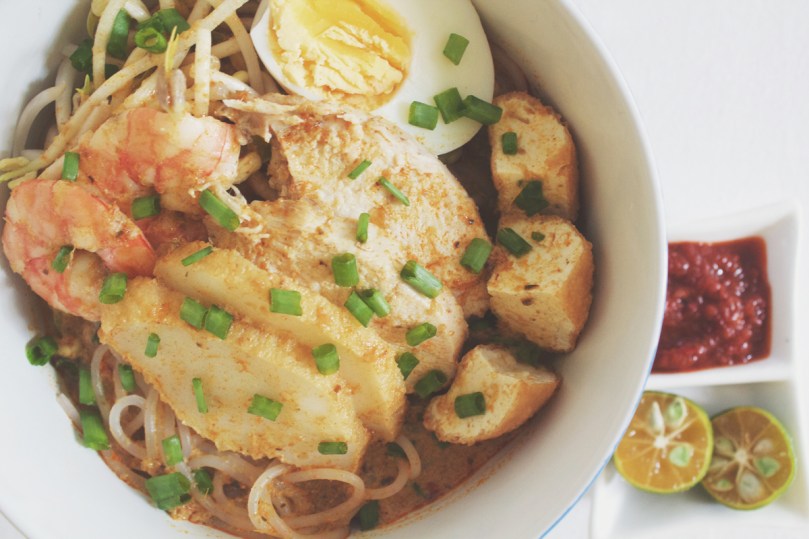
  4. Drain and then divide the noodles equally into 4-5 individual serving bowls. Top with the beansprouts, chicken slices, fish cake slices, fried tofu, hard-boiled egg slices, and prawns. Set aside.
  5. Heat a bit of oil in a medium-sized frying pan over medium-high. Sauté the garlic until fragrant and golden brown, and then add in the onions and cook until soft, about 2-3 minutes in total.
  6. Add the laksa paste and fry for about a minute or two before adding the chicken stock in. Give it a goo mix and then bring to a boil. Once boiling, turn the heat down to a slow simmer and then add in the coconut milk. Leave to simmer for about 15 minutes.
  7. Once the soup is done, ladle it into the prepared bowls and garnish with some spring onion. Serve immediately with some sambal and calamansi on the and enjoy!

Malaysian Curry Laksa (Spicy Noodle Soup)

Malaysian Curry Laksa (Spicy Noodle Soup)

BON APPÉTIT

– Ally xx

myTaste.com

#youcalltheshots Did You Know Cards 02

#youcalltheshots (2014).

Project Background

“Growing numbers of youths are heading towards adulthood without drinking at all, let alone binge drinking, and the National Drug and Alcohol Research Centre says this may be partly because teenagers now spend much more of their social time on the Internet.” — Brad Crouch, Medical Reporter | The Advertiser

Alcohol is the second largest contributor to substance-related abuse in Australia. In 2008, the Australian Government funded the National Binge Drinking Strategy where the ‘Don’t turn a night out into a nightmare’ campaign was first launched in result. Subsequent to the 2008 campaign that ran until the end of January 2010, follow up campaigns were introduced. According to the National Drug Strategy Household Survey, in 2010 (via Australian Drug Foundation, 2011):

  • 87.9% of Australians aged over 14 years had drunk alcohol at some stage in their life
  • The average age at which Australians first tried alcohol was 17
  • Among 12-year olds, around 49% of boys and 38% of girls admitted they had consumed alcohol at some stage (ABC News, 2013)
  • Among 17-year olds, it was 89% of boys and 90% of girls (ABC News, 2013)

Contemporary media is changing the way we interact with people and our surrounding environment. Studies show that teenagers today are drinking less, and even opting out from drinking at all, and this may well be a result of the influence of the time spent on the Internet. It was speculated that the age group’s love for the Internet such as, social media and online games, is taking up so much of their time, and in result, not enough time left to find themselves in drinking situations.

Another reason for the decline in teenage drinking, as pointed out in this article, is a theorised explanation of the immigration of youths from different cultures where which drinking is uncommon. “The shift in drinking behaviour is likely the result of broad cultural factors,” Dr Livingston said.

There are many factors that lead to teenage drinking. If you ask a teenager why they drink, responses vary from (via Lohmann, 2013):

  • “I was bored.”
  • “Everyone else does it.”
  • “I like how it makes me feel.”
  • “People like me when I drink because I act different.”
  • “I just wanted to see what it would make me feel like.”
  • “My parents do it so it must not be a big deal.”
  • “It helps me escape reality.”

Excessive consumption of alcohol can lead to short-term and long-term effects, ranging from immediate harm such as injuries and accidents, to chronic harm. For teenage girls especially, when intoxicated, they are more likely to indulge in risky behaviour such as unsafe or unwanted sex, which can then lead to teenage pregnancy.

Campaign Strategies

Print vs. Online

Instead of using print media, the focus of the distribution of the campaign will be through online platforms. Not only is this a sustainable strategy, it also addresses the target end user and how they will interact with the campaign. Posters would be irrelevant in a sense that most teenagers would not want to be caught looking at a poster on anti-binge drinking as chances of being stereotyped by peers and society on a whole, that she is an individual with a drinking problem.

Through an online-based strategy, teenagers are able to view the campaign in the comfort of their own homes and in the privacy of their own rooms. As pointed out above as well, teenagers are spending more of their social time on the Internet. These social media platforms will communicate with our target audience by providing information about the campaign such as advice on drinking responsibly and how a night out is always better when you’re in control, and helpful contacts. All of this will then be tied together with various Social Events – using social media to inform audiences of upcoming social events and where to find us, as well as photographs of our social events.

Project Aims & Objectives

  • To create an prevention campaign for teenage girls between the ages of 13 and 17 years old who are actively involved in binge drinking.
  • To promote safety awareness amongst these teenage girls, like making bad decisions that leave them vulnerable to dangers like date rape.
  • To then educate these teenage girls in the risks involved with excessive drinking, risks involving an unstable mindset, and wilfully agreeing to unsafe or unwanted sex, even if it was not their intention.
  • To encourage them to make the right decision when on a night out with friends, to stay safe, and to stay in control.
  • To provide guidance to these teenage girls through Raise Foundation’s mentoring program, allowing for them to feel supported through tough times, especially when dealing with alcohol abuse and sexual health.

Conceptual Framework

The concept for the campaign is based on the ideas of Proverbs, a campaign that contains wisdom, truth, morals, and is memorable so that it will be spoken about amongst teenagers for a while (making the campaign go viral over the Internet i.e. #yolo). The campaign will not make the decision for them, but will provide advice between what is right and what is wrong. Approaching the campaign this way will allow teenagers to think and reflect on their habits, and are eventually able make to their own decision. Imposing the right way onto them may cause a ‘who are you to tell me what to do’ attitude as some teenagers do not like being told what to do. Hopefully the campaign will then encourage young teenagers to postpone the age at which they first start to consume alcohol, and for those teenagers who are already consuming alcohol, to promote responsible drinking.

Environment/Spatial Design Aspect

Social Events
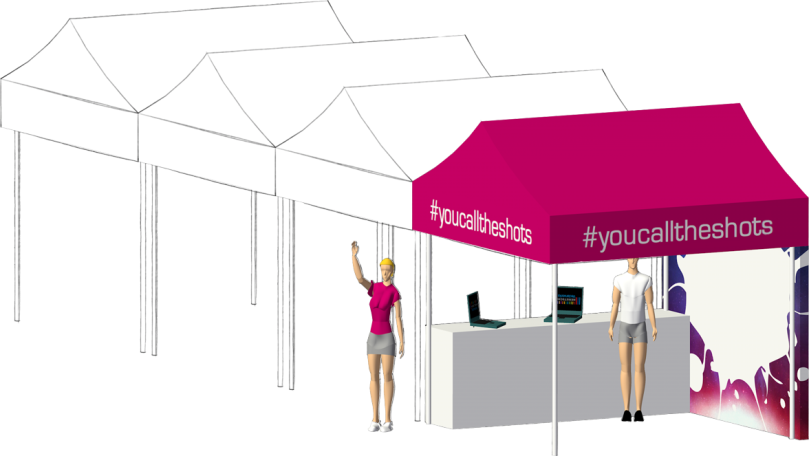
#youcalltheshots Event Booth

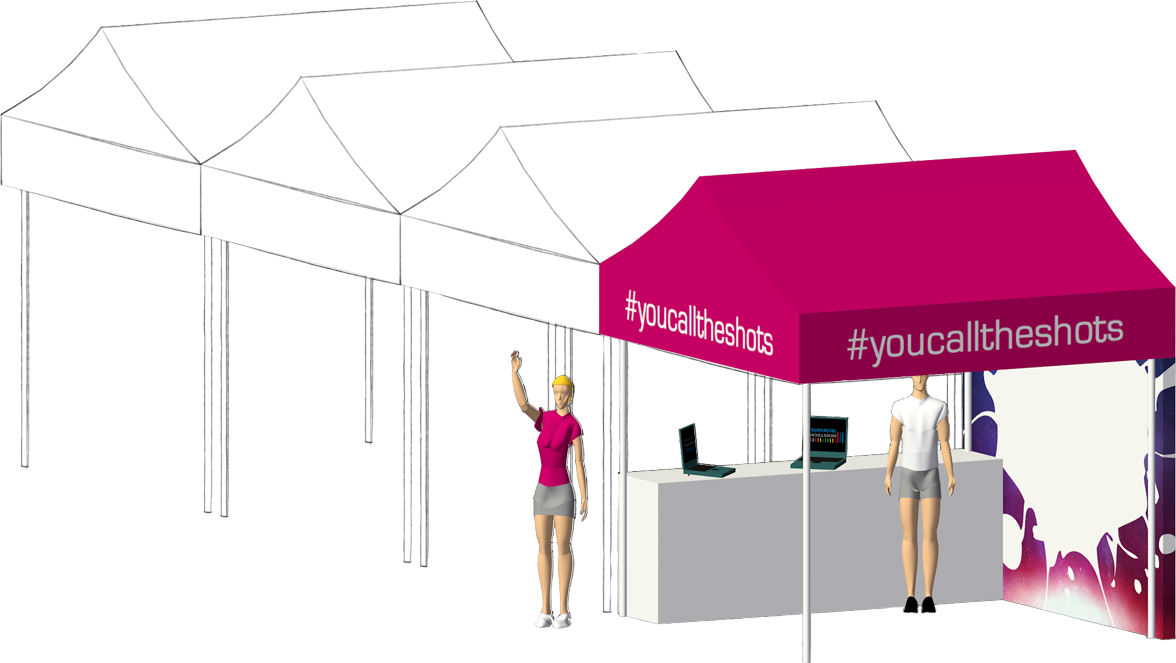
Apart from the campaign launch party, #youcalltheshots will be making appearances at various social events. An information booth will be set up so that event/festival-goers will be able to know more about the campaign and participate in activities such as carnival-themed games, giant twister, obstacle course, trampoline bungee, photobooth, etc.

Where the booth is located is an important factor to consider. As you can see, by having a corner booth, it allows one of the sides to be open, therefore allowing the ease of flow for visitors for easy access and making the booth more spacious.

Photo Booth

#youcalltheshots Photo Booth #youcalltheshots Photo Booth #youcalltheshots Photo Booth

Everyone, especially teenagers, love to take photos, or get their pictures taken. There is a growing culture of this idea of needing to take photographs and uploading them to social networking sites as a way of proving to others that you were there at that particular event, at that particular day/time – as the lingo goes, “pics or it didn’t happen”. So what better way to grab the attention of those festival-goers into our photo booth?


Graphic Design Aspect

Branding & Logo

#youcalltheshots Branding & Logo
The final logo does not have a black outline around the speech bubble, this is just to make clear the shape of the speech bubble that is coloured white.

Through the development stage, I have changed and refined the branding and logo for this campaign multiple times, not just in terms of design, but also in terms of choosing the right colour scheme for the whole campaign. I ended up choosing the colour pink as it stereotypically represents the female gender, teenage girls between the ages of 13 and 17.

I came up with a variety of tag lines to piece together the message of the whole campaign. I then took my tag lines and did a small survey to see which got more of a reaction, and it appeared that the tag line ‘You Call The Shots’ appealed more towards the targeted audience as it is a clever play on words. ‘You Call The Shots’ is an idiom which, figuratively speaking means, to decide on the course of action; to be in charge; to make the decisions; to decide what is to be done. ‘Shots’ also referred to a series of alcoholic beverages served in succession, usually served in small amounts in ‘shot’ glasses. So by you calling the shots, you get to decide for yourself whether you should take the shot or not.

Besides the colour and messaging, the design of the logo is based on a speech bubble which ties in with the concept of ‘advice giving’. If you can see it, the left side of the speech bubble is a profile of a person’s face, as if speaking out into the speech bubble. The person is also smiling, indicating that they a putting forth a positive message unlike the demonising of people and negative connotations associated with binge drinking in previous campaigns.

USB Wristbands & Digital Cards

#youcalltheshots USB Wristbands

#youcalltheshots Did You Know Cards 01

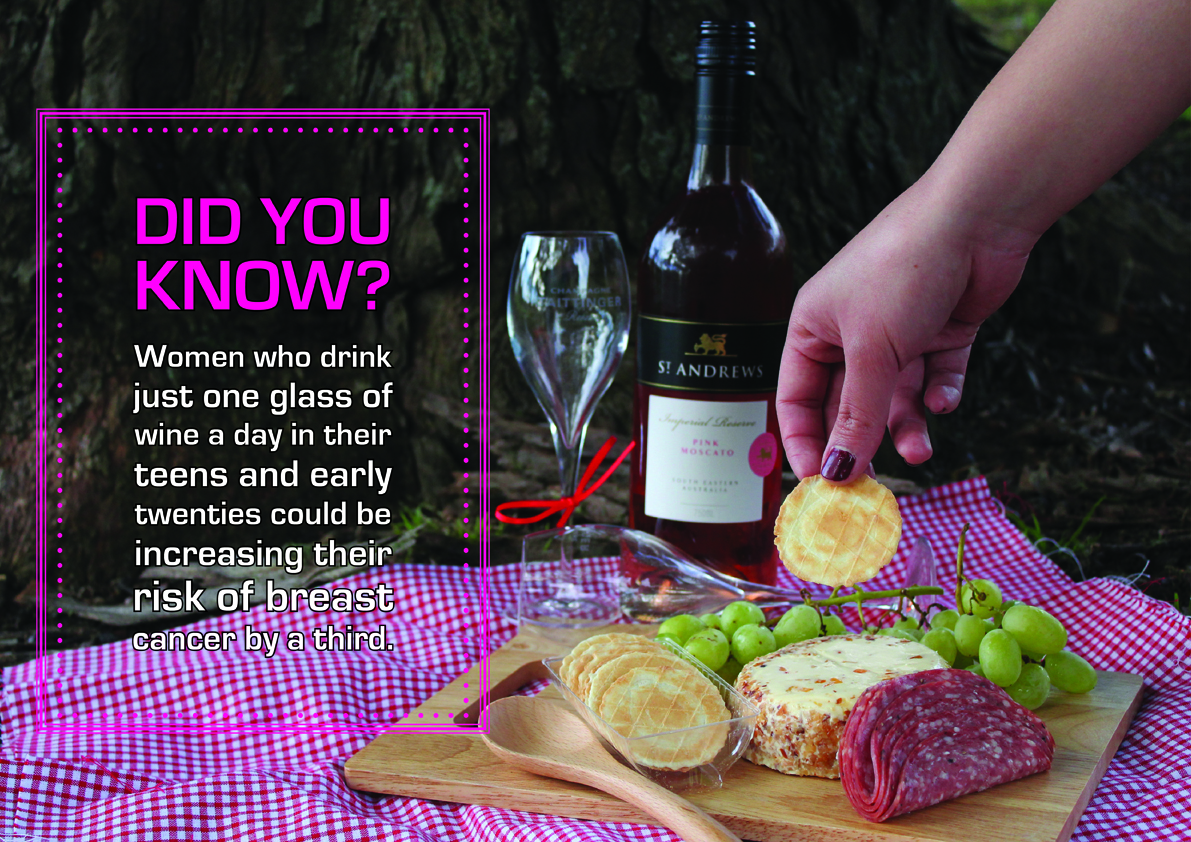
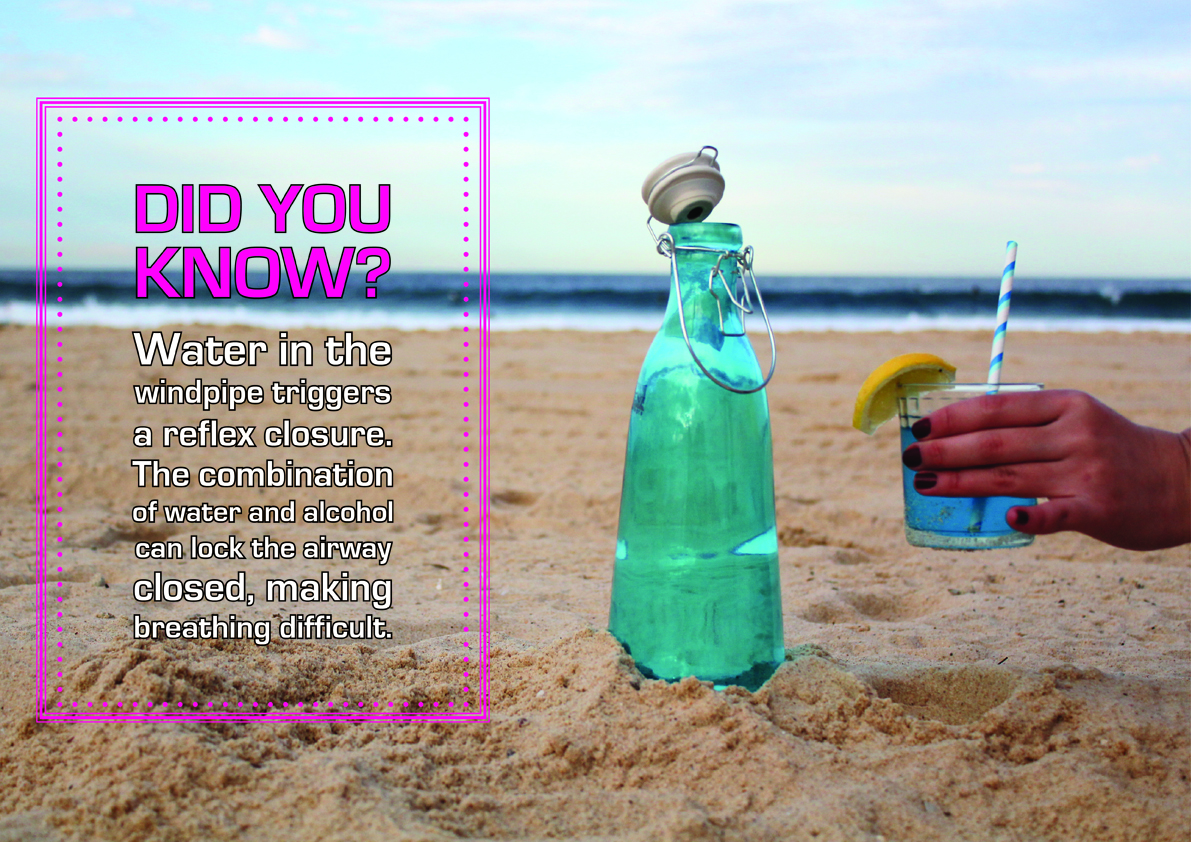
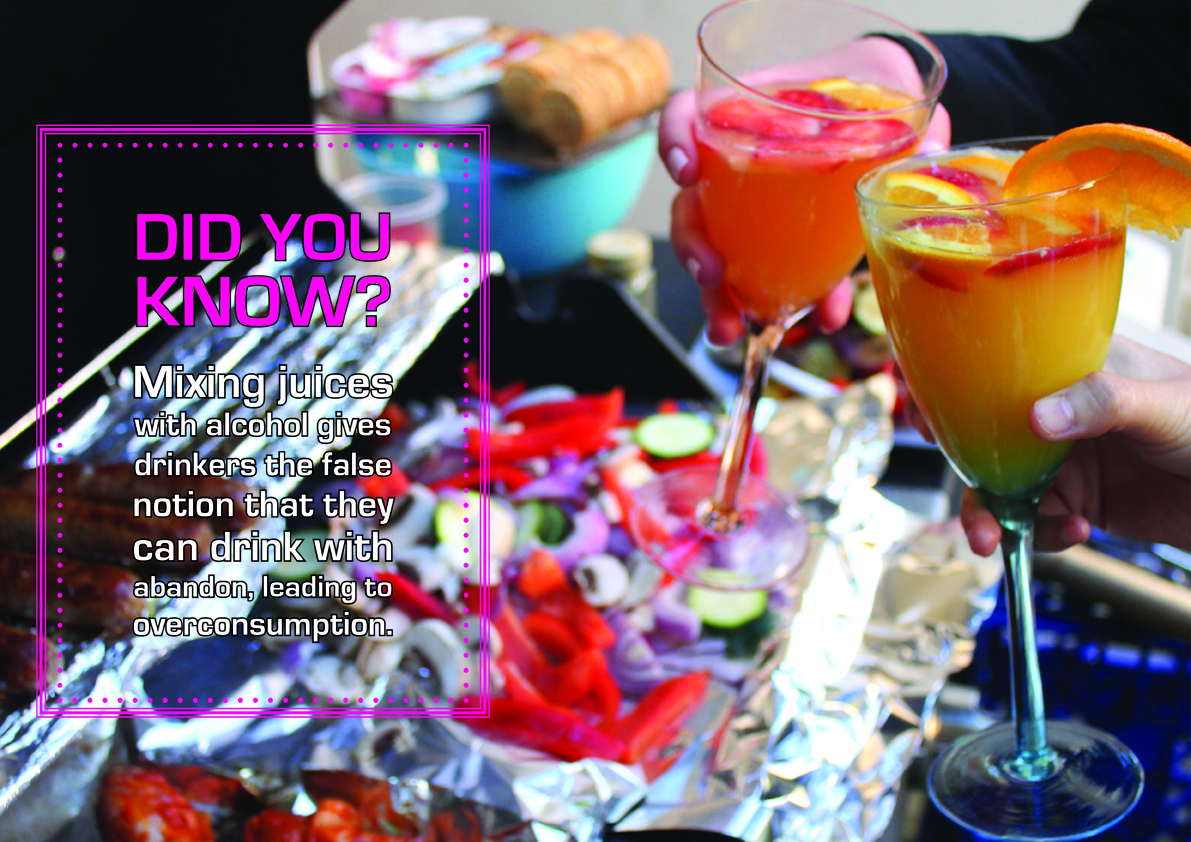
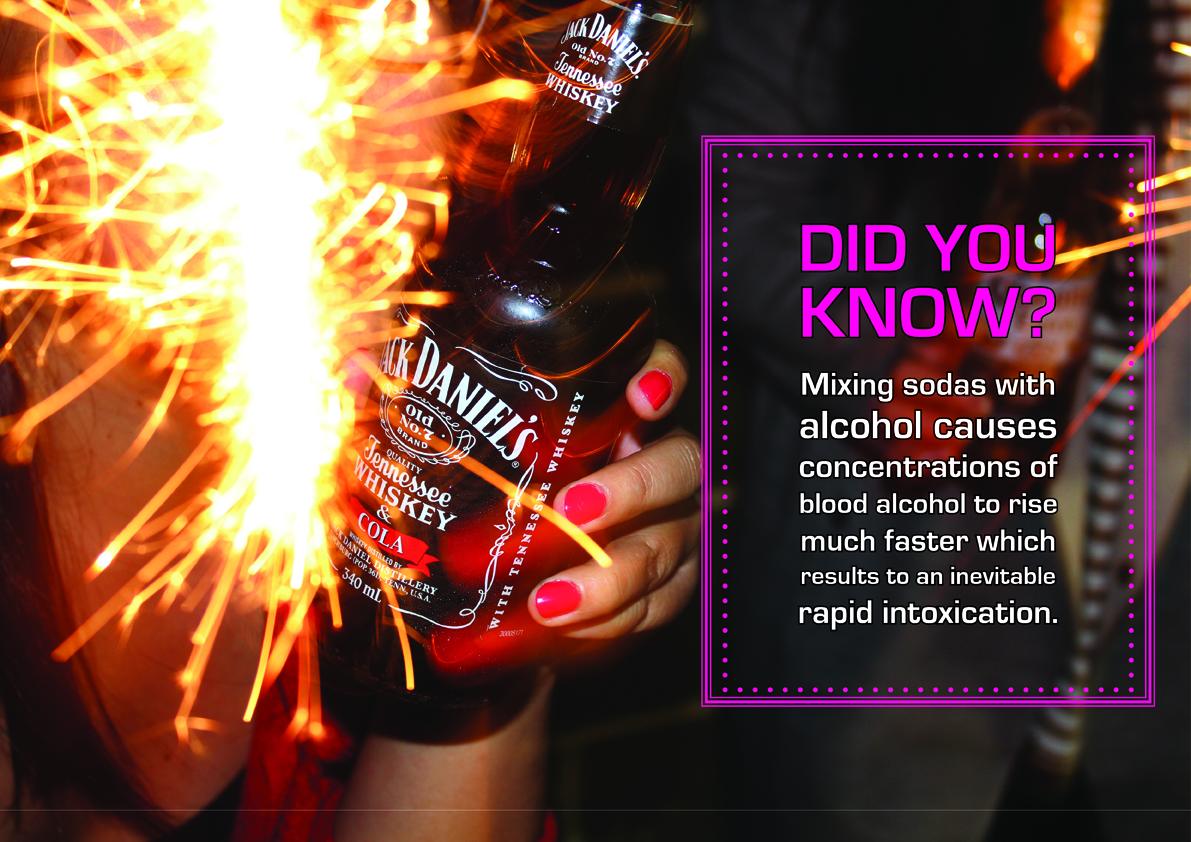
#youcalltheshots Did You Know Cards 02 #youcalltheshots Did You Know Cards 03 #youcalltheshots Did You Know Cards 04
#youcalltheshots Did You Know Cards 05 #youcalltheshots Did You Know Cards 06 #youcalltheshots Did You Know Cards 07

Besides getting your photograph taken at the event, we will also be giving out free USB wristbands, which is essentially the digital version of a flyer or information booklet. This way, it will be easier for visitors to hold on to, or wear, while enjoying the festival and will definitely keep them for later use instead of throwing them out.

The USB wristbands are also personalised in a way that the photographs taken at the booth will be automatically uploaded into the wristbands. Visitors can then upload the photographs onto social media sites or print it out themselves. Besides the photographs, the USB wristbands will also contain posters/postcards with ‘Did You Know’ alcohol facts that they can later print as well if they want to. There is also a card with all the social media links for those who want to follow the campaign online.

T-Shirts
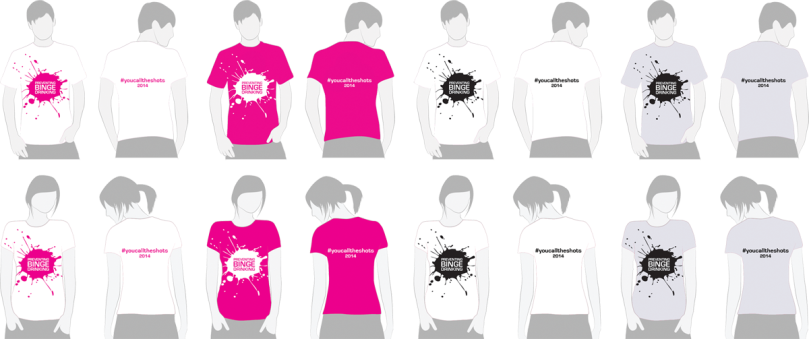
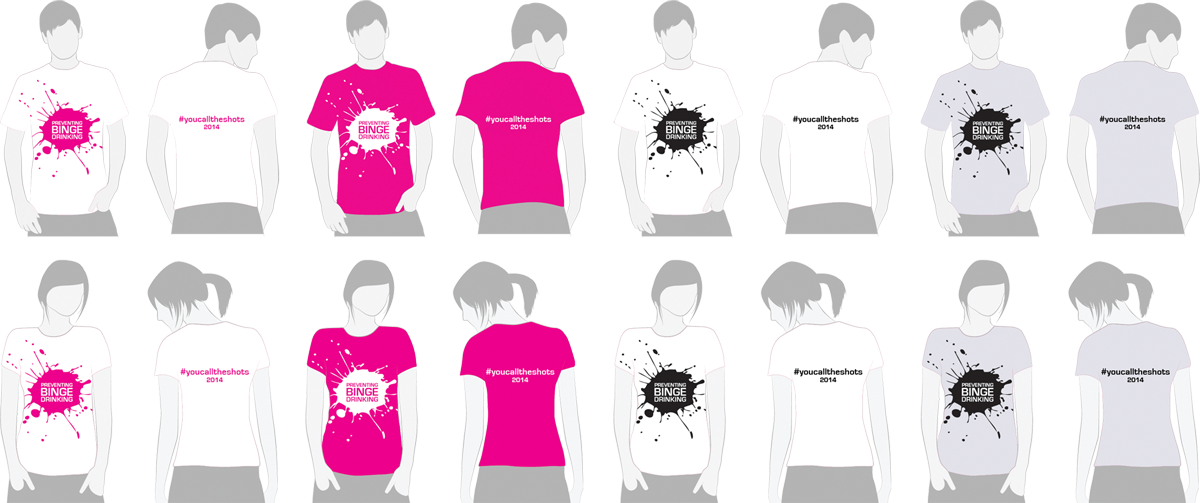
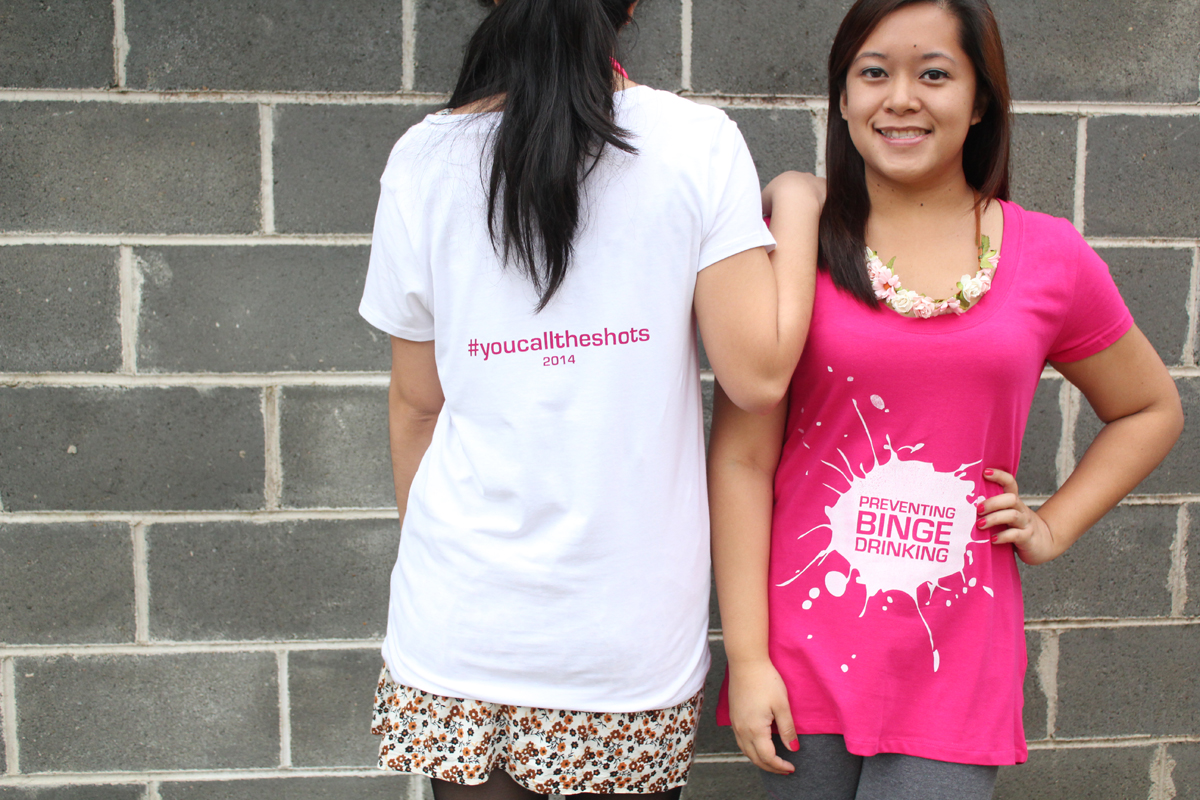
#youcalltheshots T-Shirt Mock Up Designs

#youcalltheshots T-Shirt Design #youcalltheshots T-Shirt Design

T-shirts are also available for purchase at these events. I have also added two extra colours besides the colour theme of the campaign. The black ink shirts are essentially for those (particularly targeted towards guys), who do not want to wear the colour pink.

Website
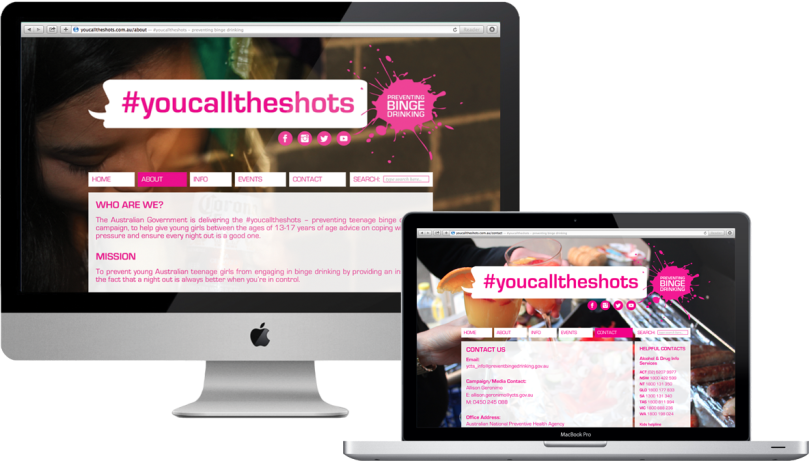
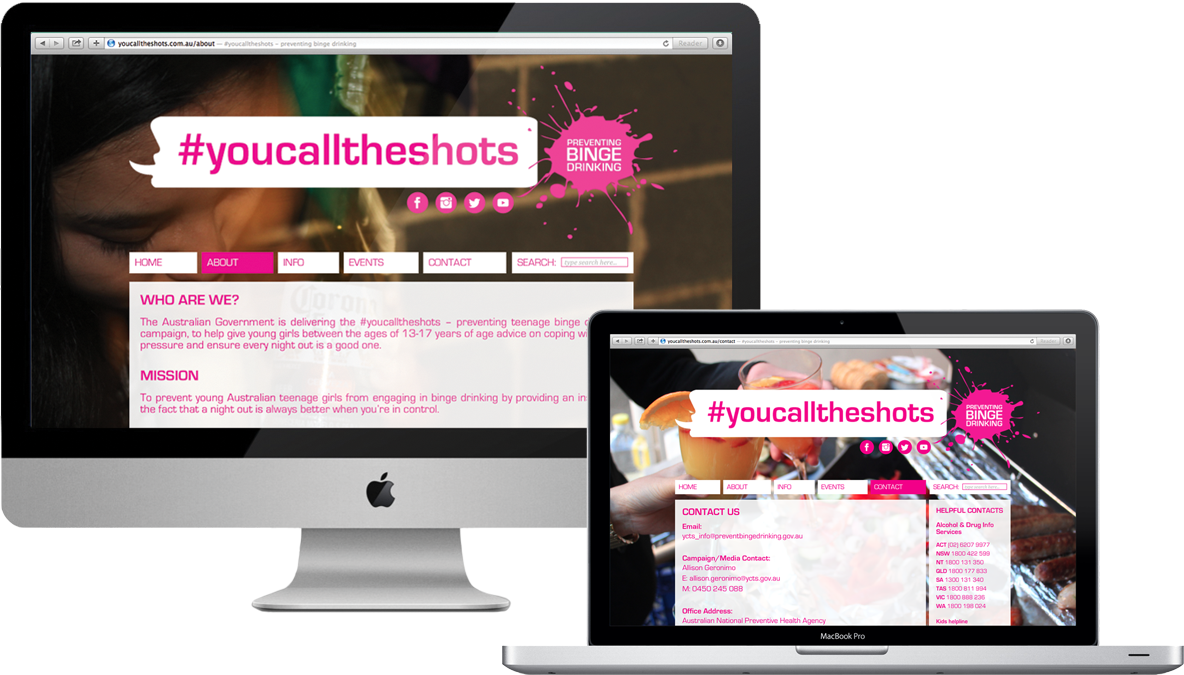
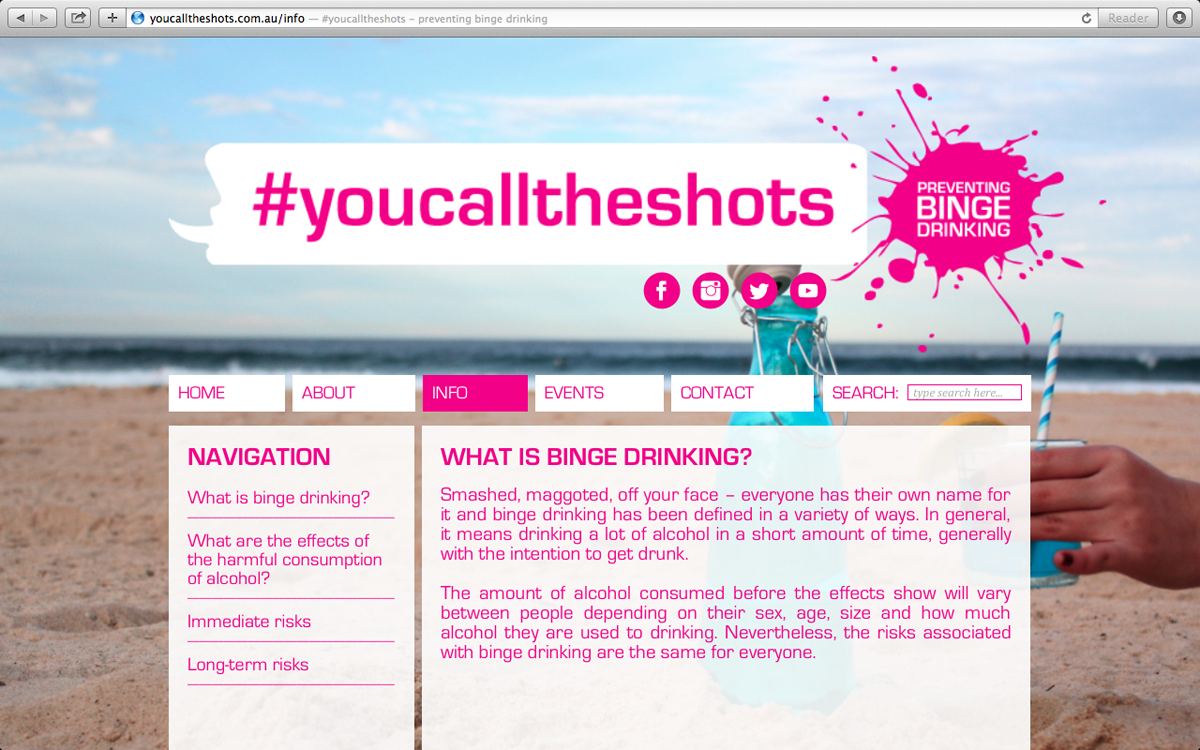
#youcalltheshots Website Design

#youcalltheshots Website Design Info Page #youcalltheshots Website Design Events Page #youcalltheshots Website Design Contacts Page

Social Media

#youcalltheshots Social Media

Public Prank Video

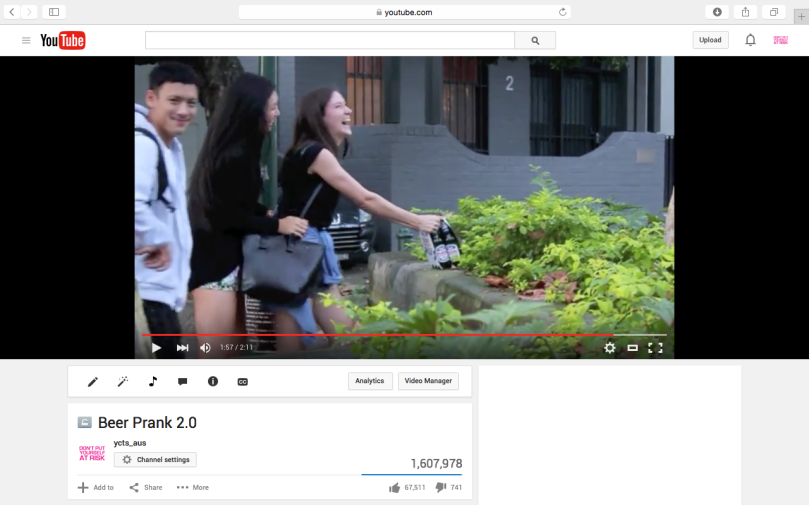
#youcalltheshots YouTube Public Prank Video

The idea behind this video campaign was inspired by movie producers merging movie trailers with public pranks to advertise their upcoming movie i.e. the Telekinetic Coffee Shop prank used to promote the movie Carrie, it sparked a lot of views and went viral in an instant.

For this campaign, I wanted to go along the lines of creating a public prank to promote the campaign by making the video go viral. The concept of the prank is as follows:

  • A new, unopened, chilled bottle of beer glued to the walkway as part of a public prank.
  • A person walks by and spots the bottle of beer.
  • Curious, they bend over to pick up the bottle of beer but then struggle to actually pick it up.
  • The person is confused, and then maybe realising that they were just pranked.
  • The person may snap a picture and upload it to Facebook, Instagram, etc. and #totallyjustgotpranked #youcalltheshots #ycts2014 #icalltheshots #alcoholfree, etc.
  • The person walks away without the bottle of beer, and the tagline ‘You Call The Shots – preventing teenage binge drinking’ implying that you left the beer behind and didn’t need it after all.

For the purpose of this project, the prank will be partly scripted and acted out by my peers – they will be told what to do, like walk towards the beverage, pick it up, and walk away, but they won’t be told that the beverage is glued to the ground or table to capture their raw reaction.

I have uploaded the videos privately on YouTube, but if you wish to watch them, click here for the first video, and here for part II (ps. I had to tell some of my peers to fake pull the beer off the ledge because it wasn’t glued on properly). Enjoy!

– Ally xx

Singapore Mei Fun (Fried Rice Vermicelli Noodles in Curry Powder)

Singapore Mei Fun (Fried Rice Vermicelli Noodles in Curry Powder)

Hello Everyone! Tonight I will be sharing with you another Singaporean dish that I love. What I love about this is the curry powder that is incorporated into this fried noodle dish. When I first tried this noodle dish, I didn’t expect it to be coated in curry powder – well, I mean, it’s not like the name of the dish was a dead giveaway for what’s in it. So it was definitely quite unique to me when I first tried it – and I loved it!

I kind of went with it on my own after indulging in much of it over the past several years, but I did refer to Saucy Spatula for reference. I also learnt a few things from her blog, the main one being that authentic Singapore fried rice vermicelli (or know as fried bee hoon), does not include curry. Unfortunately, the question of where the addition of curry originated from cannot be answered, however many claimed it to have come from Hong Kong. So why isn’t it called Hong Kong fried rice vermicelli? Well, apparently this noodle dish resembles more towards the Singapore fried bee hoon so I guess why argue with that?

Singapore Mei Fun (Fried Rice Vermicelli Noodles in Curry Powder)

PREP TIME 5 MINS | COOKING TIME 25-30 MINS | SERVES 4-5

INGREDIENTS

  • 450g bee hoon (thin rice vermicelli noodles)
  • 250g char siu pork (Chinese BBQ pork)*, sliced
  • 100g beansprouts
  • 2-3 garlic cloves, minced
  • 2 Chinese sausages, sliced diagonally
  • 2 red bird’s eye chillies, sliced
  • 1 large free range egg, beaten
  • 1 small brown onion, diced
  • 1/2 a head of cabbage, sliced
  • Tricolour capsicum (1/4 of each), sliced

For the sauce

  • 1/4 cup light soy sauce
  • 3 tbsp cooking wine
  • 1 & 1/2 tbsp curry powder
  • 1 tsp sugar
  • 1 tsp white pepper powder

*If you can easily buy it at the shops, or even your local Chinese restaurant, then I do recommend that you just buy it if you want your fried noodles now and fast! (It takes a considerate amount of time when you’re making your own char siu pork at home). But, if char siu is not available, you can substitute with ham, bacon, or shredded pork.

METHOD

  1. Start off by bringing a large pot of slightly salted water to a boil. Once boiling, add the rice vermicelli noodles and cook according to packet instructions, about 15 minutes for this brand of noodles. Once the noodles are done, drain and set aside.
  2. While the noodles a boiling away, mix the sauce ingredients in a small bowl. Set aside.
  3. Heat oil in a large frying pan over medium-high. Add the beaten egg and spread around the frying pan until thin. Fry for about a minute per side, remove and set aside to cool. Once cooled, slice them into thin strips.
  4. In the same frying pan, heat a little bit more oil and then sauté the garlic and chillies until fragrant and golden brown. Then add in the onions and cook until soft, about 2 minutes altogether.
  5. Add the Chinese sausage slices and cook for about 2 minutes. Follow with the char siu pork and capsicum, cooking for a further 3-4 minutes. Finally, add in the cabbage and beansprouts, cooking until just about to wilt.
  6. Add in the drained rice vermicelli noodles together with the sauce and give it a good mix, until the noodles are evenly coated with the curry powder mixture. Turn the heat off, garnish the noodles with some spring onions, and top with the sliced fried egg.
  7. Serve immediately with a squeeze of calamansi or a lemon wedge. Enjoy!

Singapore Mei Fun (Fried Rice Vermicelli Noodles in Curry Powder)

Singapore Mei Fun (Fried Rice Vermicelli Noodles in Curry Powder)

BON APPÉTIT

– Ally xx
myTaste.com

Singapore-style Hokkien Mee (Fried Yellow Noodle & Rice Vermicelli)

Singapore-style Hokkien Mee (Fried Yellow Noodle & Rice Vermicelli)

Hello Everyone! I’ll keep this short only because I’ve had such a busy day today and I just want my brain to relax and not have to look at a computer screen any longer (since that’s what I have been doing all say today). Then again, who am I kidding, after I write this post I will most likely end up looking at my computer screen but instead of utilising my brain and trying to get words to flow, I’ll be watching shows or random videos on Youtube until it’s time to go to bed *cheeky grin*

Anyway, enough babbling, tonight’s recipe is a dish I first experienced during one of my many travels to Singapore. When I saw a picture of it on the menu boards at a hawker centre that I was at (can’t remember where exactly), it was different to the Hokkien Mee that I usually ate back in Brunei, which apparently I have only just learnt after doing a quick Google search, is  Malaysian-styled braised in dark soy sauce. I actually quite like both, and though the ingredients are pretty much similar, I much prefer the Singapore-style Hokkien Mee.

The original recipe can be found over on Rasa Malaysia; I have tweaked the recipe slightly in terms of the order in which the ingredients go in and a few of the processes.

Singapore-style Hokkien Mee (Fried Yellow Noodle & Rice Vermicelli)

PREP TIME 10 MINS | COOKING TIME 45 MINS | SERVES 4-6

INGREDIENTS

  • 400g prawns, peeled and deveined
  • 350g squid, cleaned and cut into rings
  • 250g fresh yellow noodles
  • 250g thin rice vermicelli noodles
  • 200g pork shoulder
  • 100g bean sprouts
  • 3 large free range eggs, lightly beaten
  • 3 pcs dried bay leaves
  • 2-3 garlic cloves, minced
  • 1 pc fish cake, sliced diagonally
  • 1 small red onion, diced
  • Salt
  • Spring onions
  • Whole black peppercorns

Seasonings

  • 1/2 tbsp fish sauce, adjust quantity to taste
  • Dash of ground white pepper
  • Dash of sesame oil

To serve

  • Calamansi (or lemon wedge)
  • Sambal

METHOD

  1. Add the pork shoulder, dried bay leaves, about a teaspoon or two of whole black peppercorns, and salt to a large pot filled with about 2L of hot/boiling water. Turn the heat up to high and leave to boil for about 30 minutes or until tender. Once done, remove the pork from the stock and set aside to cool before slicing into it.
  2. Meanwhile, blanch the prawns and squid in the boiling stock, about 30 seconds to a minute. Remove from the stock and set aside. Then add in the rice vermicelli noodles and cook as per packet instructions or until just about tender. Once done, drain and set aside.
  3. Heat oil in a large frying pan, or wok, over medium-high and sauté the garlic until fragrant and golden brown. Add in the onions and cook until soft, about 2 minutes altogether.
  4. Turn up the heat to high and then add in the yellow and rice vermicelli noodles, frying for a few minutes until the noodles just begin to sear. Add in about a third of the pork stock and seasoning, continuing to cook until most of the stock has been absorbed by the noodles. Add another third of the stock and then bring the heat down to medium-low to allow the noodles to braise over a slow simmer, about 5 to 7 minutes.
  5. Add in the egg and give it a good mix before adding in the bean sprouts, prawns, squid, and pork slices. Give it a good toss and fry for about a minute before adding in the remaining stock.
  6. Plate up and garnish with some spring onions on top. Serve with a side of sambal and calamansi. Enjoy!

This slideshow requires JavaScript.

BON APPÉTIT

– Ally xx

myTaste.com

Kolo Mee (Flash-boiled Egg Noodles)

Kolo Mee (Flash-boiled Egg Noodles)

Hello Everyone! Tonight, I’ve got a very popular breakfast/brunch noodle dish to share. I remember when I was growing up, we’d travel at least 20 minutes to our favourite kolo mee place in Brunei for many years! It was kind of like our special Sunday breakfast routine with the whole family before we’d go about and do our grocery shoppings for the week. Since that place closed down a couple of years ago, we barely have kolo mee in our weekly meals – but now that I have my own way of making kolo mee, I can whip it up almost any time I crave for it!

“The secret to amazing kolo mee lies in the use of pork lard. I know this is not very healthy if eaten in large quantities but the reason why it’s used is because it coats each and every strand of the noodles with some seriously delicious meaty flavours.” — The Malay Mail Online, 2013

I guess you could say that my version of Kolo Mee is a little bit healthier (but not entirely) as I use vegetable oil instead of pork lard. Also, traditional kolo mee dishes, especially in restaurants, use quite a significant amount of MSG to enhance the flavour of the dish. The recipe that I will be sharing today doesn’t use MSG at all and is still very tasty! If you want a halal version of this dish, you can substitute the minced pork for minced chicken and just have a generous serving of fish cakes/balls instead of char is pork. You can also get creative and top it with your favourite breakfast must haves like some crispy bacon on the side or topped with a sunny-side up with the runny yolk and all that pizzaz!

Kolo Mee (Flash-boiled Egg Noodles)

PREP TIME 5 MINS | COOKING TIME 20 MINS | SERVES 6-8

INGREDIENTS

  • 450g fresh kolo mee noodles
  • 250g lean minced pork
  • 250g char siu pork (Chinese BBQ pork)*, sliced
  • 2-3 garlic cloves, minced
  • 2 small red onions, diced
  • 1 bunch gai lan (Chinese broccoli), cut into 2″ lengths
  • 1 fish cake, sliced diagonally
  • 1 red bird’s eye chilli, sliced
  • Chilli Oil
  • Ground salt and black pepper to taste
  • Light soy sauce
  • Sesame Oil
  • Spring onion

*Apparently, it takes a considerate amount of time when you’re making your own char siu pork at home that is! If you can easily buy it at the shops, or even your local Chinese restaurant, then I do recommend that you just buy it if you want your kolo mee now and fast!

METHOD

  1. Add about a tablespoon of light soy sauce, and a teaspoon of chilli and sesame oil into about 6-8 individual bowls/deep dishes. Set aside.
  2. In a small frying pan, heat about 3-4 tablespoons of vegetable oil over medium-high. Add the diced onions and frying until browned and crispy. Set aside. In the same frying pan, fry off the fish cake slices, about a minute or two per side. Set aside.
  3. Heat a medium-sized frying pan (or wok if you like) over medium-high. Add about a tablespoon of the oil used to fry the onions and fish cake to the pan and sauté the garlic and chillies until fragrant and golden brown, about a minute or two.
  4. Then add in the minced pork, followed by the ground salt and black pepper. Give it a good mix and leave to cook for about 5 minutes. Add in about 2 tablespoons of light soy sauce and cook for a further five minutes. Remove the pan from the heat and set aside.
  5. Bring a large pot of water to a boil. Once boiling, flash-boil the stalks of the gai lan first, then followed by the leaves until tender and wilted. Remove from the boiling water and set aside.
  6. Flash-boil the kolo mee noodles, in batches if you wish, for about a minute or two.  Once done, divide equally into your prepared bowls with the sauces and give it a good mix. Top with the minced meat, fish cakes, char siu pork, gai lan, fried onions, and spring onions. Serve immediately and enjoy!

Kolo Mee (Flash-boiled Egg Noodles)

BON APPÉTIT

– Ally xx
myTaste.com