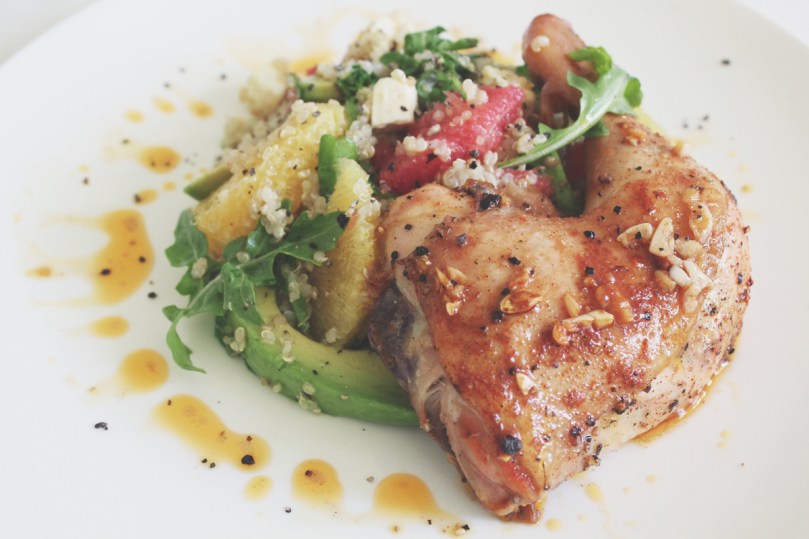
Quinoa, Avocado, & Grapefruit Salad with Lemon and Thyme Roast Chicken

Quinoa, Avocado, & Grapefruit Salad with Lemon and Thyme Roast Chicken

Hello Everyone! Hope everyone had a good weekend! I’m finally feeling better than I did last week, but my voice is still a bit husky. I can’t hit the high notes to a song whenever I’m performing in the shower, so I know I’ve still got a bit more of getting better to do. Other than that, things have been pretty chill at work – but I know it’s going to be hectic soon! There are two event coming up within the next 3 months, so I pray that I will have enough strength to persevere through! Over the weekend, my very first Uni friend from COFA (or now known as UNSWAD) visited me here in Brunei! It was so surreal as I never thought that we would meet… in Brunei! He is currently working on a project in KL and he had a free weekend to spare to come over for a visit! We toured him around a few places in Brunei, and we also caught up on work life, love life, and just anything else in general. I cannot believe that it had been exactly a year since we last saw each other in Sydney! It was definitely a great weekend.

Anyway! It’s week 3 of healthy eating month and I’ve got another quinoa recipe to share with you guys. As you already know, or not if you haven’t been following my blog on a week to week basis, quinoa (pronounced as KEEN-wah) is very beneficial to our health. It is incredibly nutritious as its fibre content is much higher than most grains. It is also very high in protein, containing the essential amino acids that we need . Quinoa contains a great amount of minerals – minerals that we other do not get enough of, especially magnesium, potassium, and zinc. If you would like to read up more on the health benefits of quinoa, click here. Pair it with some heart-healthy monounsaturated fatty acid avocados, grapefruit and orange segments, and you’ve got yourself a salad that is packed with minerals and vitamins such as: calcium, copper, fibre, folate, iron, magnesium, phosphorus, potassium, protein, zinc, and vitamins A, B5,B6, C, E, and K, and the list goes on.

Quinoa, Avocado, & Grapefruit Salad with Lemon and Thyme Roast Chicken Ingredients

PREP TIME 20 MINS* | COOKING TIME 40 MINS | SERVES 5-6

*Plus 4-5 hours waiting time to marinate the chicken.

INGREDIENTS

For the Salad

  • 100g feta cheese
  • 2 cups chicken stock*
  • 1 cup quinoa
  • 1 avocado, sliced
  • 1 grapefruit, segmented
  • 1 orange, segmented
  • 1 packet (250g) rocket leaves

For the lemon & thyme roast whole chicken legs

  • 500g whole chicken legs, washed and cleaned
  • 4-5 garlic cloves, minced
  • 2-3 springs of fresh thyme
  • 2 tsp smoked paprika
  • Juice of 1 lemon

*You can make you own stock by boiling chicken carcasses for about half an hour, together with whole black peppercorns, bay leaves, and salt. Or you can use the store bought ones, again, whatever tickles your fancy.

METHOD

  1. Combine all the roast whole chicken leg ingredients in a large baking dish. Leave to marinate for about 4-5 hours. Preheat oven to 190C. Sprinkle the chicken legs with paprika and place the baking dish in the oven and roast chicken for about 40 minutes or until done.
  2. Bring the quinoa and chicken stock to a boil in a medium-sized saucepan. Once boiling, reduce heat down to low, cover, and then simmer until tender and most of the liquid has been absorbed, about 15 to 20 minutes. Once done, fluff with a fork and transfer to a large mixing bowl.
  3. Add the sliced avocado, feta cheese together with the herbed olive oil, grapefruit, orange, and rocket leaves into the large mixing bowl together with the quinoa. Give it a good toss until well combined.
  4. Transfer to a serving dish together with a piece of lemon and thyme roast chicken leg.
  5. Serve and enjoy!

Quinoa, Avocado, & Grapefruit Salad with Lemon and Thyme Roast Chicken

Quinoa, Avocado, & Grapefruit Salad with Lemon and Thyme Roast Chicken

BON APPÉTIT

– Ally xx

myTaste.com

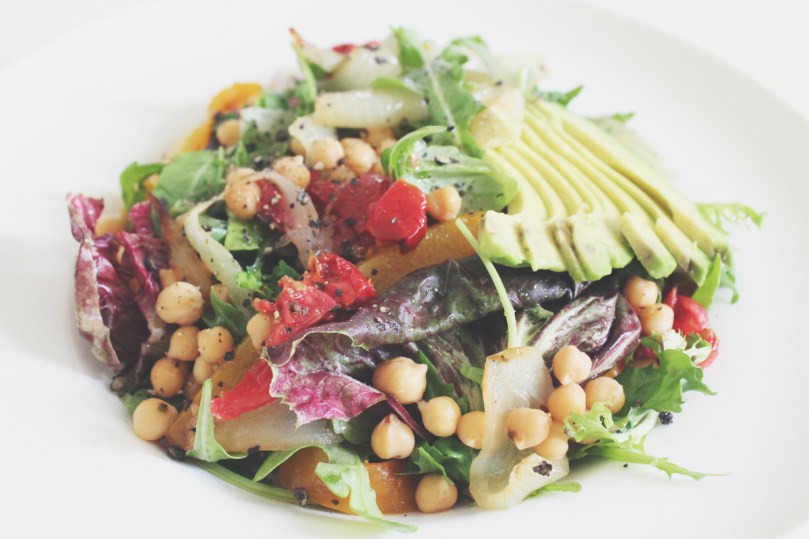
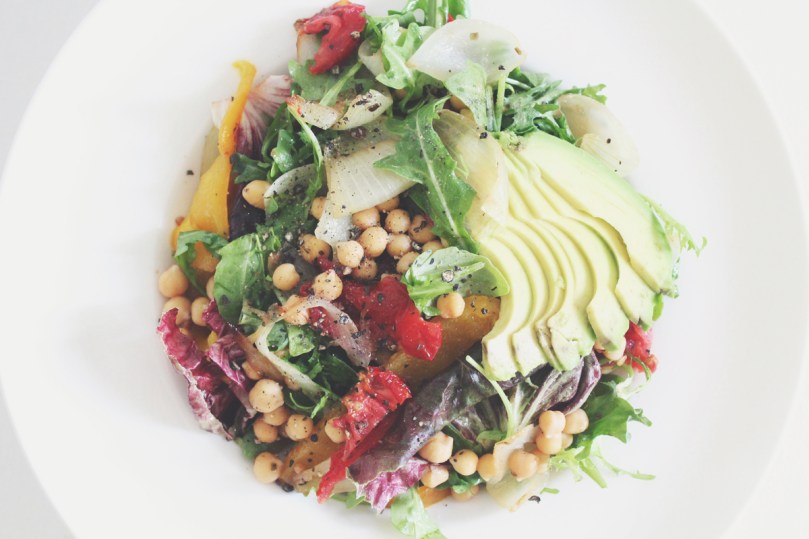
Avocado, Chickpea, & Roasted Capsicum Salad

Avocado, Chickpea, & Roasted Capsicum Salad

Hello Everyone! I hope everyone has had a relaxing CNY long weekend unlike me – well, it was relaxing as I stayed home all day on Sunday doing nothing, but it was also because I was sick over the long weekend *sad face*. I think I got sick from fatigue which resulted in a painful dry cough, a very high temperature, and muscle aches especially in my back, shoulders, and thigh regions. I’m feeling a little bit better with thanks to the long weekend as I get to rest up for 3 days after a straight 13 days of working from an average of 8am-11pm. Yes you read that right, I’m officially employed! I actually started working in late October in Brunei’s leading Advertising Agency known as D’Sunlit Sdn. Bhd. as a Graphic Designer for the Marketing Team. I was under a 3-month probation contract, and last Friday I was able to sign a permanent contract! Oh and the 13 days of straight working, that was because I was involved in an event known as the 17th Consumer Fair. I worked from Monday-Sunday two weeks ago, and last week I worked Monday-Saturday (yes no rest in between for working on that Sunday). So I guess that’s where my fatigue came from. I was actually already starting to feel under the weather last Thursday, but it only came into full effect on Saturday morning. I guess it didn’t quite help as well that I was surrounded by sick colleagues, and a sick mom and sister at home too. My sister got sick first, then me, and lastly my mom. I today in the office, I learnt that I may have made a few other colleagues sick too. How am I ever going to recover?!

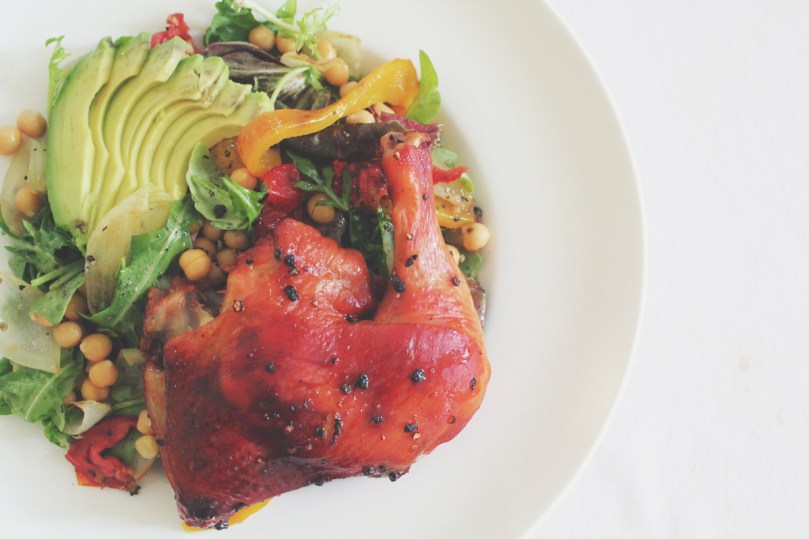
Anyway, let’s move on to the recipe shall we? It’s week two of healthy eating, and I’ve got a yummy salad for you that you can pair up with any kind of meat be it beef, chicken, or lamb – whatever tickles your fancy that is! If you’re like me, and you can’t go without meat in your diet, then whip up your favourite roast chicken to go with your salad – we roasted some whole chicken legs with my Mom’s secret and special BBQ marinade. Otherwise, you can keep the dish vegetarian or vegan friendly. We all know that avocados are loaded with heart-healthy monounsaturated fatty acids known as oleic acid. Oleic acid has been linked to reduced inflammation and has been shown to have beneficial effects on genes linked to cancer. Not only does it contain this fatty acid, it also contains minerals and vitamins such as: fibre, folate, potassium, and vitamins B5,B6, C, E, and K.

Chickpeas, also called garbanzo beans, belong to the legume family, which includes a variety of beans, peanuts, soybeans and lentils. Opting for legumes over foods high in saturated fat might lower your risk of heart disease. Chickpeas also offer specific health benefits, and consuming them regularly boosts your intake of a few key nutrients such as: protein, fibre, manganese, and folate. The mineral manganese helps support bone development and wound healing and also helps carry out chemical reactions important to your metabolism. Folate, or vitamin B-9, aids in new cell growth and brain cell communication and protects against genetic mutations that contribute to cancer development.

Avocado, Chickpea, & Roasted Capsicum Salad Ingredients

PREP TIME 10 MINS | COOKING TIME 10 MINS | SERVES 5-6

INGREDIENTS

  • 2 avocados, peeled, pitted, and thinly sliced
  • 2 brown onions, peeled and quartered
  • 1 can (400g) chickpeas in water, drained
  • 1 packet (250g) mixed salad greens
  • 1 packet (150g) semi-dried tomatoes, halved, oil reserved
  • 1 yellow capsicum
  • Balsamic vinegar
  • Ground salt and black pepper, to taste
  • Olive Oil

METHOD

  1. Rub the yellow capsicum with a little bit of oil and place directly on open flame of gas stove. Rotate occasionally so that the capsicum blisters and chars on all sides. Once done, set aside to cool down. Peel the skin off and cut into strips once it has cooled down enough to handle. Add to a large mixing bowl.
  2. Blanch the chickpeas in boiling water for about 5 minutes. Drain and add to the large mixing bowl together with the roast capsicum strips.
  3. Heat olive oil in a small frying pan over medium-high. Add the onions and cook until soft and caramelised. Once done, transfer to the large mixing bowl.
  4. Add the semi-dried tomatoes together with its herbed oil, mixed salad greens, and balsamic vinegar. Season with a touch of ground salt and black pepper and give it a good toss until well coated. Transfer to a serving dish and top with the sliced avocados.
  5. Serve and enjoy!

Avocado, Chickpea, & Roasted Capsicum Salad

Avocado, Chickpea, & Roasted Capsicum Salad with Roast BBQ Chicken

BON APPÉTIT

– Ally xx
myTaste.com

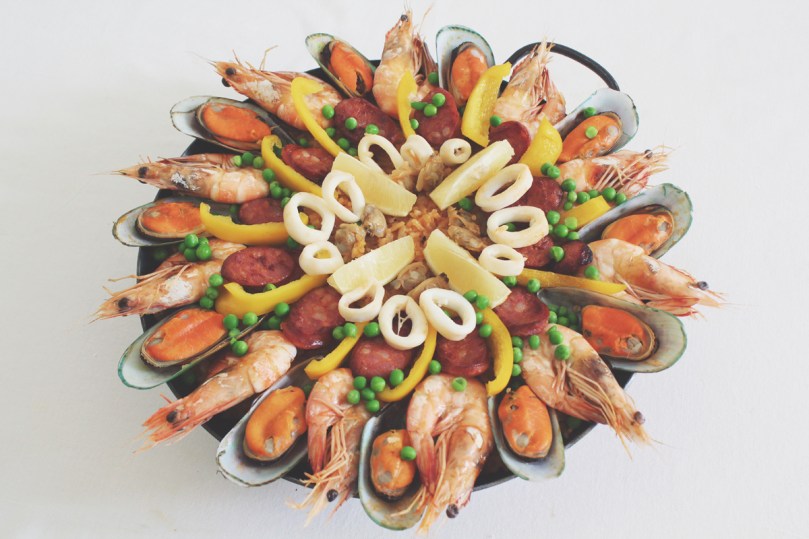
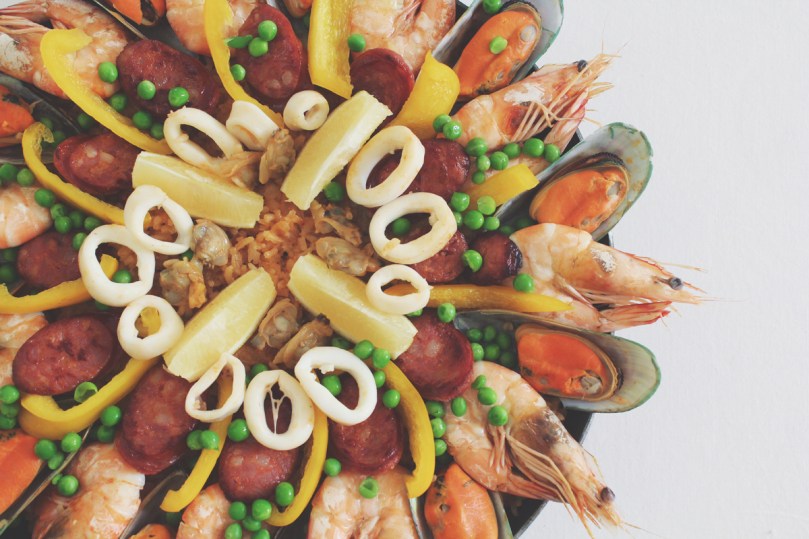
Paella de Marisco (Seafood Paella)

Paella de Marisco (Seafood Paella)

Hello Everyone! Maligayang Pasko! Joyeux Noël! ¡Feliz Navidad! Vrolijk Kerstfeest! And a very Merry Christmas to my family, friends and followers from all around the world! It’s weird knowing that Christmas  Day is coming to an end, and that the New Year is just around the corner! The year definitely went by real quick! Anyway, tonight will by my last post for the year (maybe) and it is also the very last post for my Festive Filipino Foods series for the blog. Day 12 of 12 is finally here and I have definitely saved the best for last!

If you weren’t able to guess from the hints I dropped in yesterday’s post, tonight’s dish is a Valencian rice dish with ancient roots that originated in its modern form in the mid-19th century near Albufera lagoon on the east coast of Spain adjacent to the city of Valencia. The dish is highly regarded as Spain’s National Dish with various types ranging from Vegetarian/Vegan Paella (Paella de Verduras), Seafood Paella (Paella de Marisco), Mixed Paella (Paella Mixta), and many, many more variants! From the name of this blog, you’ll already know what type of Paella I’ll be covering tonight, but now that I look back and think about my dish, it can actually be a Paella Mixta because what I will be sharing with you tonight is a free-style combination of land animals (well mainly processed pork in the form of a chorizo sausage), seafood, and vegetables.

According to tradition in Valencia, Paella is cooked over an open fire, fueled by orange and pine branches along with pine cones. This produces an aromatic smoke which infuses the Paella. It is cooked in a special wide-flat pan called a Paellera, and dinner guests traditionally eat directly out of the pan as well. Since paellera’s aren’t commonly found, or if you don’t have one handy, the recipe method below will show you how you can still make paella in a normal cooking pot. The last time I made Paella was back in 2012 if I’m not mistaken. I cooked it up together with my then housemate Vanessa and shared it with a friend of mine and her mother one cold wintery evening. We cooked it in a large frying pan and even served it up in that pan!

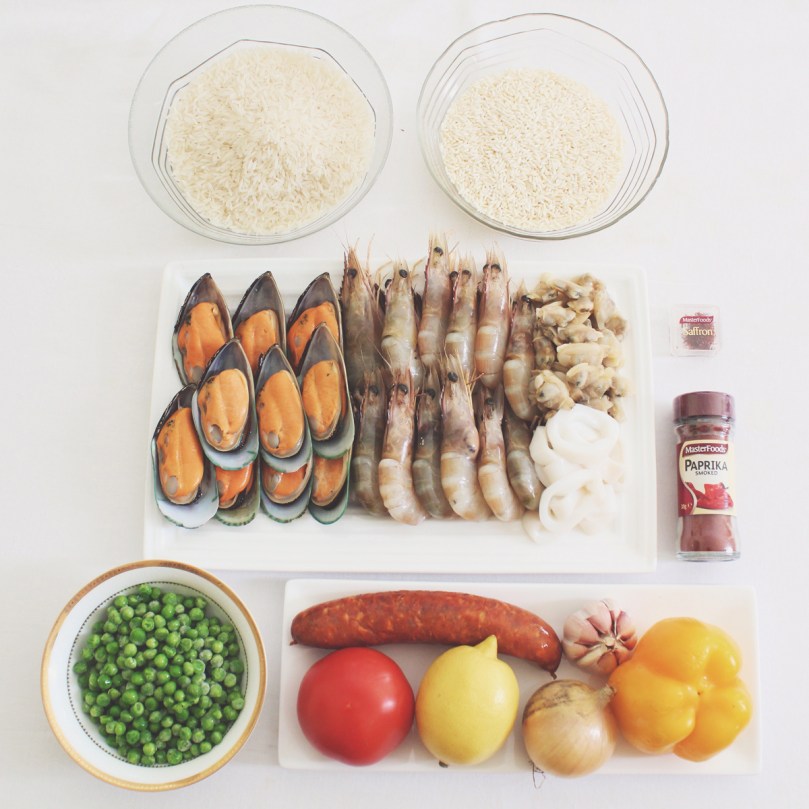
Paella de Marisco (Seafood Paella) Ingredients

Paella de Marisco (Seafood Paella) Ingredients

PREP TIME 20 MINS | COOKING TIME 30-40 MINS | SERVES 8-10

INGREDIENTS

  • 2 cups plain medium-grain rice, washed and drained
  • 1 cup glutinous rice, washed and drained
  • 1 cup frozen green peas
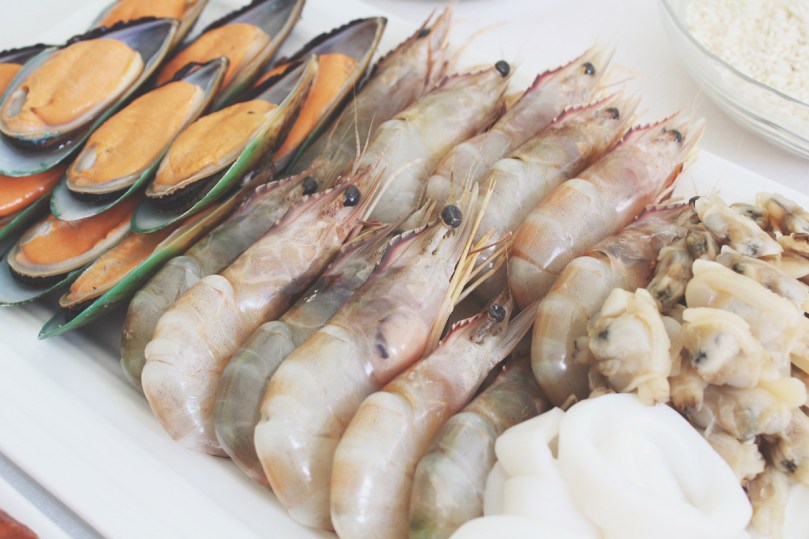
  • 300g fresh or frozen mussels
  • 200g fresh prawns, peeled and deveined, peels and heads reserved
  • 150g fresh or frozen baby clam meat
  • 100g squid, cleaned and cut into rings
  • 4-5 garlic cloves, minced
  • 2-3 dried bay leaves
  • 1 brown onion, diced
  • 1 chorizo sausage, sliced diagonally
  • 1 large tomato, diced
  • 1 lemon, cut into wedges
  • 1 yellow capsicum, sliced
  • 1 tbsp smoked paprika
  • Ground salt and black pepper, to taste
  • Pinch of Saffron threads
  • Whole black peppercorns

METHOD

  1. Start by making the broth to flavour your paella by adding the prawn heads and peels to a medium-sized pot and cover with about a litre and a half of water. Season with a bit of salt, bay leaves, and whole black peppercorns. Bring to a boil over high heat and then turn it down to a slow simmer. Make sure to press down on the heads and peels as it simmers away to extract as much flavour as you can. Leave it to simmer for about 30 minutes. Once done, turn the heat off and set aside.
  2. Heat about 2-3 tablespoons of oil in a large pot over medium-high, and panfry the chorizo slices until browned, about a minute per side. Remove and transfer to a plate lined with a paper towel to soak up any excess oil.
  3. In the same pot, sauté the garlic until fragrant and golden brown. Add in the onions and cook until soft, about 2-3 minutes altogether. Follow with the diced tomatoes and cook until soft, a further 3-4 minutes.
  4. Add in the rice, paprika, saffron threads, and season with and bit of ground salt and black pepper. Give it a good mix before adding about 3 cups of the prawn stock. Cover and leave it to cook without stirring – at this point, you may want to turn your heat down to medium to avoid the rice sticking to the bottom of the pan. Leave it alone for about 15 minutes or once the rice has absorbed most of the liquid.
  5. Turn the heat down to low, and add the seafood (if you are going to serve it up in the pot you cooked it in, then I suggest that you arrange your seafood in a presentable way, if not, then you can just chuck them in and arrange it later when you transfer your paella to a serving dish). Cover and leave it to cook/bake for a further 15 minutes, or until the seafood is cooked through. Add the vegetables and chorizo slices and cook for a further 5 minutes, after which you can turn the heat off and leave it in the pot for a further 5-10 minutes before serving.
  6. Serve immediately with a fresh squeeze of lemon, and enjoy amongst family and friends!

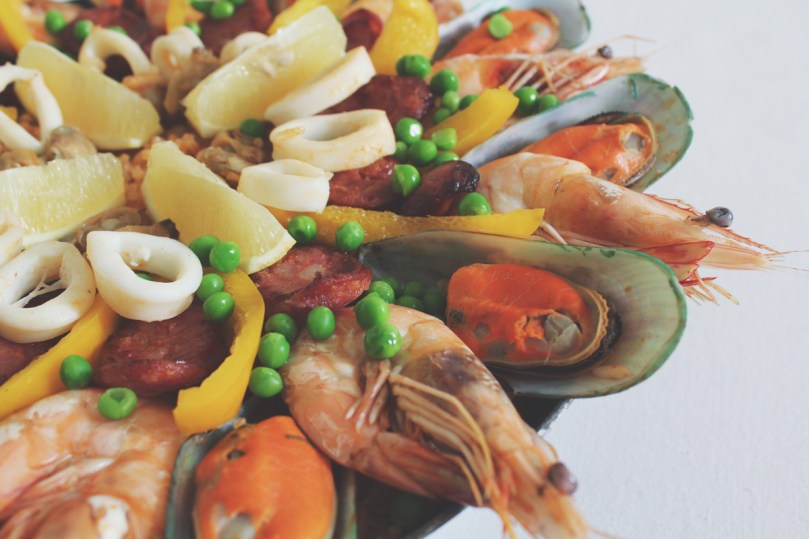
Paella de Marisco (Seafood Paella)

Paella de Marisco (Seafood Paella)

Paella de Marisco (Seafood Paella)

BON APPÉTIT

– Ally xx
ps: I may or may not actually post up two more festive recipes, depending if I have time to write them up from tomorrow onwards before the New Year kicks in.

myTaste.com

Callos a la Madrileña (Ox Tripe Stew)

Callos a la Madrileña (Ox Tripe Stew)

Hello Everyone! Sadly, we’re nearing the end of our 12 days before Christmas special on the blog. How will you be spending your Christmas Eve tomorrow? I know where I’ll be – in the kitchen whipping up food with my Mom for our Noche Buena; and when I’m not cooking, I’ll most likely be taking a relaxed 2-day off doing absolutely nothing… Maybe. I can’t exactly sit around and do nothing. Heck, I’m evening writing this post while watching The Incredibles on TV and I was just talking to my Mom about how this movie never gets old – I still love watching it to date.

Anyway, time to get off the tangent wagon and get down to tonight’s recipe. It is basically a stew that is common and traditional to Madrid, well known as Callos a la Madrileña, or Callos for short. The stew consists of ox tripe, ox feet (or shank), chickpeas, blood sausage (or chorizo), and red capsicum. The tripe and feet are boiled and simmered until the texture becomes extra tender; this makes eating this dish pleasurable. It is then cooked together with the chickpeas and capsicum.

The extra tender tripe and fat from the ox feet literally melts in your mouth while the luscious taste of chorizo and bacon lingers around – inviting you to try more. Though it looks and sounds enticing (which it does), moderation is still recommended because of the high fat and cholesterol content of this dish. It is good to enjoy food but it is better to enjoy life. — Vanjo Merano from Panlasang Pinoy

Ox feet is rarely found in stores/markets here in Brunei – they’re always sold out even if you go extra early in the morning. My guess is that restaurants who use this part of the cow have already reserved it. Anyway, you can substitute it for veal (beef) shanks, however, you won’t get the same feeling of the melt-in-your-mouth fat as you do from ox feet.

Callos a la Madrileña (Ox Tripe Stew) Ingredients

PREP TIME 15 MINS | COOKING TIME 2 HOURS | SERVES 6-8

INGREDIENTS

  • 500g ox tripe, washed and cleaned
  • 500g beef shank
  • 250g bacon
  • 1 can (240g) chickpeas/garbanzos, drained
  • 6 pcs dried bay leaves
  • 2-3 garlic cloves, minced
  • 2 red bird’s eye chillies (optional)
  • 1 brown onion, diced
  • 1 chorizo sausage, sliced diagonally
  • 1 red capsicum, cut into strips
  • 1 tomato, diced
  • 1 tbsp tomato paste
  • Ground salt and black pepper, to taste
  • Whole black peppercorns

METHOD

  1. Add the beef tripe, 3 bay leaves, salt and a generous pinch of whole black peppercorns to a large pot filled with water. Boil for about an hour and a half, or until tender. Do the same for the beef shank in a separate pot. Once done, turn he heat off and leave the meat in the broth for an extra half hours. Remove from the broth and slice both the meats into bit-sized pieces. Discard the liquids from the tripe, but reserve the beef shank broth for later.
  2. Heat a large frying pan over medium-high and add the bacon in, frying until crisp, about 2-3 minutes per side perhaps (or more). Remove from the pan and set aside to cool down a bit before cutting them into smaller pieces.
  3. If there isn’t enough oil produced from the fat of the bacon when you fried it, add about a tablespoon more of oil and fry the chorizo slices until browned, about a minute or two per side. Once done, remove from the frying pan and set aside on a plate lined with a paper towel to soak up any excess oils.
  4. In the same frying pan, sauté the garlic until fragrant and golden brown. Then, add in the onions and cook until soft, about 2-3 minutes altogether. Follow with the diced tomatoes and cook until soft, a further 3-4 minutes.
  5. Add in the tripe and shank, together with a touch of ground salt and black pepper. Give it a good mix before adding the reserved stock, tomato paste, and chillies. Bring to a boil, and cook for about 10 minutes.
  6. Add in the chickpeas/garbanzos, and carrots and cook for a further 5 minutes before adding in the capsicum, bacon bits, and chorizo slices. Give it one final mix and then turn the heat off. Leave, covered, in the pan for about 5 minutes before serving.
  7. Transfer to a serving dish and enjoy hot!

Callos a la Madrileña (Ox Tripe Stew)

Callos a la Madrileña (Ox Tripe Stew)

BON APPÉTIT

– Ally xx

myTaste.com

Lengua Estofado (Ox Tongue Braised in Tomato Sauce)

Lengua Estofado (Ox Tongue Braised in Tomato Sauce)

Hello Everyone! We’re a third of the way into our 12 days of Festive Filipino Foods, and tonight I will be sharing something a little bit unusual, and when I say unusual, I mean it’s not something that I would think to buy in the stores and cook it myself. It is rather foreign and exotic for some, where adjectives such as gross or yucky is used to describe a dish where tongue is used. I don’t recall ever having lengua before – actually, now that I’ve said that, I have had it before, but only the ones that have been sliced very thinly and  grilled at a Korean BBQ Restaurant in Sydney. If you don’t think about the fact that you are eating tongue, it actually feels like you’re having beef brisket.

Upon doing further research, I have found that many different cuisine and cultures are accustomed to ox tongue. For example, it is a major ingredient in the making of what is called tongue toast in North America, where it is used in an open-faced sandwich served for either breakfast, lunch, dinner, or as an hors d’œuvre. In Mexico, it is widely used in their burritos and tacos. Tongue is also widely prepared, and considered a delicacy in many parts of South America, Asia, and European countries including Belgium, France, Italy, Portugal, Germany, and Poland to name a few.

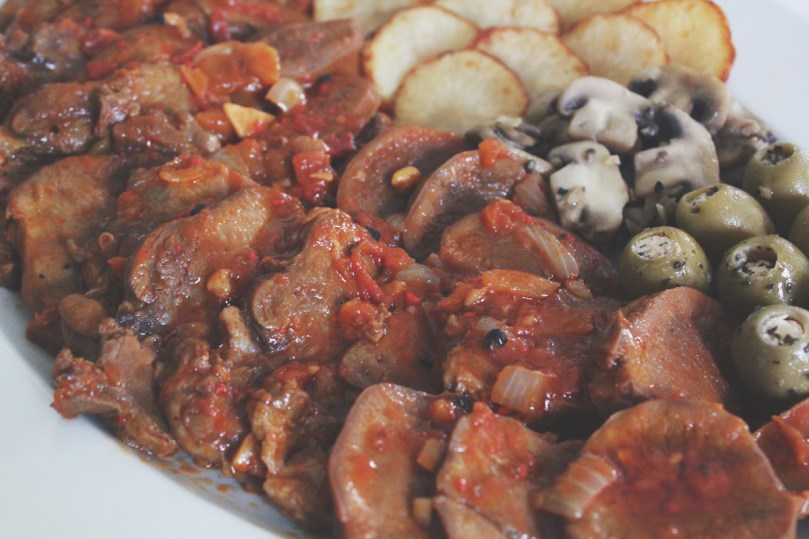
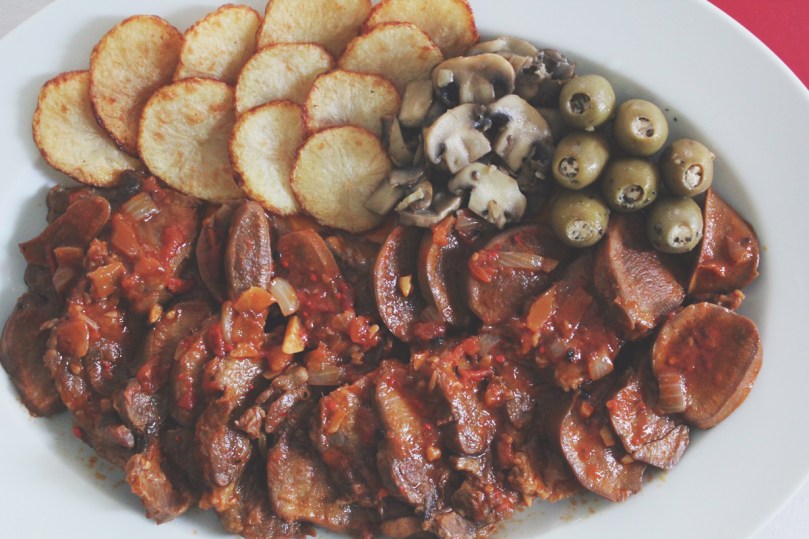
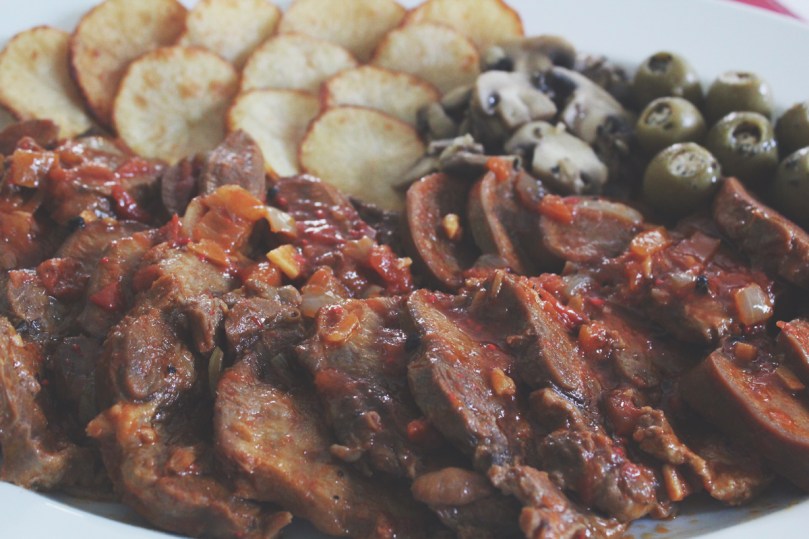
Ox (beef) tongue is often prepared by boiling the meat first in various spices, and only after that is the skin removed. It is then cooked further by either braising it in a sauce, grilling, or roasting it in the oven. Tonight, I will be sharing with you a recipe for ox tongue braised in tomato sauce, and served with some mushrooms, olives, and potatoes on the side. Estofado is a Filipino method of cooking based on Spanish influences where it involves the braising or stewing of meat like beef or pork knuckles. Sugar, garlic, soy sauce and a bay leaf are among the other ingredients added into the pot during this process. Lengua Estofado is of a Hispanic origin and has been adapted to suit the palates of Filipinos due to centuries of Spanish colonisation. Despite initial impressions of the dish being gross and yucky, it is quite a popular dish during family gatherings, especially for Noche Buena.

Lengua Estofado (Ox Tongue Braised in Tomato Sauce) Ingredients

PREP TIME 10-15 MINS | COOKING TIME 1 HOUR 35 MINS | SERVES 4-5

INGREDIENTS

  • 1kg ox tongue
  • 1 punnet (250g) cup mushrooms, sliced
  • 125g green olives stuffed with feta
  • 3 red bird’s eye chillies
  • 2-3 dried bay leaves
  • 2-3 garlic cloves, minced
  • 1 large potato, washed and sliced thinly
  • 1 large tomato
  • 1 small brown onion, diced
  • 1 tbsp tomato paste
  • Ground salt and black pepper, to taste
  • Knob of butter
  • Whole black peppercorns

METHOD

  1. Add the ox tongue, bay leaves, whole peppercorns, and salt to a large pot filled with water. Boil the ox tongue for about an hour until tender. Once done, remove from the pot and set aside to cool down a bit after which you can then peel the skin off the tongue and then slice the meat into about 1-cm thick slices. Don’t forget to reserve some of the stock for when we braise it later.
  2. Heat oil a large frying pan over medium-high and sauté the minced garlic until fragrant and golden brown. Then add in the tomatoes and cook until soft, about 2 minutes altogether. Follow with the tomatoes and cook until soft, a further 3-4 minutes.
  3. Next, add the slices of lengua and season it with a bit of ground salt and black pepper. Give it a good mix before adding about a cup and a half of the reserved stock. Bring to a boil. Once boiling, add in the tomato paste and chillies. Stir, and leave to braise for a further 30 minutes.
  4. While the tongue is braising away, heat a couple of tablespoons of oil in a medium-sized pan and fry the potato slices until golden and crispy. Transfer to a dish lined with a paper towel to absorb and excess oils. Work in batches if necessary.
  5. Remove the oil from the pan and melt the knob of butter. Add the mushroom slices in and sauté until the mushrooms are soft.
  6. Once the long is done, plate up accordingly and serve immediately. Share with the family and enjoy!

Lengua Estofado (Ox Tongue Braised in Tomato Sauce)

Lengua Estofado (Ox Tongue Braised in Tomato Sauce)

BON APPÉTIT

– Ally xx

myTaste.com

Pancit Lucban (Filipino Style Stir-Fried Thick Flour Noodles)

Pancit Lucban (Filipino Style Stir-Fried Thick Flour Noodles)

Hello Everyone! So tonight, I’m sharing with you a dish that I think I over indulged in during my recent trip back to the Philippines earlier on the year in March/April 2015. We spent a ridiculous amount of lunches and meriendas in Buddy’s while we visited our relatives in the provincial City of Lucena. Anyway, the dish, known as Pancit Lucban or Habhab, is a version of pancit that originated in the Quezon province. This noodle dish may draw many resemblances to the traditional Pancit Canton, but there are some apparent differences. The main difference is all in the type of noodles used; Pancit Lucban/Habhab uses dried flour noodles known as miki Lucban which are not the same noodles used to make pancit canton. In addition, miki Lucban noodles that are made fresh also have a much softer texture than that of pancit canton.

Here’s a fun fact for you – well okay, it’s not really a fun fact but it is quite interesting and may be one of the reasons you’d probably go out and have a handful of Pancit Lucban. That’s right, a handful. This version of pancit is traditionally served over a piece of banana leaf and is eaten without any utensils. I know what you’re thinking, how exactly do you eat noodles without any utensils?! Well, imagine eating a sandwich. You will need to grab the banana leaf with the noodles in it and put it directly to you mouth. Don’t eat the banana leaf though! Below is a picture of my cousin and my Mom back in 2008 (I think) having some Pancit Lucban from a street food vendor during a dog show/walk in Lucena:

My Mom & Cousin eating Pancit Lucban the traditional way

It’s probably not the most glamorous way to eat your noodles, but it may be an exciting experience especially to those who find this way of eating very foreign to them. Miki Lucban is unfortunately not commonly found in stores around Brunei, not even in the Filipino section. So instead, we used Pancit Canton which actually makes calling this dish Pancit Lucban a sin! *cheeky grin*

Pancit Lucban (Filipino Style Stir-Fried Thick Flour Noodles) Ingredients

PREP TIME 10 MINS | COOKING TIME 45-50 MINS | SERVES 6-8

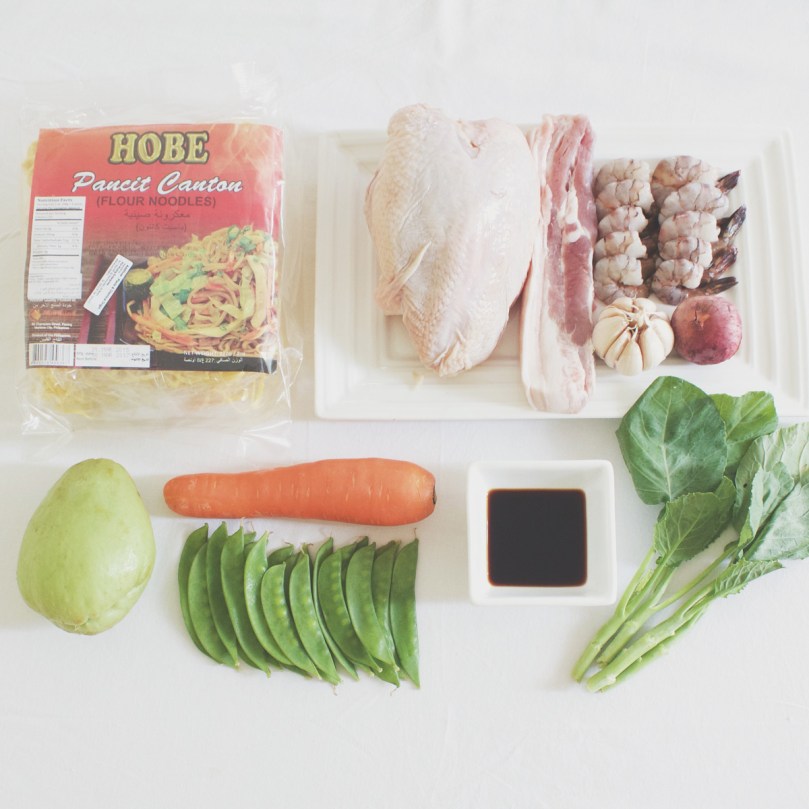
INGREDIENTS

  • 450g pancit canton (or miki Lucban if available)
  • 250g tiger prawns, shelled and deveined
  • 100g snow peas, topped and tailed
  • 3-4 dried bay leaves
  • 2-3 garlic cloves, minced
  • 2 pcs thin sliced pork belly, cut into 1cm chunks
  • 1 bunch gai lan (Chinese broccoli)
  • 1 carrot, julienned
  • 1 chicken crown, breasts removed and sliced, bone reserved
  • 1 small red onion, diced
  • 1/2 chayote, peeled and sliced
  • 5 tbsp light soy sauce
  • Ground salt and black pepper to taste
  • Whole black peppercorns

METHOD

  1. Add the reserved chicken bone, dried bay leaves, about a teaspoon or two of whole black peppercorns, and salt to a medium-sized pot filled with about 1.5L of hot/boiling water. Turn the heat up to high and leave to boil for about 30 minutes.
  2. Meanwhile heat a large frying pan over medium-high and add in the chunks of pork belly. Cook until browned. The oils released from the pork belly should be enough to sauté the garlic and cook the onions, but if needed, add a little bit more oil if there isn’t enough. Then add the minced garlic and sauté until fragrant and golden brown, about a minute, then followed by the diced onions. Cook until soft, about 2 minutes in total.
  3. Add in the sliced chicken breasts, and season with a bit of salt and ground black pepper and give it a good mix. Cook for about 5 minutes. Then add in the prawns, followed by the chayote, carrots, and snow peas. Mix well and leave to cook for a further 3-4 minutes. Lastly, add in the gai lan and cook until just slightly wilted. Once done, transfer to a bowl and set aside.
  4. In the same frying pan, add about half of the chicken stock to the pan together with the soy sauce, ground salt, and black pepper. Bring to a boil. Once boiling, add the canton noodles in and cook until all the liquid has evaporated (if the noodles are looking a bit dry, you may add more stock, a ladle at a time). Make sure that while cooking, you mix and untangle them periodically. Altogether this should take about 10-15 minutes. Halfway through, add in half of the cooked meat and vegetables to the noodles and mix well.
  5. Serve immediately topped with the extra meat and vegetables, and with calamansi, or alternatively a lemon wedge. Enjoy! Note: best served with a splash of vinegar!

This slideshow requires JavaScript.

BON APPÉTIT

– Ally xx
myTaste.com

Pancit Palabok (Filipino Style Noodles with Prawn Gravy)

Pancit Palabok (Filipino Style Noodles with Prawn Gravy)

Hello Everyone! I might keep this section of the blog short (and I say might because I know that even though I’ve said that, my post will always end up being fairly long by the time I finish writing), because I am feeling a bit overworked and tired today – actually I’ve been feeling exhausted since the beginning of the week and it may be due to a mentally challenging Escape Room challenge that I did with a few friends on Monday evening. Small tangent – we all shared the spotlight on dumb blonde moments!

Tanget aside, tonight’s recipe is a dish that I, of course as all dishes I write about, love but isn’t cooked often at home. The only reason I can think of is maybe because it requires a lot of ingredients and preparation I guess. It’s not so much about how long it takes to make the sauce because in the past, my mom would just use a ready-made powdered version of the sauce that you can easily find on the shelves in the Filipino/Asian food section of your local grocers. For tonight’s post though, I will be making the sauce from scratch just because I want to 🙂 This is also the first time that I have tried making the sauce from scratch and it was a huge success! It’s actually quite easy to make, it just requires a lot of time and patience; but I know for sure that I will not be buying ready-made sauce packets ever again! Unless of course, time is not on my side. I mean, if you’re going to use fresh prawns to top your noodles off in the end, then you might as well take an extra step in salvaging the heads and peels to make a delicious sauce, right?

Pancit Palabok (Filipino Style Noodles with Prawn Gravy)

Anyway, before we jump on to the recipe, I followed Trissalicious’ recipe for making the Palabok sauce from scratch so don’t forget to check her blog out too for her take on this delicious dish!

Pancit Palabok (Filipino Style Noodles with Prawn Gravy) Ingredients

PREP TIME 15 MINS | COOKING TIME 1 HOUR | SERVES 8-10

INGREDIENTS

For the prawn stock

  • 500g fresh prawns, heads and peels reserved
  • 1.5L water
  • Ground salt
  • Whole black peppercorns

For the sauce

  • 100g thin sliced pork belly, cut into chunks
  • 3-4 cups prawn stock (see recipe below)
  • 5 garlic cloves, minced
  • 2 small red onions, diced
  • 1 pc firm tofu, finely diced
  • 4 tbsp plain flour
  • 2-3 tbsp fish sauce, adjust quantity to taste
  • 1 tsp achuete powder
  • Ground salt and black pepper, to taste

Noodles and Toppings

  • 500 grams pancit luglug (cornstarch noodles)*
  • Firm tofu, deep fried and cut into chunks
  • Hard boiled egg, sliced
  • Pork crackling (chicharon), crushed
  • Prawns, poached
  • Smoked fish (tinapa), flaked
  • Squid, cut into rings and poached
  • Spring onion

*You may also use bihon (thin rice vermicelli noodles) for this dish

METHOD

  1. Make the prawn stock: Add the prawn heads and peels to a medium-sized pot and cover with about a litre and a half of water. Season with a bit of salt and whole black peppercorns. Bring to a boil over high heat and then turn it down to a slow simmer. Make sure to press down on the heads and peels as it simmers away to extract as much flavour as you can. Leave it to simmer for about 30 minutes. While the stock is simmering away, you can get a head start in preparing your toppings for the dish. I recommend that you leave the poaching of the prawns and squid for last, when you sauce is almost ready.
  2. Make the sauce: Heat a large frying pan over medium-high and add in the chunks of pork belly. Cook until browned. The oils released from the pork belly should be enough to sauté the garlic and cook the onions, but if needed, add a little bit more oil if there isn’t enough. Then add the minced garlic and sauté until fragrant and golden brown, about a minute, then followed by the diced onions. Cook until soft, about 2 minutes in total.
  3. Add in the firm tofu and give it a good mix. Then, add in achuete powder and plain flour, followed by the prawn stock. Make sure to add the stock in a bit at a time as if making a roux and make sure to mix well after each addition. The sauce should be quite thick, resembling the consistency of a béchamel – you may add more water if you want your sauce thinner, or likewise, add more flour if the sauce is feeling a bit thin to your liking. Add the fish sauce and season with some salt and black pepper to taste. Bring the heat down to low and let it slowly simmer away for about half an hour (10-15 minutes if you are impatient); but the longer you leave it on the stove, the tastier the sauce becomes!
  4. Cook the noodles: While your sauce is simmering away, cook the noodles according to the packer instructions, about 15 minutes for the pack of noodles that I got. Once done, drain and divide the noodles equally into individual plates. Also, don’t forget to poach your prawns and squid by this point!
  5. Assemble: Top the noodles with a generous amount of sauce and add your favourite toppings! Serve immediately with a squeeze of calamansi (or lemon) juice and enjoy!

Pancit Palabok (Filipino Style Noodles with Prawn Gravy)

Pancit Palabok (Filipino Style Noodles with Prawn Gravy)

BON APPÉTIT

– Ally xx

myTaste.com

Pancit Bihon Guisado (Filipino Style Stir-Fried Rice Noodles)

Pancit Bihon Guisado (Filipino Style Stir-Fried Rice Noodles)

Hello Everyone! It a whole new month and you already know what that means! A new month on Amcarmen’s Kitchen means a new theme, and for the month of November, I will be sharing with you guys some of my favourite noodle dishes of all time! But before I begin, I’d just like to apologise for my later than usual post – I’ve been super busy for the past three weeks with things I cannot say yet for security reasons, but yes, super busy that I am always mentally drained and find it difficult to just sit down and concentrate on writing for my blog. I’ll probably be able to tell you guys everything somewhere in February next year, but if you really want to know, you can ask me privately. If I don’t tell you, then you’re probably one of the reasons why I can’t talk about why I’ve been busy on any form of social media 😉

Anyway, noodles were first introduced into the Philippines by the Chinese, and since then, noodles have been adopted into local cuisine with endless variations, those popular being pancit bihon guisado, pancit palabok, pancit canton, pancit habhab, etc. The term pancit is actually derived from the Hokkien piān-ê-si̍t (pian i sit) which literally means convenient food. Tonight, I will be kicking it off with a noodle that has been served on our tables countless times over my childhood years up until now – Pancit Bihon Guisado!

Pancit Bihon Guisado (Filipino Style Stir-Fried Rice Noodles)

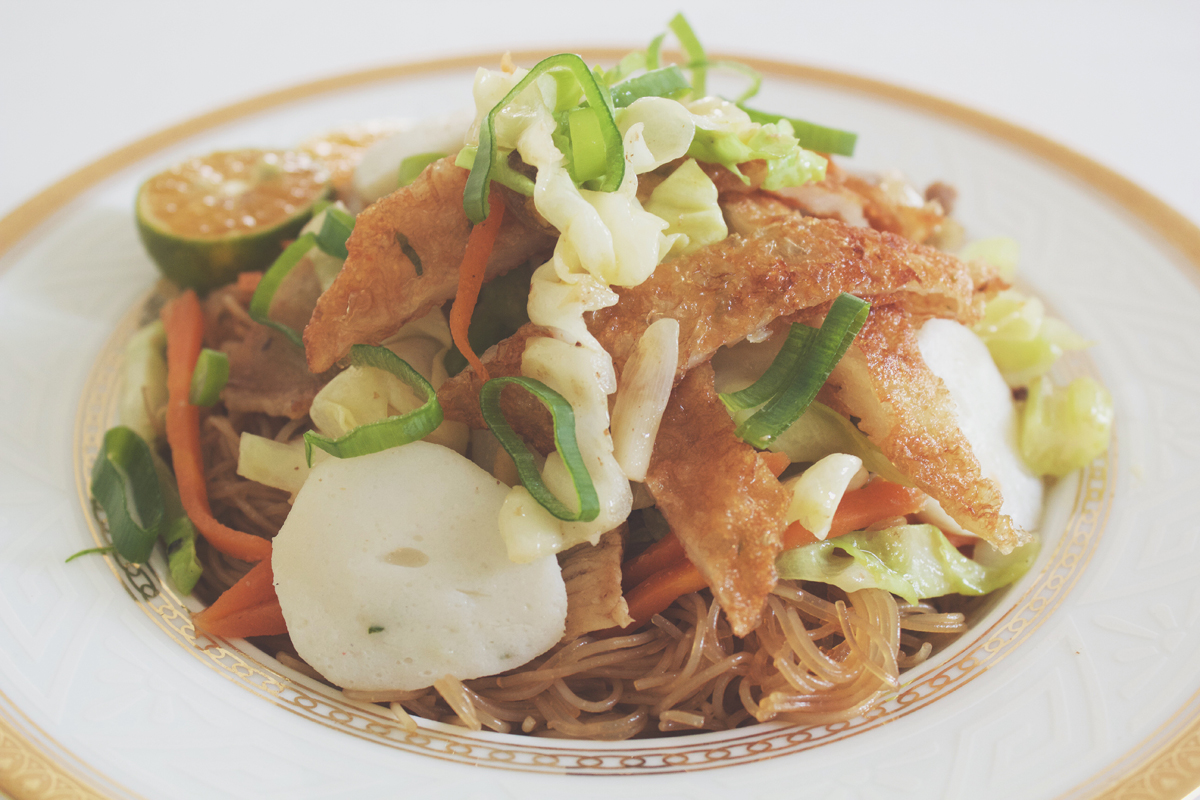
When one says pancit, it is usually associated with bihon, which is a recipe that uses very thin rice noodles, fried with soy sauce, some citrus, possibly with some fish sauce as well, and some variation of sliced meat and chopped vegetables. The composition of bihon varies quite a lot because it depends on your personal recipe. I can say that the recipe that I will be sharing with you today did even start out like this when my mom first made it for the family – the ingredients have definitely changed over the years! So don’t be afraid to improvise or get creative with the ingredients; s’long as you’ve got the base of the noodles covered with this recipe. You can even take all the meat out and replace the chicken stock with veggie stock for an all vegetarian pancit bihon guisado!

Pancit Bihon Guisado (Filipino Style Stir-Fried Rice Noodles) Ingredients

PREP TIME 15 MINS | COOKING TIME 30-45 MINS | SERVES 8-10

INGREDIENTS

  • 450g bihon noodles
  • 100g fish balls, halved
  • 100g thin fish cake, sliced diagonally
  • 3 pcs dried bay leaves
  • 2-3 garlic cloves, minced
  • 2 celery stalks, sliced
  • 2 pcs thin sliced pork belly, cut into 1cm chunks
  • 1 carrot, julienned
  • 1 chicken crown, breasts removed and sliced, bone reserved
  • 1 small brown onion, diced
  • 1/2 a head of cabbage, sliced
  • 4-5 cups chicken stock
  • 1 tbsp dark soy sauce
  • 1 tbsp fish sauce
  • 1 tbsp oyster sauce
  • Ground black pepper and salt, to taste
  • Spring onions, sliced
  • Whole black peppercorns

METHOD

  1. Add the reserved chicken bone, dried bay leaves, about a teaspoon or two of whole black peppercorns, and salt to a medium-sized pot filled with about 1.5L of hot/boiling water. Turn the heat up to high and leave to boil for about 30 minutes.
  2. Meanwhile heat a large frying pan over medium-high and add in the chunks of pork belly. Cook until browned. The oils released from the pork belly should be enough to sauté the garlic and cook the onions, but if needed, add a little bit more oil if there isn’t enough. Then add the minced garlic and sauté until fragrant and golden brown, about a minute, then followed by the diced onions. Cook until soft, about 2 minutes in total.
  3. Add in the sliced chicken breasts, fish balls, and sliced fish cakes. Season with a bit of salt and ground black pepper and give it a good mix. Cook for about 5 minutes. Then add in the carrots and celery. Mix well and leave to cook for a further 2-3 minutes. Lastly, add in the cabbage and spring onions, and cook until just slightly wilted. Once done, transfer to a bowl and set aside.
  4. In the same frying pan, add the chicken stock to the pan together with the soy sauce, fish sauce, and oyster sauce. Bring to a boil. Once boiling, add the bihon noodles in and cook until all the liquid has evaporated. Make sure that while cooking, you mix and untangle them periodically. Altogether this should take about 10 minutes. Halfway through, add in half of the cooked meat and vegetables to the noodles and mix well.
  5. Serve immediately topped with the extra meat and vegetables, and with calamansi, or alternatively a lemon wedge. Enjoy!

Pancit Bihon Guisado (Filipino Style Stir-Fried Rice Noodles)

Pancit Bihon Guisado (Filipino Style Stir-Fried Rice Noodles)

BON APPÉTIT

– Ally xx

myTaste.com

Pesang Tilapia (Tilapia in Ginger Stew)

Pesang Tilapia (Tilapia in Ginger Stew)

Hello Everyone! I’m feeling sad, are you? Well, the only reason I’m sad is because Seafood Month has come to an end! I can’t believe the month has flown by so quickly. On the bright side, we get to explore a whole new range of dishes for the month of October! I won’t say yet what I have in store for the blog, so you’ll just have to stay tuned as all will be revealed on Thursday!

Pesang Tilapia (Tilapia in Ginger Stew)

So here we go, on to our last recipe for Seafood Month: Pesang Tilapia! Apparently, frying the fish first is not the traditional method in making Pesang Isda (isda means fish in Tagalog just for those who don’t know), it is actually boiled in the ginger stew until tender, and is actually a much healthier option as opposed to frying the fish. However there are a few pros to frying the fish first, mainly for taste and also technique. Firstly, frying makes the fish and stew taste better, and secondly, frying prevents the fish from flaking, because of its stable texture ,when cooked in the stew for a long time.

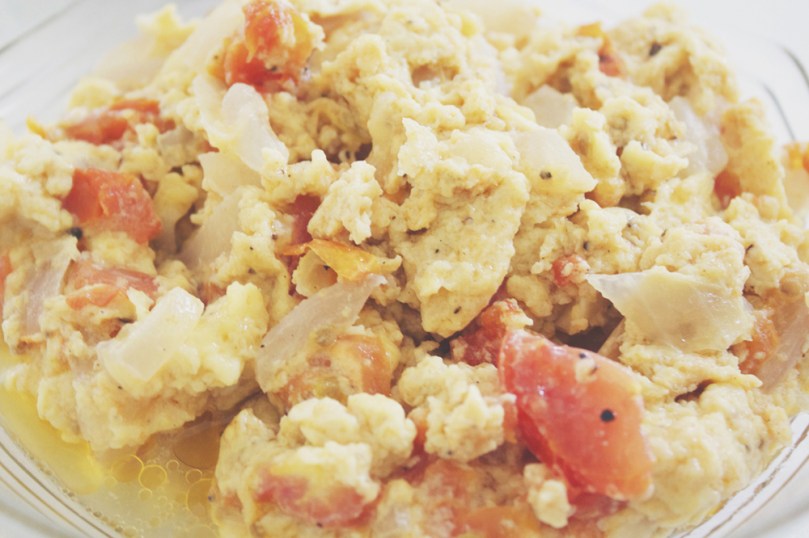
I’ve read a couple of recipes online prior to writing this post up, and a few suggestions have come up on what to serve on the side with this dish. One of the most popular is having some miso sauce as a condiment. I usually just have some fish sauce and calamansi mixed together as a condiment. I’ve also tried searching around for recipes that make any mention of serving this dish with some filo-style scrambled eggs but I haven’t seen any. Nonetheless, it actually tastes really good having the scrambled eggs together with the fish!

Pesang Tilapia (Tilapia in Ginger Stew) Ingredients

PREP TIME 5 MINS | COOKING TIME 20-22 MINS | SERVES 4

INGREDIENTS

For the ginger stew

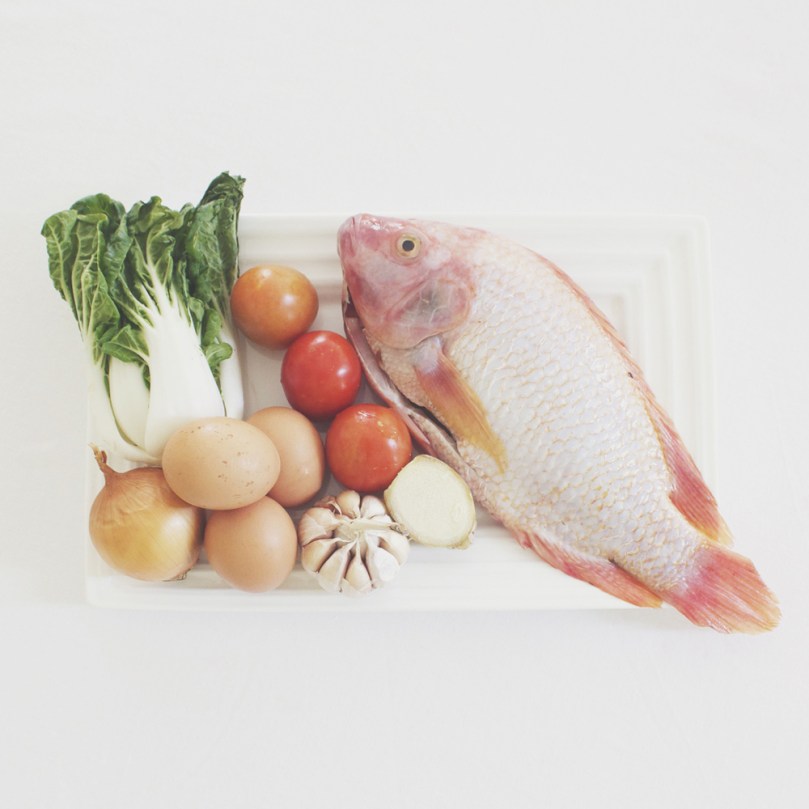
  • 800g whole tilapia fish, scaled, gutted and cleaned*
  • 1L water
  • 2-3 bunches of baby bok choy or pechay, cleaned and ends removed
  • 2-3 garlic cloves, minced
  • 1 brown onion, sliced
  • 1 thumb-sized ginger, peeled and sliced
  • 1/2 cup vegetable oil, for shallow frying
  • Ground salt and black pepper to taste

*Alternatively you can use any other types of fish such as catfish, grouper, mudfish, and/or seabass. I know some people who can’t eat fish if it’s still whole; you can still cook this dish with fish cutlets or fillets.

For the Filipino-style scrambled eggs

  • 3 large free range eggs, beaten
  • 3 small ripe tomatoes, diced
  • 2 garlic cloves, minced
  • 1 brown onion, sliced
  • 2 tbsp vegetable oil
  • 1 tsp black peppercorns
  • Ground salt to taste

METHOD

  1. Heat the vegetable oil in a large frying pan over medium-high. Season the fish by rubbing some salt and black pepper. Once the oil is hot, fry the fish until golden brown. Once browned, flip and fry the other side of the fish, about 6-7 minutes per side. Once done, transfer the fish to a serving dish.
  2. Discard the oil, leaving behind about a tablespoon or two, and in the same pan, fry the ginger slices until fragrant. Add in the garlic and sauté until fragrant and golden brown. Finally, add in the onions and cook until soft, about 2 minutes altogether. Then add the water, whole pepper corns and salt, and bring the stew to a boil.
  3. While the stew is simmering away, move on to making your scrambled eggs. Heat the vegetable oil in a small frying pan over medium-high. Sauté the garlic until fragrant and golden brown. Add in the onions and cook until soft, about 2 minutes. Then add in the tomatoes, salt, and black pepper. Cook until the tomatoes are soft.
  4. Once the tomatoes are soft, pour in the beaten eggs and stir with a spoon, lifting and folding it over from the bottom of the pan, until the eggs are softly set and slightly runny in places. Turn the heat off and leave the eggs for a few seconds to finish cooking. Give a final stir before serving.
  5. Turn the heat off from the ginger stew and add the baby bok choy, leaving to cook for about a minute. Pour the stew over the fried fish and serve immediately with some steamed rice and the scrambled eggs. Enjoy!

Pesang Tilapia (Tilapia in Ginger Stew)

Sautéed Egg for Pesang Tilapia (Tilapia in Ginger Stew)

BON APPÉTIT

– Ally xx

myTaste.com

Calamari Stir-fry with Snow Peas & Ginger

Calamari Stir-fry with Snow Peas & Ginger

Hello Everyone! I’m feeling slightly better than I was on Tuesday, but I’m still trying to battle neck pains and a cough that has been giving me an abdominal workout; I just thought I’d let you know how I’m feeling since I mentioned on Tuesday’s post that I was coming down with a cold. I spent the whole of yesterday trying not to move as my back and arms were killing me. Also, I didn’t have much of an appetite as I realised that I didn’t finish every meal that I had yesterday. Otherwise, the fact that I can speak now makes me happy!

Calamari Stir-fry with Snow Peas & Ginger

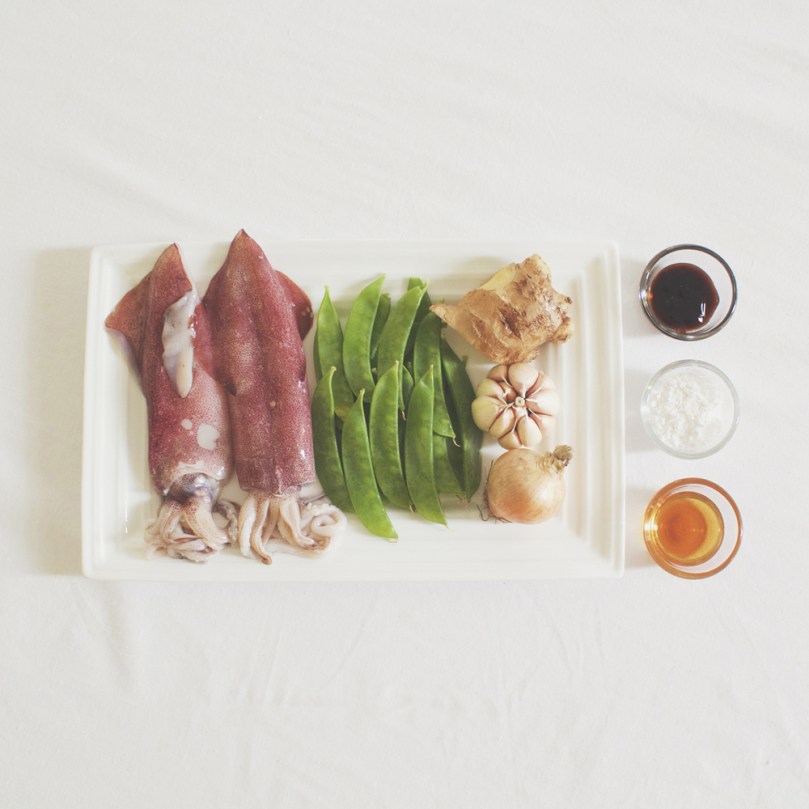
Anyway, all that aside, I realised that I still had some squid leftover in the freezer from the time I whipped up those Chorizo-stuffed Squids and my dressed up glass noodle salad known as Yum Woon Sen (ยำวุ้นเส้น). So I decided to make use of them before I’d forget about them and then they’ll end up in the back of the freezer, lost and forgotten for months. Today’s recipe is based on a recipe card that I picked up from the Sydney Fish Markets the time my family came over to visit; it is a simple squid stir-fry paired with some crispy snow peas, flavoured with lots of ginger. Since I wasn’t feeling too well, my Mom did all the preparations and I just threw everything together in the frying pan.

Calamari Stir-fry with Snow Peas & Ginger Ingredients

PREP TIME 10 MINS | COOKING TIME 6 MINS | SERVES 2

INGREDIENTS

  • 250g large squid, cleaned and cut into pieces
  • 100g snow peas, topped and tailed
  • 2-3 garlic cloves, minced
  • 1 small-sized onion, sliced
  • 1 thumb-sized ginger, peeled and sliced
  • 1/2 cup water
  • 1 tbsp oyster sauce
  • 1 tsp cornflour, mixed with 1 tsp water
  • 1 tsp sesame oil
  • Ground salt and black pepper to taste

METHOD

  1. Lightly score the inner surface of the squid, or alternatively, cut into rings.
  2. Heat some vegetable in a medium-sized frying pan over medium-high. Add in the ginger slices and fry until fragrant. Then add in the garlic, sautéing until fragrant and golden brown. Finally, add the onions in and cook until soft, altogether about 2 minutes.
  3. Add the in the snow peas and stir-fry for about a minute.
  4. Throw in the squid, seasoning with a bit of salt and pepper. Stir for about a minute and then add in the water, cornflour mixture, oyster sauce, and sesame oil. Give it a good mix and leave to cook for a further 2 minutes.
  5. Serve immediately with some steamed rice. Enjoy!

Calamari Stir-fry with Snow Peas & Ginger

BON APPÉTIT

– Ally xx

myTaste.com