Pancit Palabok (Filipino Style Noodles with Prawn Gravy)

Pancit Palabok (Filipino Style Noodles with Prawn Gravy)

Hello Everyone! I might keep this section of the blog short (and I say might because I know that even though I’ve said that, my post will always end up being fairly long by the time I finish writing), because I am feeling a bit overworked and tired today – actually I’ve been feeling exhausted since the beginning of the week and it may be due to a mentally challenging Escape Room challenge that I did with a few friends on Monday evening. Small tangent – we all shared the spotlight on dumb blonde moments!

Tanget aside, tonight’s recipe is a dish that I, of course as all dishes I write about, love but isn’t cooked often at home. The only reason I can think of is maybe because it requires a lot of ingredients and preparation I guess. It’s not so much about how long it takes to make the sauce because in the past, my mom would just use a ready-made powdered version of the sauce that you can easily find on the shelves in the Filipino/Asian food section of your local grocers. For tonight’s post though, I will be making the sauce from scratch just because I want to 🙂 This is also the first time that I have tried making the sauce from scratch and it was a huge success! It’s actually quite easy to make, it just requires a lot of time and patience; but I know for sure that I will not be buying ready-made sauce packets ever again! Unless of course, time is not on my side. I mean, if you’re going to use fresh prawns to top your noodles off in the end, then you might as well take an extra step in salvaging the heads and peels to make a delicious sauce, right?

Pancit Palabok (Filipino Style Noodles with Prawn Gravy)

Anyway, before we jump on to the recipe, I followed Trissalicious’ recipe for making the Palabok sauce from scratch so don’t forget to check her blog out too for her take on this delicious dish!

Pancit Palabok (Filipino Style Noodles with Prawn Gravy) Ingredients

PREP TIME 15 MINS | COOKING TIME 1 HOUR | SERVES 8-10

INGREDIENTS

For the prawn stock

  • 500g fresh prawns, heads and peels reserved
  • 1.5L water
  • Ground salt
  • Whole black peppercorns

For the sauce

  • 100g thin sliced pork belly, cut into chunks
  • 3-4 cups prawn stock (see recipe below)
  • 5 garlic cloves, minced
  • 2 small red onions, diced
  • 1 pc firm tofu, finely diced
  • 4 tbsp plain flour
  • 2-3 tbsp fish sauce, adjust quantity to taste
  • 1 tsp achuete powder
  • Ground salt and black pepper, to taste

Noodles and Toppings

  • 500 grams pancit luglug (cornstarch noodles)*
  • Firm tofu, deep fried and cut into chunks
  • Hard boiled egg, sliced
  • Pork crackling (chicharon), crushed
  • Prawns, poached
  • Smoked fish (tinapa), flaked
  • Squid, cut into rings and poached
  • Spring onion

*You may also use bihon (thin rice vermicelli noodles) for this dish

METHOD

  1. Make the prawn stock: Add the prawn heads and peels to a medium-sized pot and cover with about a litre and a half of water. Season with a bit of salt and whole black peppercorns. Bring to a boil over high heat and then turn it down to a slow simmer. Make sure to press down on the heads and peels as it simmers away to extract as much flavour as you can. Leave it to simmer for about 30 minutes. While the stock is simmering away, you can get a head start in preparing your toppings for the dish. I recommend that you leave the poaching of the prawns and squid for last, when you sauce is almost ready.
  2. Make the sauce: Heat a large frying pan over medium-high and add in the chunks of pork belly. Cook until browned. The oils released from the pork belly should be enough to sauté the garlic and cook the onions, but if needed, add a little bit more oil if there isn’t enough. Then add the minced garlic and sauté until fragrant and golden brown, about a minute, then followed by the diced onions. Cook until soft, about 2 minutes in total.
  3. Add in the firm tofu and give it a good mix. Then, add in achuete powder and plain flour, followed by the prawn stock. Make sure to add the stock in a bit at a time as if making a roux and make sure to mix well after each addition. The sauce should be quite thick, resembling the consistency of a béchamel – you may add more water if you want your sauce thinner, or likewise, add more flour if the sauce is feeling a bit thin to your liking. Add the fish sauce and season with some salt and black pepper to taste. Bring the heat down to low and let it slowly simmer away for about half an hour (10-15 minutes if you are impatient); but the longer you leave it on the stove, the tastier the sauce becomes!
  4. Cook the noodles: While your sauce is simmering away, cook the noodles according to the packer instructions, about 15 minutes for the pack of noodles that I got. Once done, drain and divide the noodles equally into individual plates. Also, don’t forget to poach your prawns and squid by this point!
  5. Assemble: Top the noodles with a generous amount of sauce and add your favourite toppings! Serve immediately with a squeeze of calamansi (or lemon) juice and enjoy!

Pancit Palabok (Filipino Style Noodles with Prawn Gravy)

Pancit Palabok (Filipino Style Noodles with Prawn Gravy)

BON APPÉTIT

– Ally xx

myTaste.com

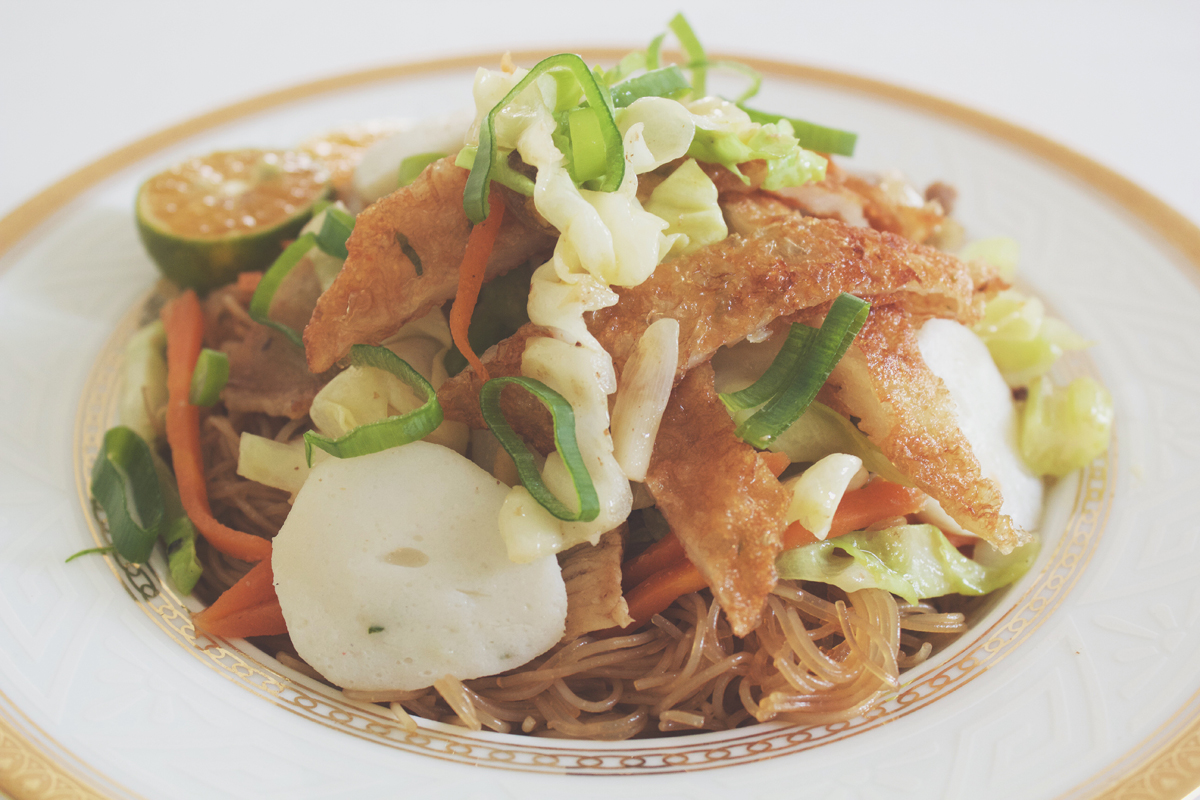
Pancit Bihon Guisado (Filipino Style Stir-Fried Rice Noodles)

Pancit Bihon Guisado (Filipino Style Stir-Fried Rice Noodles)

Hello Everyone! It a whole new month and you already know what that means! A new month on Amcarmen’s Kitchen means a new theme, and for the month of November, I will be sharing with you guys some of my favourite noodle dishes of all time! But before I begin, I’d just like to apologise for my later than usual post – I’ve been super busy for the past three weeks with things I cannot say yet for security reasons, but yes, super busy that I am always mentally drained and find it difficult to just sit down and concentrate on writing for my blog. I’ll probably be able to tell you guys everything somewhere in February next year, but if you really want to know, you can ask me privately. If I don’t tell you, then you’re probably one of the reasons why I can’t talk about why I’ve been busy on any form of social media 😉

Anyway, noodles were first introduced into the Philippines by the Chinese, and since then, noodles have been adopted into local cuisine with endless variations, those popular being pancit bihon guisado, pancit palabok, pancit canton, pancit habhab, etc. The term pancit is actually derived from the Hokkien piān-ê-si̍t (pian i sit) which literally means convenient food. Tonight, I will be kicking it off with a noodle that has been served on our tables countless times over my childhood years up until now – Pancit Bihon Guisado!

Pancit Bihon Guisado (Filipino Style Stir-Fried Rice Noodles)

When one says pancit, it is usually associated with bihon, which is a recipe that uses very thin rice noodles, fried with soy sauce, some citrus, possibly with some fish sauce as well, and some variation of sliced meat and chopped vegetables. The composition of bihon varies quite a lot because it depends on your personal recipe. I can say that the recipe that I will be sharing with you today did even start out like this when my mom first made it for the family – the ingredients have definitely changed over the years! So don’t be afraid to improvise or get creative with the ingredients; s’long as you’ve got the base of the noodles covered with this recipe. You can even take all the meat out and replace the chicken stock with veggie stock for an all vegetarian pancit bihon guisado!

Pancit Bihon Guisado (Filipino Style Stir-Fried Rice Noodles) Ingredients

PREP TIME 15 MINS | COOKING TIME 30-45 MINS | SERVES 8-10

INGREDIENTS

  • 450g bihon noodles
  • 100g fish balls, halved
  • 100g thin fish cake, sliced diagonally
  • 3 pcs dried bay leaves
  • 2-3 garlic cloves, minced
  • 2 celery stalks, sliced
  • 2 pcs thin sliced pork belly, cut into 1cm chunks
  • 1 carrot, julienned
  • 1 chicken crown, breasts removed and sliced, bone reserved
  • 1 small brown onion, diced
  • 1/2 a head of cabbage, sliced
  • 4-5 cups chicken stock
  • 1 tbsp dark soy sauce
  • 1 tbsp fish sauce
  • 1 tbsp oyster sauce
  • Ground black pepper and salt, to taste
  • Spring onions, sliced
  • Whole black peppercorns

METHOD

  1. Add the reserved chicken bone, dried bay leaves, about a teaspoon or two of whole black peppercorns, and salt to a medium-sized pot filled with about 1.5L of hot/boiling water. Turn the heat up to high and leave to boil for about 30 minutes.
  2. Meanwhile heat a large frying pan over medium-high and add in the chunks of pork belly. Cook until browned. The oils released from the pork belly should be enough to sauté the garlic and cook the onions, but if needed, add a little bit more oil if there isn’t enough. Then add the minced garlic and sauté until fragrant and golden brown, about a minute, then followed by the diced onions. Cook until soft, about 2 minutes in total.
  3. Add in the sliced chicken breasts, fish balls, and sliced fish cakes. Season with a bit of salt and ground black pepper and give it a good mix. Cook for about 5 minutes. Then add in the carrots and celery. Mix well and leave to cook for a further 2-3 minutes. Lastly, add in the cabbage and spring onions, and cook until just slightly wilted. Once done, transfer to a bowl and set aside.
  4. In the same frying pan, add the chicken stock to the pan together with the soy sauce, fish sauce, and oyster sauce. Bring to a boil. Once boiling, add the bihon noodles in and cook until all the liquid has evaporated. Make sure that while cooking, you mix and untangle them periodically. Altogether this should take about 10 minutes. Halfway through, add in half of the cooked meat and vegetables to the noodles and mix well.
  5. Serve immediately topped with the extra meat and vegetables, and with calamansi, or alternatively a lemon wedge. Enjoy!

Pancit Bihon Guisado (Filipino Style Stir-Fried Rice Noodles)

Pancit Bihon Guisado (Filipino Style Stir-Fried Rice Noodles)

BON APPÉTIT

– Ally xx
myTaste.com

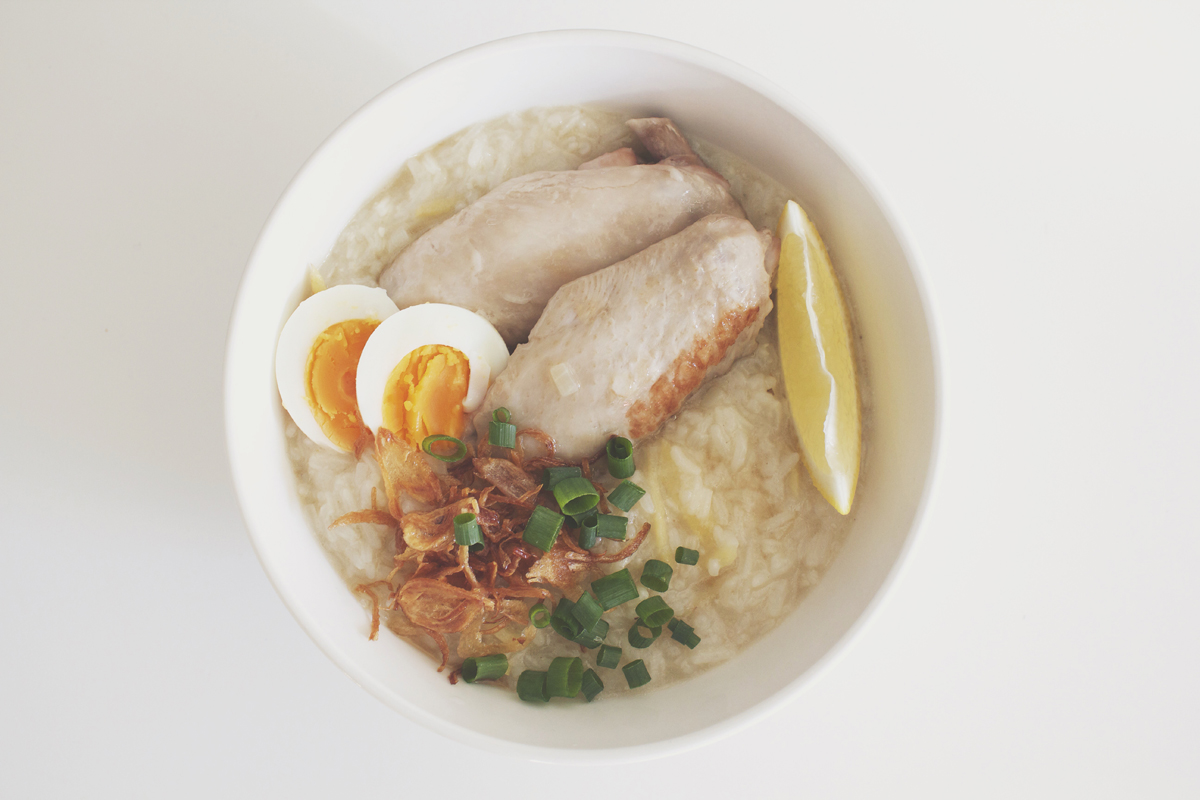
Arroz Caldo (Chicken Rice Porridge)

Arroz Caldo (Chicken Rice Porridge)

Hello Everyone! Today’s recipe is a dish that is quite well-known in the family, and across the Philippines I presume, as the go to dish when someone is feeling under the weather. In our house, you’d know when someone is sick with the flu when you see this dish on the table for everyone to eat; yes that’s right, you don’t have to be the sick one to have a bowl of arroz caldo! However, besides it well-known as the go to dish for the sick, arroz caldo is also a common breakfast dish as it can be quite filling, providing you with the energy that you’d need to last you until lunch time. It can also be a snack (merienda) dish with tokwa’t baboy (a dish composed of boiled pig’s ears and/or pork belly, and fried tofu with a vinegar, soy sauce, and chilli dip on the side).

Arroz Caldo is actually of Chinese origin as it draws resemblance to a type of risotto-like congee. The name of this dish however, was given by the Spaniards due to pronunciation issues. The dish is also similar to other Filipino porridges such as lugaw and goto, the only distinguishing ingredient would be that arroz caldo mainly uses chicken while goto requires the use of tripe, beef, and innards. Lugaw on the other hand, is as plain as it can get.

So I made this dish back when I was in Sydney, a few weeks before I left in early August. I was staying at Marissa’s place for the time I was there and we both fell ill at one point during my stay. I can’t quite remember who fell sick first and who gave who the sickness, but all I remembered was that I made this dish for the both of us. I even told her the story behind this dish and she even made mention that they have a similar Vietnamese dish known as Cháo Ga (also fed to those who were feeling under the weather).

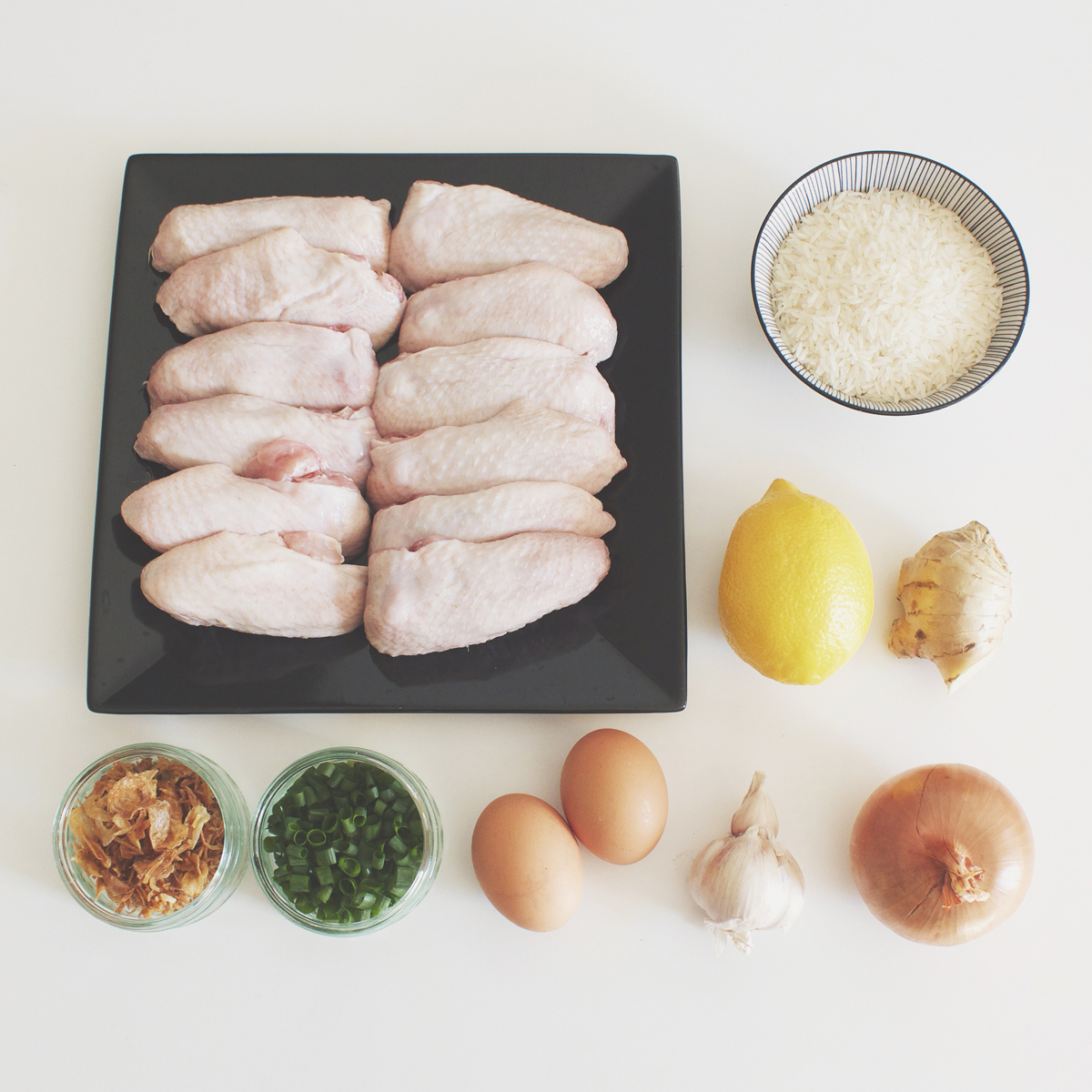
Arroz Caldo (Chicken Rice Porridge) Ingredients

PREP TIME 10 MINS | COOKING TIME 45 MINS | SERVES 4-6

INGREDIENTS

  • 500g chicken mid-wings, washed and cleaned
  • 1.5L water
  • 2 cups rice, uncooked and washed
  • 4 large free range eggs, hard-boiled and sliced
  • 2-3 garlic cloves, minced
  • 1 large brown onion, sliced
  • 1 lemon (or calamansi if available)
  • 1 thumb-sized ginger, julienned
  • 2 tbsp fish sauce
  • 2 tbsp vegetable oil
  • 2 tsp chicken stock powder
  • Ground black pepper to taste
  • Crispy fried shallots
  • Spring onions, sliced

METHOD

  1. Heat the vegetable oil in a large pot over medium-high. Add the ginger and fry until fragrant, then add in the garlic, sautéing until fragrant and golden brown. Then add in the onions and cook until soft, altogether about 2-3 minutes.
  2. Add the chicken mid-wings to the pot and season with the chicken stock powder and ground black pepper. Give it a good mix and cook for about 6-8 minutes or until the outer layer of the chicken starts to brown. Then add in the water and bring to a boil. Once boiling, cook for a further 5 minutes and then scoop out the chicken mid-wings and set aside*.
  3. Add the washed, uncooked rice and mix well, stirring occasionally. Turn the heat down to low-medium and leave it to simmer until the rice is fully cooked (about 30 to 40 minutes). Stir occasionally just to make sure that the rice doesn’t stick to the bottom of the pot. In the last 10 minutes of cooking time, you may return the chicken mid-wings to the pot to heat them up again before serving the dish.
  4. Taste and if the porridge needs a bit more seasoning, add some fish sauce and adjust to your liking.
  5. Divide the porridge into bowls equally and top with the chicken and sliced hard-boiled eggs. Garnish with a pinch of crispy fried shallots, spring onion, and a squeeze of lemon juice (you may add some saffron threads for aroma and colour).
  6. Serve hot and enjoy!

*You don’t usually scoop the chicken out, but because I didn’t want the chicken to become too soft and start breaking apart, so I took them out. The reason is just because I don’t want them to look aesthetically displeasing on the dish for the photograph really. Otherwise, leaving them in until they fall of the bone is what you would like to achieve with this dish.

Arroz Caldo (Chicken Rice Porridge)

Arroz Caldo (Chicken Rice Porridge)

BON APPÉTIT

– Ally xx
myTaste.com

Pesang Tilapia (Tilapia in Ginger Stew)

Pesang Tilapia (Tilapia in Ginger Stew)

Hello Everyone! I’m feeling sad, are you? Well, the only reason I’m sad is because Seafood Month has come to an end! I can’t believe the month has flown by so quickly. On the bright side, we get to explore a whole new range of dishes for the month of October! I won’t say yet what I have in store for the blog, so you’ll just have to stay tuned as all will be revealed on Thursday!

Pesang Tilapia (Tilapia in Ginger Stew)

So here we go, on to our last recipe for Seafood Month: Pesang Tilapia! Apparently, frying the fish first is not the traditional method in making Pesang Isda (isda means fish in Tagalog just for those who don’t know), it is actually boiled in the ginger stew until tender, and is actually a much healthier option as opposed to frying the fish. However there are a few pros to frying the fish first, mainly for taste and also technique. Firstly, frying makes the fish and stew taste better, and secondly, frying prevents the fish from flaking, because of its stable texture ,when cooked in the stew for a long time.

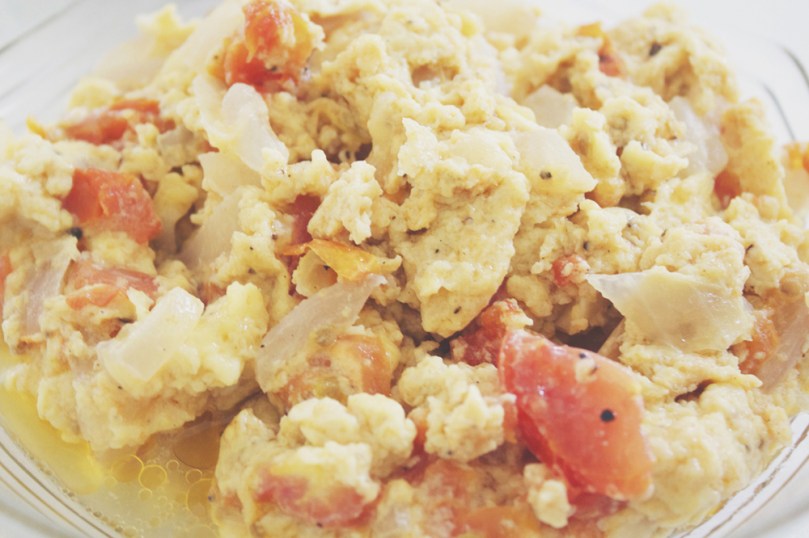
I’ve read a couple of recipes online prior to writing this post up, and a few suggestions have come up on what to serve on the side with this dish. One of the most popular is having some miso sauce as a condiment. I usually just have some fish sauce and calamansi mixed together as a condiment. I’ve also tried searching around for recipes that make any mention of serving this dish with some filo-style scrambled eggs but I haven’t seen any. Nonetheless, it actually tastes really good having the scrambled eggs together with the fish!

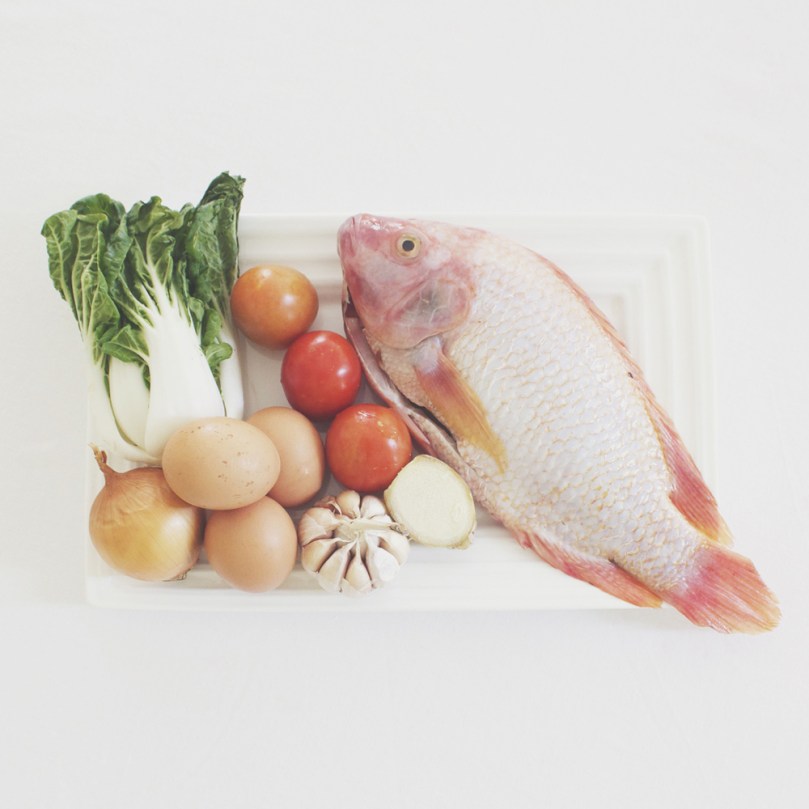
Pesang Tilapia (Tilapia in Ginger Stew) Ingredients

PREP TIME 5 MINS | COOKING TIME 20-22 MINS | SERVES 4

INGREDIENTS

For the ginger stew

  • 800g whole tilapia fish, scaled, gutted and cleaned*
  • 1L water
  • 2-3 bunches of baby bok choy or pechay, cleaned and ends removed
  • 2-3 garlic cloves, minced
  • 1 brown onion, sliced
  • 1 thumb-sized ginger, peeled and sliced
  • 1/2 cup vegetable oil, for shallow frying
  • Ground salt and black pepper to taste

*Alternatively you can use any other types of fish such as catfish, grouper, mudfish, and/or seabass. I know some people who can’t eat fish if it’s still whole; you can still cook this dish with fish cutlets or fillets.

For the Filipino-style scrambled eggs

  • 3 large free range eggs, beaten
  • 3 small ripe tomatoes, diced
  • 2 garlic cloves, minced
  • 1 brown onion, sliced
  • 2 tbsp vegetable oil
  • 1 tsp black peppercorns
  • Ground salt to taste

METHOD

  1. Heat the vegetable oil in a large frying pan over medium-high. Season the fish by rubbing some salt and black pepper. Once the oil is hot, fry the fish until golden brown. Once browned, flip and fry the other side of the fish, about 6-7 minutes per side. Once done, transfer the fish to a serving dish.
  2. Discard the oil, leaving behind about a tablespoon or two, and in the same pan, fry the ginger slices until fragrant. Add in the garlic and sauté until fragrant and golden brown. Finally, add in the onions and cook until soft, about 2 minutes altogether. Then add the water, whole pepper corns and salt, and bring the stew to a boil.
  3. While the stew is simmering away, move on to making your scrambled eggs. Heat the vegetable oil in a small frying pan over medium-high. Sauté the garlic until fragrant and golden brown. Add in the onions and cook until soft, about 2 minutes. Then add in the tomatoes, salt, and black pepper. Cook until the tomatoes are soft.
  4. Once the tomatoes are soft, pour in the beaten eggs and stir with a spoon, lifting and folding it over from the bottom of the pan, until the eggs are softly set and slightly runny in places. Turn the heat off and leave the eggs for a few seconds to finish cooking. Give a final stir before serving.
  5. Turn the heat off from the ginger stew and add the baby bok choy, leaving to cook for about a minute. Pour the stew over the fried fish and serve immediately with some steamed rice and the scrambled eggs. Enjoy!

Pesang Tilapia (Tilapia in Ginger Stew)

Sautéed Egg for Pesang Tilapia (Tilapia in Ginger Stew)

BON APPÉTIT

– Ally xx

myTaste.com

Chicken Sopas

Chicken Sopas

Hello Everyone! I am now in the Sunshine State of Queensland where I spent the weekend at a family friend’s farm in the countryside of Cedar Vale, near Jimboomba. They have a lovely country home with about 4 acres of land, and an alpaca(!), a donkey, three goats, and six chickens. Today, my family and I caught the bus to the city of Brisbane where we will be staying for 2 nights before heading back to the country and then to the Gold Coast for a day. Anyway, it’s actually already late here, I mean past 11pm isn’t late, but I need to go to bed and start early tomorrow as we are spending the day at Lone Pine Koala Sanctuary! Finally after 5 years in Australia, I get to cuddle a koala and feed kangaroos! So I’ll keep tonight’s post short so I can get as much z’s as I can.

Chicken Sopas Ingredients

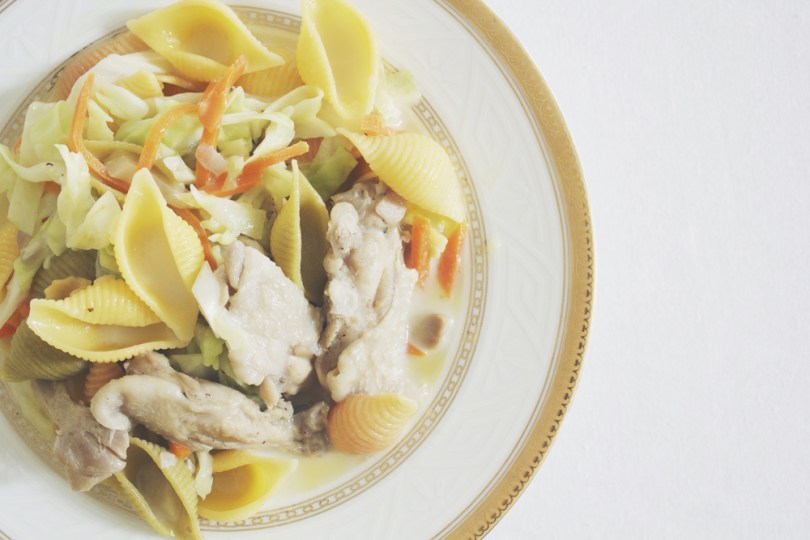
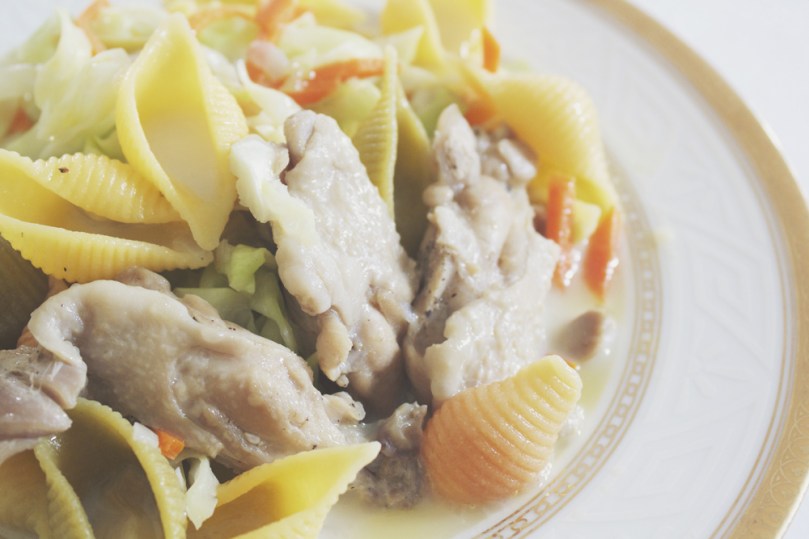
Tonight’s recipe is a Filipino classic; a soup dish made of shredded boneless chicken, macaroni noodles, a bit of milk, and some vegetables to flavour the dish. This dish is actually common for breakfast or a snack time treat during cold and rainy seasons. The difference between a regular chicken soup and a chicken sopas is the use of milk, either fresh or evaporated for a richer flavour. Other meats besides chicken can be added to the dish, such as diced hotdogs or luncheon meat in some recipes, and also chicken liver. I think my Mom has made a sopas dish with chicken liver before; didn’t fancy it. Play with the ingredients if you wish – the pasta and vegetables may also vary so feel free to use the appropriate ingredients in which you desire!

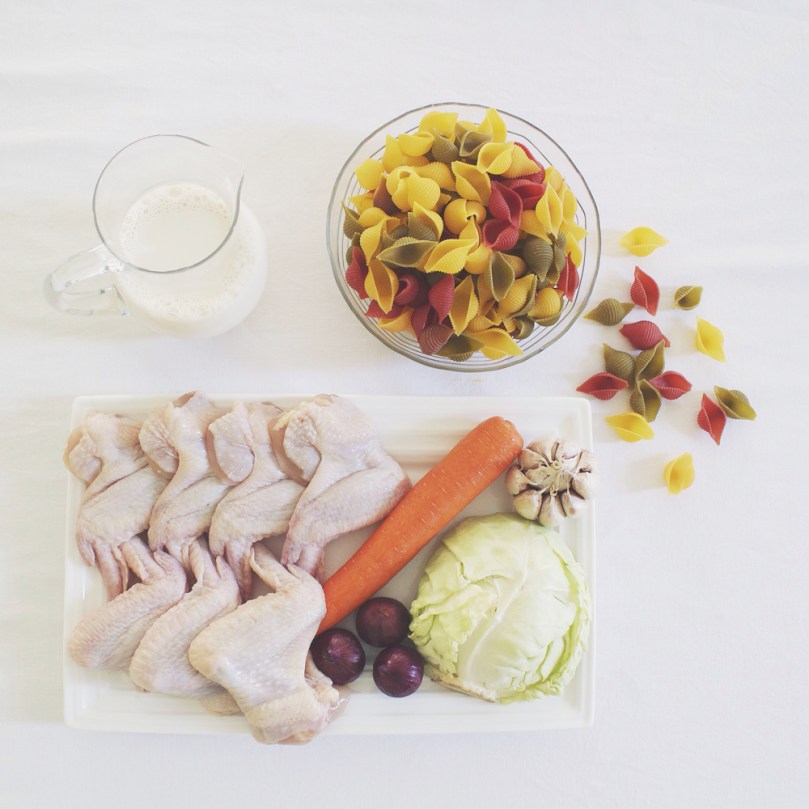
Note: If anywhere you see ‘soaps’ instead of ‘sopas’, it’s not a typo, it’s autocorrect and I’m a bit tired to go through and change them if you see any beyond this point – it’s happened to the first two above and I managed to go back and change those; but otherwise Chicken Soaps sounds like an intriguing dish! Also, on the ingredients photograph, you will notice the chicken wings. We actually used chicken spare ribs in this recipe but my Mom was insistent on photographing the wings because it looked ‘prettier’ than the ribs.

Chicken Sopas Ingredients

PREP TIME 20 MINS | COOKING TIME 20 MINS | SERVES 4

INGREDIENTS

  • 500g chicken spare ribs, washed and cleaned
  • 250g tri-colour shells
  • 2 cups water
  • 1 cup fresh milk
  • 3 small red onions, thinly sliced
  • 2 cloves garlic, crushed and minced
  • 1 small carrot, julienned
  • Half head cabbage, roughly chopped
  • Ground salt and pepper to taste

METHOD

  1. Heat oil in a large pot and sauté the garlic until golden brown. Add in the onions and cook until soft, about 2 minutes. Add in the chicken ribs, seasoning with salt and pepper. Give it a good mix and then let it cook for about 10 minutes, checking and mixing regularly to avoid the chicken meat sticking to the bottom of the pot.
  2. Add in the water and bring it back to a boil. Once boiling, add in the shells and cook according to packet instructions, mine took about 10 minutes.
  3. About 5-6 minutes into the 10, add the carrots and cabbage. Continue cooking until pasta is tender. Add in the milk and turn the heat off.
  4. Serve hot and enjoy!

Chicken Sopas

BON APPÉTIT

– Ally xx

myTaste.com

Ube Halaya (Purple Yam Jam)

Ube Halaya (Purple Yam Jam)


Hello Everyone! Today’s recipe is a dessert that is made from grated and boiled purple yam which is locally known as ‘Ube’ in the Philippines. Besides the purple yam jam (Ube Halaya), many different desserts such and pastries such as ice cream, tarts, and cakes make use of this root crop. Halaya (en español: jalea), directly translates to jelly or jam, but it is hardly a traditional jelly or jam.

Ube Root

I know I basically say this is every post that I upload, but let’s face it, if it not one of my favourites then I wouldn’t be posting the recipe online! Anyway, this is also one of my favourite Filipino desserts besides Leche Flan. Here in Brunei, you can find this root crop in the local markets known as ubi belayar ranging from $3.00 to $5.00, and sometimes even $7.00 per kilo especially if it has been newly harvested (you just have to shop around to find the stall that sells for much cheaper). We managed to buy some from an old man selling them for $3.00/kg and the root still looked fresh.

Ube Halaya (Purple Yam Jam) Process

Ube Halaya (Purple Yam Jam) Process

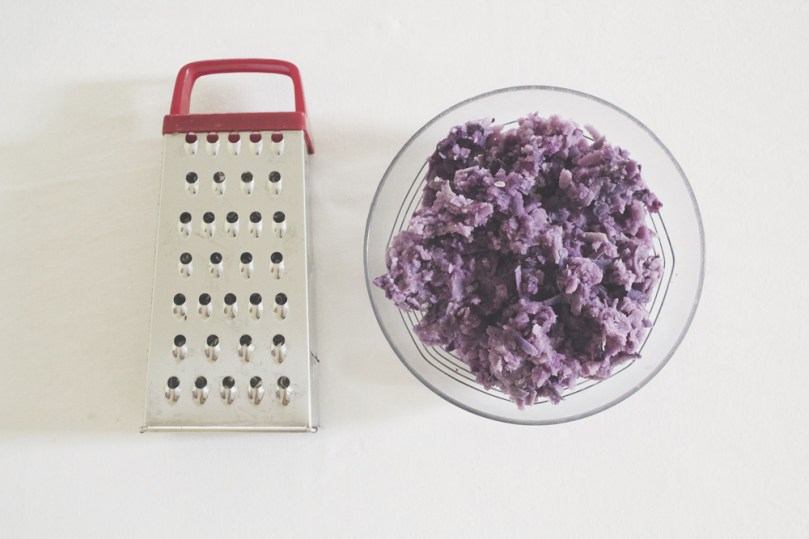
I am not sure of how readily available the purple yam is in various countries, but I am aware that you can buy ready-made boiled and grated purple yam in Asian stores. Having a prepared product such as this definitely saves time in the kitchen, but if it’s definitely available raw from the markets, I definitely recommend making it from scratch and burn some calories in the kitchen with this dish! In the past, I have found that by just grating and pounding the flesh, you still get lumps of the yam in your end result, and therefore not as smooth. We therefore pass the flesh through a sieve as well to get rid of any remaining lumps. A lot of work, but a stellar end result; smooth and creamy lump-free halaya!

Ube Halaya (Purple Yam Jam) Ingredients

PREP TIME 1 HOUR | COOKING TIME 1 HOUR 10 MINS | SERVES 8-10

INGREDIENTS

  • 2.5kg purple yam, skin on, thoroughly washed and scrubbed
  • 1 can (395g) condensed milk
  • 125g unsalted butter, chilled

METHOD

  1. Submerge the purple yam in a very large pot (the largest you have!) of hot water. Bring the water to a boil and cook the purple yam for 30-45 minutes or until the yam is soft and tender. If you don’t have a pot big enough to fit the yam, you may cut it on half (or quarters if needed).
  2. Once tender, remove from the pot and set aside to cool down before peeling the skin off.
  3. Working it batches, finely grate the purple yam. Once you’ve done that, get out your mortar and pestle and get pounding! Once you’re done with the pounding, get you sieve out and press the mashed purple yam through the sieve. This ensures that your ‘jam’ is smooth and there are no lumps in your mixture. This is probably the most labour-intensive part of the recipe!
  4. Next, heat a large cooking pot on low and add in the butter to melt.
  5. Once the butter has completely melted, add in the condensed milk and stir well. Add the purple yam in and stir occasionally so that the mixture does not stick to the bottom of the pot. Cook until the texture or the mixture becomes really thick (about 20-25 minutes). When cooked, turn the heat off and let it sit in the cooking pot for another half hour before transferring them into moulds/containers.
  6. Refrigerate for at least two hours, then serve and enjoy with family and/or friends!

Ube Halaya (Purple Yam Jam)

PS: It was very hard as to not resist the temptation to wrap this yam jam in spring roll wrappers as an experiment to see if they would work just as well as wrapping leche flan. Guess what? It was successful! There’s this phrase in Tagalog that you would use when you have too much of something that you get fed up, but it’s quite the opposite when you have it wrapped in spring roll pastry; it becomes “hindi nakakasuya”. Anyway, basically add about a teaspoon or two of purple yam jam on top of a spring roll wrapper together with a few strips of fresh coconut; then fold, locking the wrapper on each side. Freeze it overnight before frying and viola! Crispy Fried Ube Halaya. You’re welcome.

Cripsy Fried Ube Halaya (Purple Yam Jam)

BON APPÉTIT

– Ally xx
myTaste.com

Crispy Fried Leche Flan

Hello Everyone! Firstly, I would just like to say to you all that I am back in Sydney! Currently staying at a friends place while waiting for my Mom and two younger sisters to arrive in Sydney on Saturday morning before we start our Australian tour!I’ll be showing them around Sydney, and then we will be off to Melbourne, Brisbane, and then back again for my graduation ceremony in mid-June! Now because of all our travels, I will momentarily cease Review Sundays, only because I don’t have any places in my folders to write about, and also because there is a possibility that I won’t have the time (or most likely won’t be bothered) to write reviews on places I’ve visited on this trip, during the trip. Once I’ve settled back down from my 1-month vacation, then I will get back into Review Sundays; but don’t fret, I will still be uploading recipes twice a week on Tuesdays and Thursdays as I’ve cooked up a whole lot of dishes while I was in Brunei to prepare for this vacation period of mine.

Crispy Fried Leche Flan Process

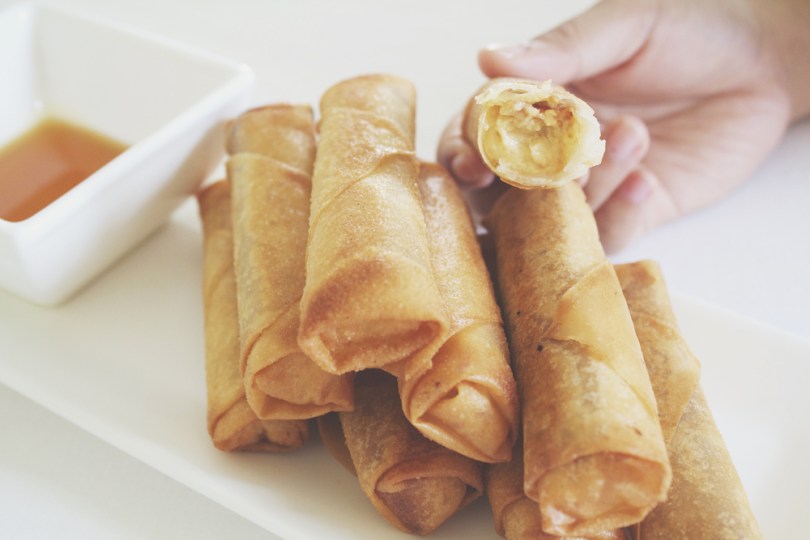
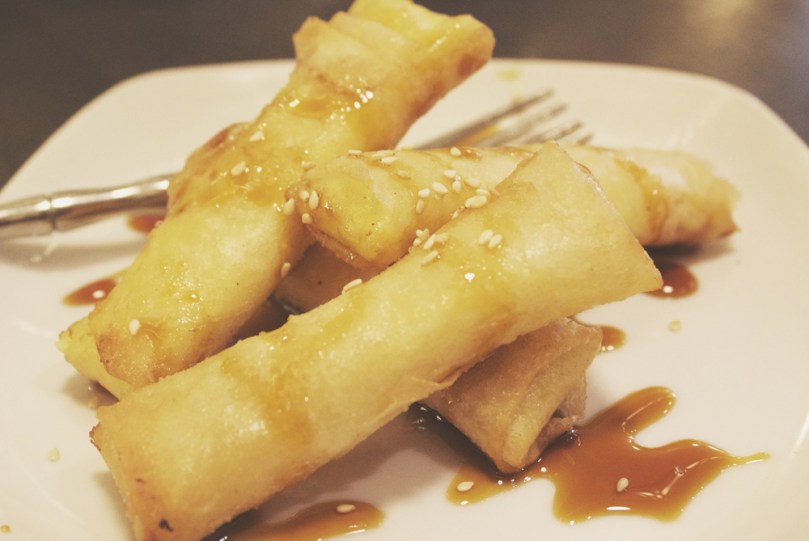
Anyway, today’s recipe is a little twist on what I have been making for a while now – mainly for lunch/dinner parties, or during Christmas and New Year celebrations. Or sometimes, I make it upon the request of my friends for their birthdays (Jialing especially) or just whenever they want me to make it for them when I invite them over to my place. During my recent trip to the Philippines, I encountered ‘Crispy Fried Leche Flan’ on two different menus. I thought long and hard about the possibility and HOW they are able to deep-fry a soft, smooth, and silky custard – at one point I thought, battered flan? Anyway, weird techniques were going through my mind and it killed me not knowing how it was possible – until I ordered it that is. I did not expect it to be wrapped spring roll style; such a clever idea! The first time I had these babies was at Catalino’s Restaurant (Villa Javierto) in Lucena City. I was so amazed by the lovely golden brown, crispy spring roll pastry complimented by an oozy, smooth flan filling with a side of soft caramel dip. It was like love at first bite with these I tell you. Never have a ever heard of crispy fried flan until this very day at Catalino’s; and I was even more excited to see it on Mesa’s menu in the city! However, as I probably mentioned in that blog review, Mesa’s crispy flans did not live up to the hype of my first experience. To quote my blog review, I said that theirs were “small, not so crispy rolls of flan that didn’t quite taste like flan in my opinion and more like steamed egg”.

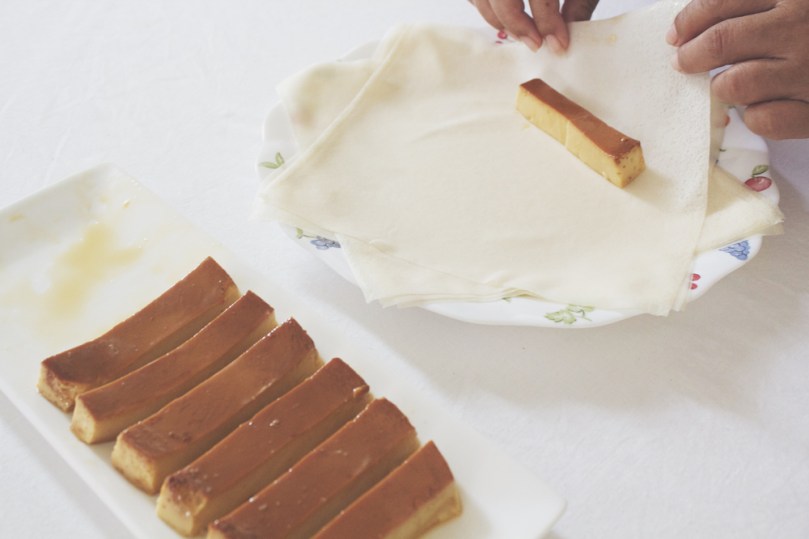
Ever since my trip to the Philippines and encountering these beautiful rolls of delight, I knew I had to take it to my kitchen and whip up a batch of these. At first I was unsure of how it was they managed to handle and wrap soft flan; I thought that they needed to go into the freezer first and once frozen you could handle them easily. My mother showed me otherwise; she handled the slices of flan with great care, and was very gentle with them when wrapping them. The trick to get them nice and crispy is basically the same with the plantain rolls I posted roughly a month back; by freezing them overnight and frying them straight away with no defrosting required.

Leche Flan Ingredients

Crispy Fried Leche Flan Ingredients

PS: Before I start with the recipe, I just want to point out that I showed these images to one of my friends prior to writing this post because I told her about how I made crispy leche flan. She wanted to know how it was possible and so I showed her how it was done. Her first reaction to the side of caramel dip – “IS THAT FISH SAUCE?” I seriously could not stop laughing.

INGREDIENTS

  • 1 recipe Leche Flan (Crème Caramel)
    • 6 egg yolks, at room temperature
    • 1 can (395g) condensed milk, at room temperature
    • 1 cup milk, at room temperature
    • 6 tsp caster sugar
    • 1 & 1/2 tsp vanilla extract
  • Large springroll wrappers

METHOD

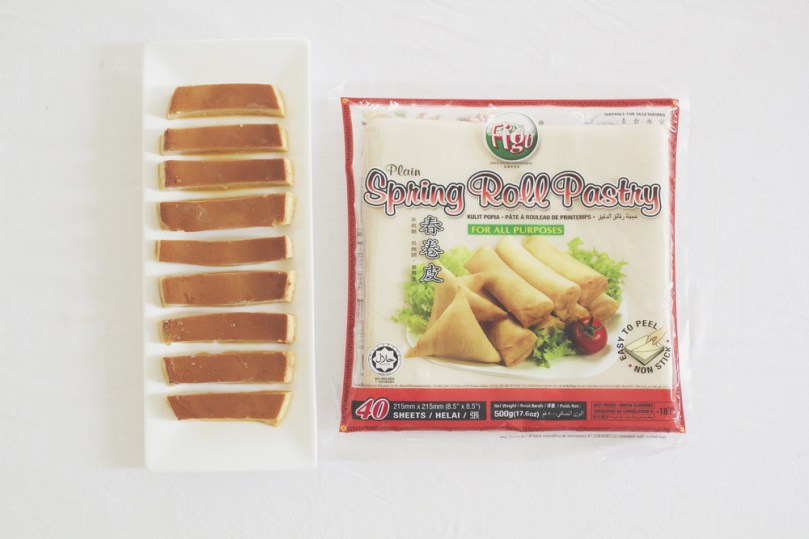
  1. Make a batch of leche flan prior to starting this recipe. Make sure that you refrigerate them for at least 6 hours before working with them. You can find the recipe linked above in the ingredient list. Instead of using small round moulds, I suggest you use square moulds (or in my case I used oval because that’s what I had) and cut them into thick rectangular strips. Do not discard the caramel sauce, instead pour it into a sauce dish and serve alongside the crispy fried leche flan rolls.
  2. Place the slice of flan on top of a spring roll wrapper and fold, locking the wrapper on each side. then place in a container and repeat until all the slices of flan have been wrapped. Freeze overnight.
  3. In a small (or medium, depending on how many you’re going to fry) pan, heat the oil over medium-high. Make sure it is quite hot before adding the wrapped flans in. Fry until the wrapper turns golden brown.
  4. Serve hot during dessert or meryenda, with ice cream on the side if you wish. Enjoy!

Crispy Fried Leche Flan

BON APPÉTIT

– Ally xx

myTaste.com

Mesa Filipino Moderne - FRESH CATCH: Tilapia

Mesa Filipino Moderne

Hello Everyone and welcome back to an all new Review Sunday! I’ve got three more places from the Philippines that I want to touch on before I start reviewing a couple of places here in Brunei. I’ve actually visited quite a number of places in the Philippines, but I feel like I haven’t had the full dining experience yet in terms of what their menu has to offer. Then there are some other places that I was thinking of writing about, but when I look back at their food, it was all too similar and nothing special really.

Anyway, what I realised when dining out in the Philippines, food is always the same no matter where I go. For example, dishes like sisig, crispy pata, kare-kare, sinigang, laing, buko pandan, leche flan, and many other classic and famous Filipino dishes, though I imagine cooked slightly different to separate themselves from others, all taste quite similar no matter where we have it. In tagalog, I would normally say “nakakasawa”, if you eat the same food over and over you will say or have that feeling nakakasawa, but maybe its because I’ve been eating in the wrong places.

Mesa caught my eye as I was roaming around SM North Edsa with my sisters while my Mom was somewhere along Quezon Avenue doing medical checkups. We were looking for new places to eat, and when a saw ‘new’ I just mean nothing like Barrio Fiesta or Gerry’s Grill – not places that we have been to over and over again every time we visit the Philippines. I had never heard or encountered Mesa in my pervious trips, and what intrigued me was the modernity and interpretation of classic traditional Filipino dishes. I was definitely intrigued when I saw Ostrich on their menu even though I didn’t have any.

Mesa Filipino Moderne - SISIG: Sisig in a pouch
SISIG: Sisig in a pouch
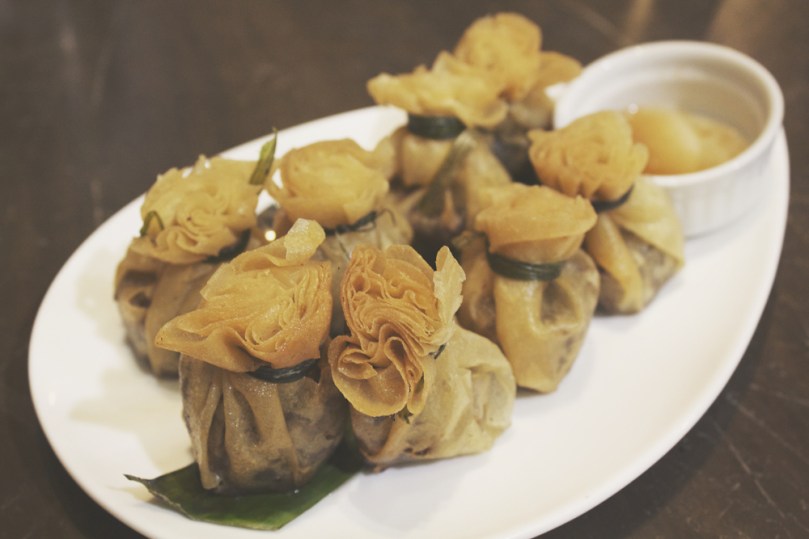
Savoury pork sisig wrapped in a pouch (₱190.00)

As mentioned probably in a previous review, sisig is a dish that I never fail to have whenever I visit the Philippines. I was attracted to this dish because I’ve never had sisig this way before. It was a perfect way to start out our lunch at Mesa; the pouches had a very nice golden brown finish to them, and it gave each bite a nice crunch to the sisig filling inside. It was paired nicely with a side of spicy vinegar as well.

Mesa Filipino Moderne - SOUP: Sinigang na baboy in guava and pineapple
SOUP: Sinigang na baboy in guava and pineapple
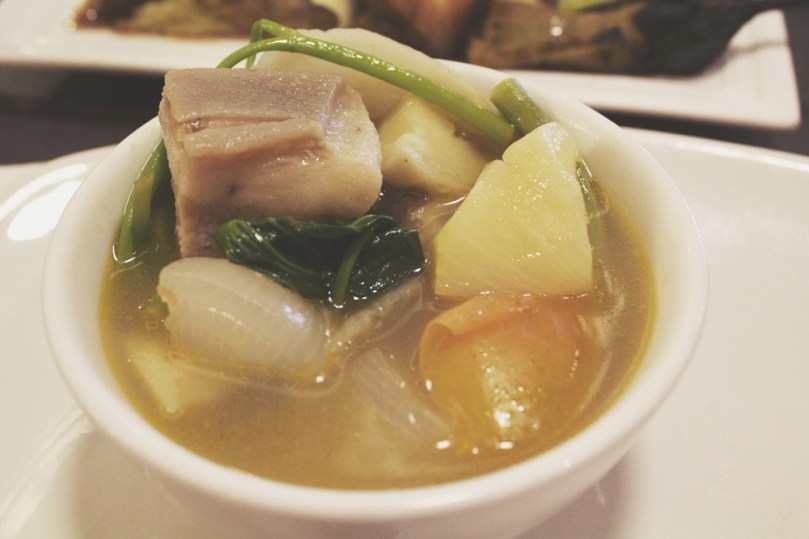
Pork simmered in broth with guava and fresh pineapple; serves 4-5 (₱290.00)

What caught my eye with this dish as I was browsing the menu was the guava and pineapple part. I’ve never had sinigang with these two fruits before so I was indeed very intrigued to know how the strong flavours would blend together. It actually worked quite well to an extent. I say ‘extent’ because there was one time I had a whole heap of guava flavour in my spoon of soup and the taste overkilled. Nevertheless, an enjoyable dish.

Mesa Filipino Moderne - FRESH CATCH: Hito
FRESH CATCH: Hito
Crispy boneless with mangga salad (₱340.00)

The only thing that concerned me about this dish was where’s the mango salad? If you’re going to make mention “with” mango salad, I expect it to be of reasonable portioning as a side dish and not just “topped” over the fried fish. Slightly disappointing.

Mesa Filipino Moderne - FRESH CATCH: Tilapia
FRESH CATCH: Tilapia
Crispy boneless served with four sauces (₱340.00)

Well, just like the crispy boneless hito, nothing quite special about the four sauces that went with fried fish that in my opinion had not much flavour in the flesh itself. Verging on being overcooked? Quite possibly.

Mesa Filipino Moderne - VEGETABLES: Laing 2 ways
VEGETABLES: Laing 2 ways
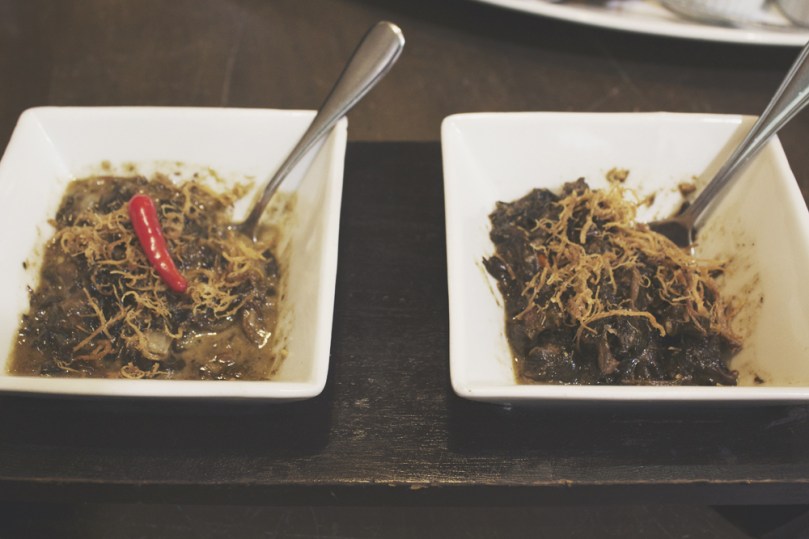
Taro leaves, pork, shrimp paste, and coconut cream topped with adobo flakes, served original and crispy (₱170.00)

The taro, or also known as gabi in the Philippines, is low in saturated fat, sodium, and cholesterol, and in contrast, high in dietary fibre, vitamin E, vitamin B6, potassium, and manganese. The leaves, stems, and corms are all consumed and form part of the local cuisine, a dish known as Laing. Laing originated from the Bicol region, and no matter where you have it at, and no matter the way it is cooked, it always ends up looking like a pile of… 🙂 I’ve had my fair share from many eateries, and even home-cooked laing, and it always looks like this. But I assure you that it tastes so much better than it looks. I like how Mesa served this dish two ways – basically one with sauce and the other without. Both tasted pretty good and the adobo flakes on top added that extra flavour and crunch to the dish.

Mesa Filipino Moderne - MEAT: Pinatayong Manok
MEAT: Pinatayong Manok
“Standing” whole chicken carved right at your table (₱415.00)

Quite possibly one of the reasons why I stopped in front of the restaurant and had a look at their menu; I saw a picture of this dish and I immediately knew I wanted to eat that. It was basically a whole roasted chicken that didn’t particularly have any special taste to it in my opinion, but what I enjoyed was the way it was served to us. It was brought to our table “standing” and carved for us at our table. The chicken was cooked well and was very tender.

Mesa Filipino Moderne - MEAT: Pork Binagoongan
MEAT: Pork Binagoongan
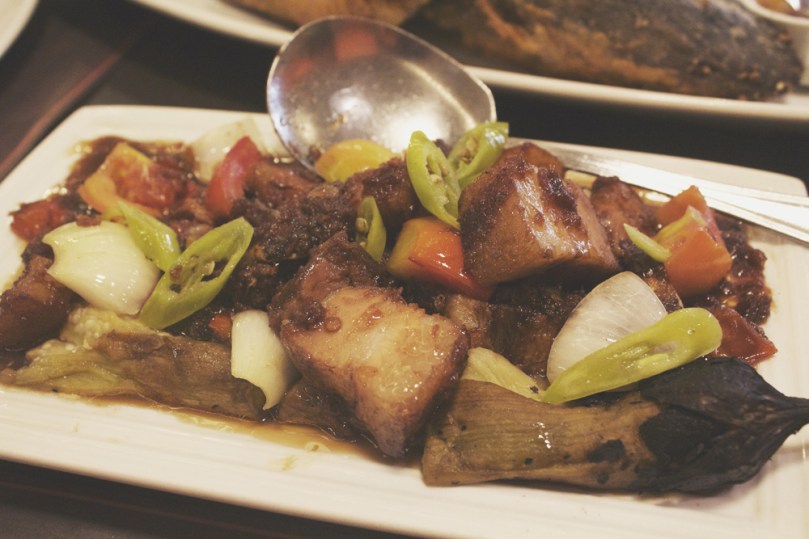
Pan fried pork belly sautéed in shrimp paste (₱190.00)

This dish I enjoyed because I love the pairing of a well-cooked pork belly, shrimp paste, and grilled eggplant. This dish did not disappoint at all unlike the others.

Mesa Filipino Moderne - DESSERT: Pandan Macapuno Rumble
DESSERT: Pandan Macapuno Rumble (₱75.00)

I was intrigued to know what modern twist they would put on a classic buko pandan dessert. Nothing special to be honest except the fact that the coconut meat was set with the jelly? That’s all that I could point out that seemed different to the classic ones I’ve had multiple times. Other than that, flavour was good.

Mesa Filipino Moderne - DESSERT: Crispy Leche Flan
DESSERT: Crispy Leche Flan (₱70.00)

This was the dessert that I was most looking forward to only to be disappointed in the end – small, not so crispy rolls of flan that didn’t quite taste like flan in my opinion and more like steamed egg. I was disappointed only because I had a much better first experience with crispy leche flan when I was travelling the city of Lucena just a couple of days before I visited Mesa again.

Mesa Filipino Moderne is definitely a place to visit if you want to experience modern Filipino cooking at an affordable price. I say that it is affordable because the pricing of their dishes are quite reasonable for the portions you get, so definitely a good value for money indeed. But as I have mentioned in another review before, these prices are not very affordable for the average Filipino, so I guess the value for money on a more general scale wouldn’t be so good. The food I would rate no more than a 6 to be honest – at first glance I was very excited to experience modern Filipino cuisine, but after having dined and looked back at the dishes that I’ve had, I can’t say I was left excited to go back for more. The only dish that I really enjoyed was the pork sisig in a pouch. Everything else was mediocre. Service 8 out of 10; it was exceptional nor was it bad, and the ambience is a sure 10 for me.

Now that I look back at all the dishes that I’ve had and my small disappointments with each of the dishes I ordered, I wonder how they were able to achieve the Best Food Retailer award. I may be jumping into conclusions a bit early as I’ve only tried probably an eighth of the dishes they have on offer, but if I am off to a non-promising start with their menu, I can’t be sure on how the rest will unfold if I visited a few more times and trying other dishes. Anyway, my opinion is my opinion; it may be biased, it may be not. You may agree with me, you may not, that is, if you’ve dined at Mesa.

I’m not sure if there are other restaurants that are much better at modern Filipino cuisine, but this is the first step of my journey to finding out how far we can modernise classic dishes. There is one place I have yet to visit, but have been closely following their Instagram page, and it’s called Sarsá Kitchen+Bar. I must say that their Sinigang Fried Chicken looks very enticing. Maybe on my next adventure to the Philippines I’ll be able to drag some family members over to have some eats.

Mesa Filipino Moderne
3/F SM City North EDSA, Main Building
EDSA corner North Avenue
Quezon City, Metro Manila
Philippines

– Ally xx

Bulalo (Beef Bone Marrow Soup)

Bulalo (Beef Bone Marrow Soup)

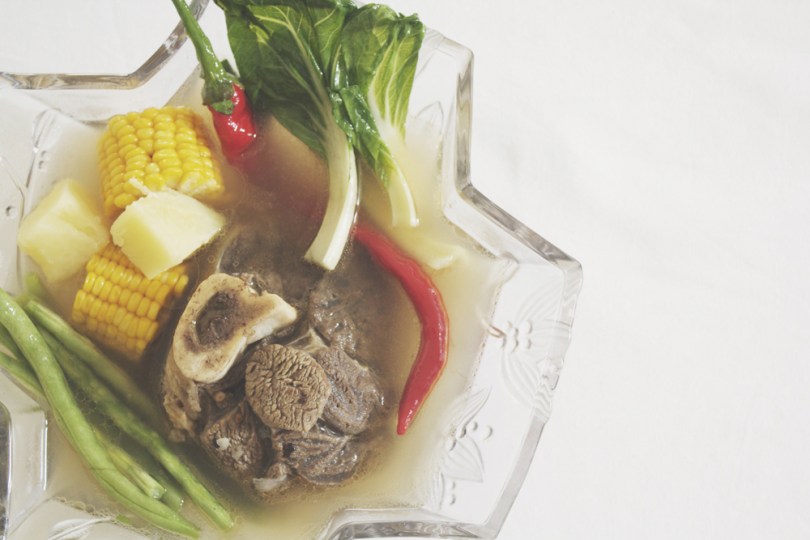
Hello Everyone! So today’s dish is also a classic and most favourite Filipino main dish that can be found on, if not all, most menus across the Philippines. Bulalo, as stated in the title above, is a beef bone marrow soup that is light in colour and as the name states, uses beef shanks and marrow bones paired with various vegetables such as bok choy, corn cobs, green beans, etc. Because of the popularity of this dish, many restaurants and eateries across the Philippines specialise in Bulalo. Some of the most famous “Bulalohan” can be found in Tagaytay City (Cavite) and Santo Tomas (Batangas).

It is not a very hard dish to prepare – simple ingredients and simple cooking is all it really takes. In fact, all your really need for this dish is time and patience. The key to preparing this dish though is to choose the appropriate meat, shanks to be specific, and to make it as tender as possible. To achieve this is to simmering the beef for longer periods of time; it also releases all of its flavour. For me, the best tasting bulalo I’ve had to date was at Nina’s Itikan in Santa Clara, Bulacan. Even though they specialise in itik (duck), their bulalo was very rich in flavour. Even my dish that I am going to share with you today cannot match to its flavour!

Bulalo (Beef Bone Marrow Soup) Ingredients

PREP TIME 10 MINS | COOKING TIME 2 HOURS 10 MINS | SERVES 4

INGREDIENTS

  • 1kg beef shank
  • 2L water
  • 3 cloves garlic, crushed
  • 1 corn on a cob, cut into 4 equal parts
  • 1 large potato, cut into chunks
  • 1 long red chilli
  • 1 medium sized onion, quartered
  • 1 small bunch bok choy
  • 1 small bunch green beans, trimmed
  • 1 stalk lemon grass, halved and bruised
  • 2 tsp salt
  • 2 tsp whole black peppercorns

METHOD

  1. Pour water into a large cooking pot together with the salt, peppercorns, and lemongrass. Bring the water to a boil. Once boiling, add the beef shanks in and simmer for about 1 and a half hours; if you are using a pressure cooker then 30 minutes should do the trick.
  2. Then add in the chilli, garlic, and onions, and simmer for a further 30 minutes until the meat is tender. Add in the corn, green beans, and potatoes, and simmer for another 10 minutes, then followed by the bok choy. If broth needs a bit more salt, then add in a few teaspoons of fish sauce to season to taste.
  3. Serve hot with steamed rice and enjoy! A great dish to share during cold, rainy day/night to warm up your insides!

Bulalo (Beef Bone Marrow Soup)

BON APPÉTIT

– Ally xx

myTaste.com

Crispy Pata (Deep-fried Pork Leg)

Crispy Pata (Deep-fried Pork Leg)

Hello Everyone! After spending the past month in the Philippines, I thought that it’d be a good idea to share some of the foods that I came across and ate along the way. A classic dish that I will be sharing with you is the very famous Crispy Pata, or Deep-fried Pork Leg. Crispy Pata can be found in most eating places in the Philippines; one place that we dined at while staying Lucena City specialises in this dish and is even called Bubbles Crispy Pata & Restaurant. I remember the first time I came here with my cousins from the Barrientos side, my cousin JR joked about ordering a crispy para dish EACH. I think we ended up ordering one between two people, which, looking back, in my opinion is still quite a lot to eat between two; but just like me, he loves him some crispy pata. What I love about this very simple dish, is the crispy skin and of course the very tender meat beneath that layer of crispy goodness.

Crispy Pata (Deep-fried Pork Leg) Ingredients

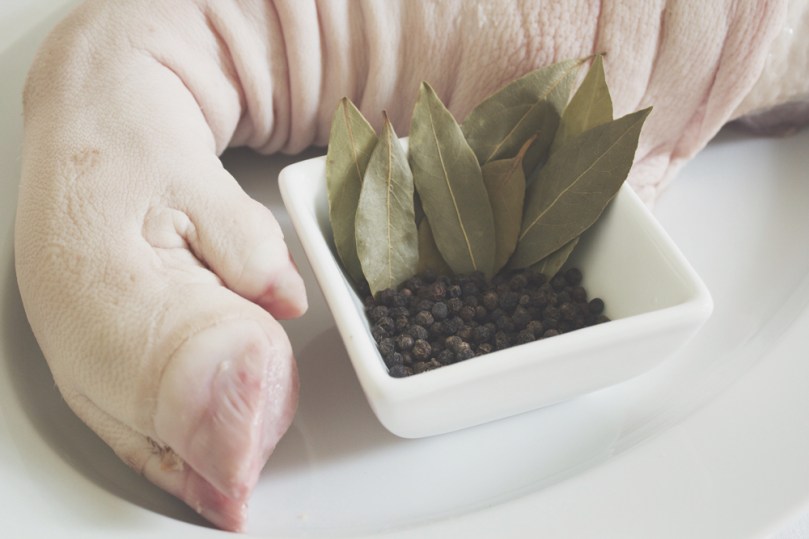
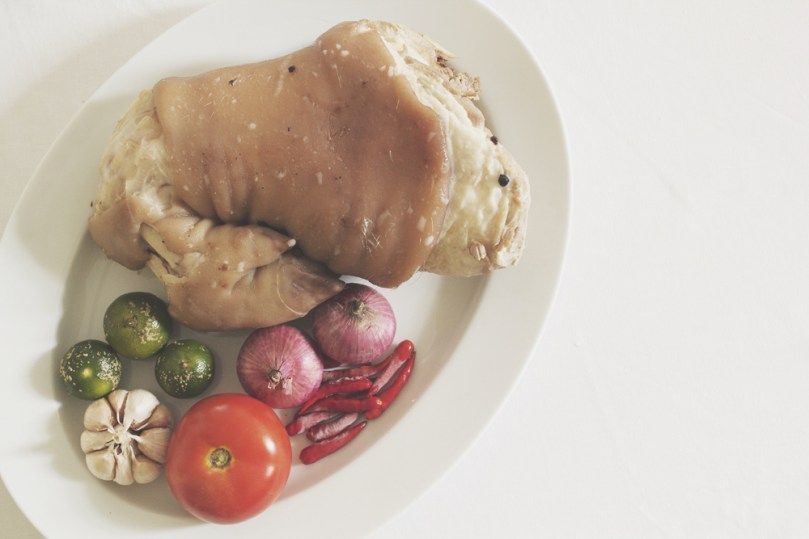
As you probably would’ve already figured out from my description above, and the photographs, Crispy Pata is a famous Filipino pork dish that uses a whole pig’s leg. The leg (or pata) is made tender by simmering in water along with other spices, mainly peppercorns and bay leaves. It is then deep-fried until the texture becomes very crunchy. The dish is then served with various dipping sauces, the main being a soy-vingear sauce with chopped onions, or along with some pickled green papaya known as atchara, served as either a main dish with steamed rice, or as beer food known as pulutan.

Crispy Pata is definitely an easy dish to cook, but be cautious as the process does involve dangerous steps. Deep frying a whole leg can cause the hot oil to be uncontrollable. It is a must to slightly (not fully, as the cover can pop-up due to pressure) cover the cooking pot while frying. What my mom does is that instead of submerging the whole leg in scalding hot oil, she adds enough oil to submerge at least half of the leg and fries it for about 15 minutes or until golden brown. She then cautiously turns the leg and fries the other side for the same amount of time in medium heat until it becomes crispy. This is quite possibly one of the reasons why I only ever have crispy pata at a restaurant or when I’m home and my mom is there to do it for me – I don’t like the frying process!

Crispy Pata (Deep-fried Pork Leg) Ingredients

PREP TIME 24 HOURS* | COOKING TIME 2 HOURS 30 MINS | SERVES 4

*Includes setting aside the boiled pork leg in the fridge overnight to draw out the moisture before deep-frying.

INGREDIENTS

  • 1 whole pig’s leg (about 2 or 2.5kg)
  • 12 to 15 cups water
  • 8 to 12 cups cooking oil
  • 6 pcs dried bay leaves
  • 2 tbsp whole black peppercorns
  • 1 & 1/2 tsp salt

For the soy dipping sauce

  • 1/3 cup dark soy sauce
  • 1 small red onion, diced
  • 1 small tomato, diced
  • Juice of two calamansi**

For the vinegar dipping sauce

  • 1/3 cup white vinegar
  • 3 cloves garlic, crushed
  • 3 red bird’s eye chillies, halved
  • Whole peppercorns

**Calamansi (or calamondin), is a hybrid between a mandarin orange and a kumquat. It is widely cultivated in the Philippines and primarily used in cooking to flavour foods and drinks. If calamansi isn’t available, you may substitute it with lemon or lime, but the taste will not be the same. I can’t say exactly what the difference in taste is, but I think calamansi is a tad more sour than a lemon/lime, and has a slight orange taste to it.

METHOD

  1. Pour water into a large cooking pot along with the bay leaves and peppercorns. Bring to a boil. Once boiling, add in the whole pork leg and simmer under mediumm-high heat until the leg becomes tender (about 1.5 to 2 hours).
  2. Remove the tender leg from the cooking pot, transfer to a plate large enough to fit it and set aside until the temperature goes down. Once it has cooled down, place a clean cloth above the leg and refrigerate overnight. Remove from the fridge a few hours before cooking to bring it back to room temperature. Some recipes I’ve seen don’t require you to refrigerate the meat, I do it so that it draws out excess moisture from the leg.
  3. At this point you may want to rub on some different spices such as garlic powder, ground black pepper, and salt onto the skin. If you do, let it stand for 15 minutes for the leg to absorb the rub. If you don’t want to season it any further, which is what I did, then you can move onto frying.
  4. Heat a clean large cooking pot (preferably with cover), over high heat and pour the cooking oil in. When the oil becomes hot, turn the heat down to medium high. Carefully lower the leg into the hot oil and deep fry. Cook until one side becomes brown and crispy, about 10 to 15 minutes, and then cautiously flip the leg to brown and crisp the other side. Be extra careful in doing this procedure.
  5. Turn the heat off and remove the crispy pork leg. Transfer it to a wide serving plate.
  6. Combine all the ingredients together for the separate dipping sauces dance serve together with the crispy pata!

Crispy Pata (Deep-fried Pork Leg)

BON APPÉTIT

– Ally xx

myTaste.com