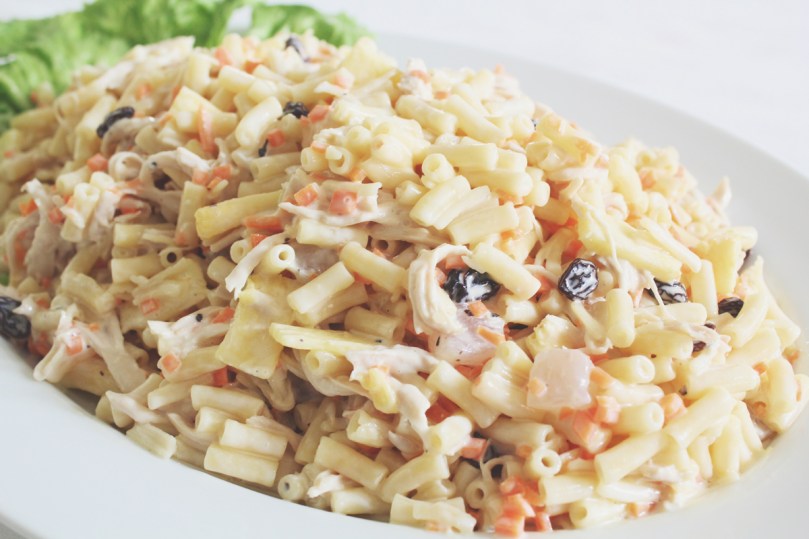
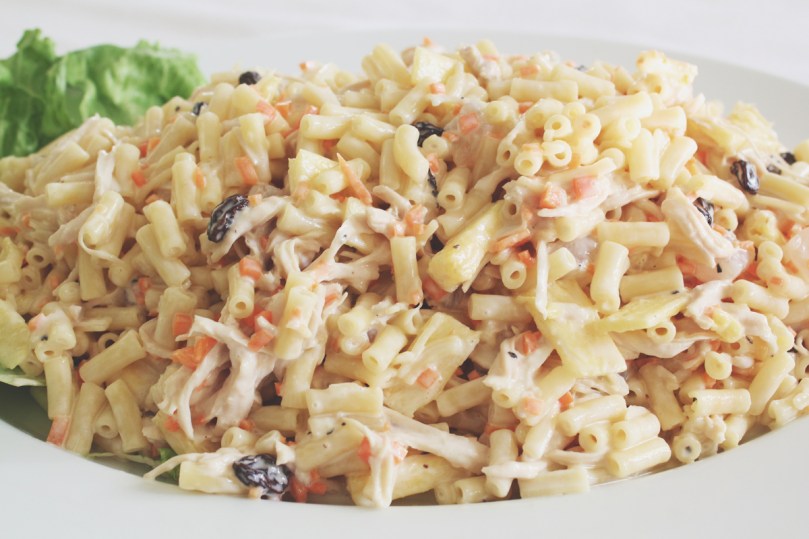
Filipino-style Chicken Macaroni Salad

Filipino-style Chicken Macaroni Salad

Hello Everyone! It’s been a while since my last post – but if you are a regular reader, you would’ve picked up from my last post that I’d be taking a short break. It’s not because I needed some time to recover from my mental exhaustion (because let’s face it, I’m still always mentally drained by the end of a long day), but more for the theme for this month’s recipes. From today onwards, you will be expecting a recipe every single day leading up to Christmas – you read that right! I will be sharing with you Festive Filipino Dishes that can be found on the tables of a Filipino family during Noche Buena, some of the recipes that I will be sharing have been influenced by Spanish cuisine. So let’s kick off Day 01 of 12 days to Christmas with a sweet (or savoury?) one: Filipino-style Chicken Macaroni Salad.

First off, for those of you who don’t know, Noche Buena is the Spanish word for the night of Christmas Eve. In Latin American cultures, including Spain and the Philippines, Noche Buena is an annual traditional family feast. The traditional dinner is celebrated at midnight after attending the late evening Mass known as Misa de Gallo. In the Philippines, a whole roasted pig known as lechón, is the centre of all dishes during the feast. It is believed that the tradition dates back to the 15th century when Caribbean colonists hunted down pigs and roasted them whole as the family gathered for Christmas Eve. However, a whole roasted pig isn’t always served in other cultures. For example, in Peru, a large juicy turkey is the star for Noche Buena while in Venezuela, hallacas are quite popular. Actually, I think I may have explained what Noche Buena is in a post last Christmas? I’m not sure. Oh well!

Tonight’s dish is one of the many that can be found on the table during Noche Buena, but it doesn’t stop there. This dish is also typically served during Filipino fiestas and also during family outings and picnics. It is actually a very simple dish that doesn’t require a lot of cooking and complicated steps. The main “cooking” is basically cooking the macaroni until tender, and the chicken to be boiled and shredded. When those core ingredients are ready, all you have to do next is toss all the ingredients together and voilà! Chill it in the fridge for a couple of hours and you’ve got a tasty chicken macaroni salad.

Filipino-style Chicken Macaroni Salad Ingredients

PREP TIME 15 MINS | COOKING TIME 30 MINS | SERVES 10-12

INGREDIENTS

  • 500g macaroni*
  • 1 jar (400g) Nata de Coco, drained
  • 300ml dollop cream
  • 250g chicken breast
  • 100ml condensed milk
  • 1 cup cheddar cheese, diced
  • 1 cup fresh pineapple, diced
  • 3/4 cup carrots, minced
  • 3/4 cup mayonnaise
  • 1/4 cup raisins
  • Ground salt and pepper to taste

*Aside from macaroni, you can use other types of short cut pasta. Here are some examples: Mostaccioli, Penne, Rigatoni, Cellentani, Rotini, Cavatappi, Fideuà, and Maccheroncelli.

METHOD

  1. Bring a medium-sized pot of salted water to a boil. Once boiling, add in the chicken breasts and cook for about 15 minutes, or until cooked all the way through depending on the size of your breasts (yes I meant to say it that way *cheeky grin*). Once done, drain and set aside to completely cool down.
  2. Meanwhile, mix the condensed milk, cream, mayonnaise, salt, and pepper in a large mixing bowl. Taste and adjust accordingly to your liking. Set aside.
  3. Then, bring a large pot of salted water to a boil. Once boiling, add the macaroni and cook according to packet instructions (mine was about 10-11 minutes). Once done, drain and transfer to a large mixing bowl together with the dressing.
  4. When the chicken breasts have completely cooled down, shred the chicken meat and add it into the mixing bowl together with the macaroni.
  5. Add all the other remaining ingredients and toss thoroughly until well combined. Cover the bowl with cling wrap and refrigerate for about and hour or two before serving.
  6. Serve chilled and enjoy!

Filipino-style Chicken Macaroni Salad

Filipino-style Chicken Macaroni Salad

BON APPÉTIT

– Ally xx
myTaste.com

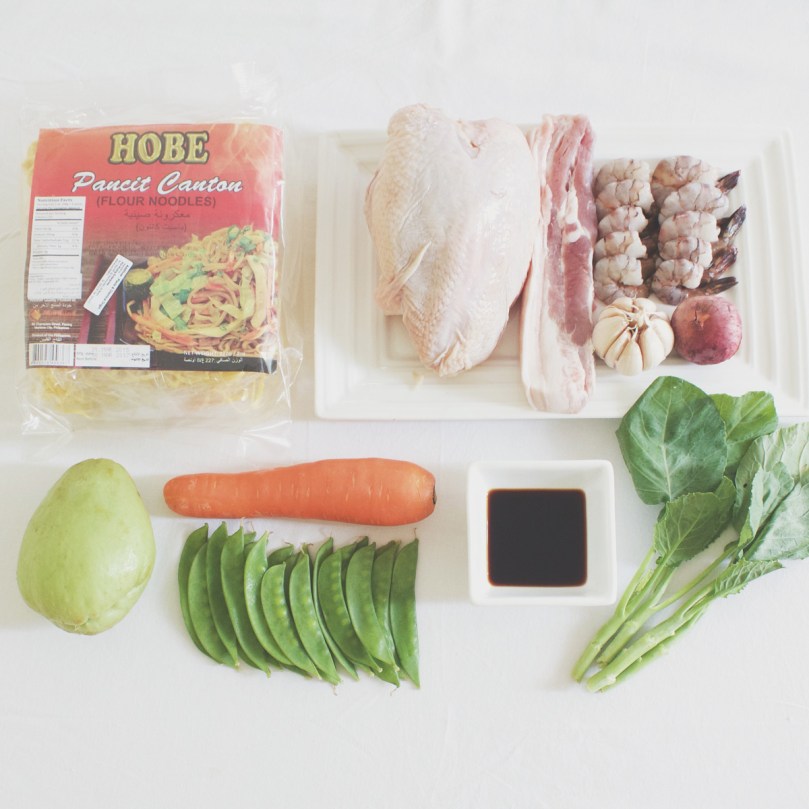
Pancit Lucban (Filipino Style Stir-Fried Thick Flour Noodles)

Pancit Lucban (Filipino Style Stir-Fried Thick Flour Noodles)

Hello Everyone! So tonight, I’m sharing with you a dish that I think I over indulged in during my recent trip back to the Philippines earlier on the year in March/April 2015. We spent a ridiculous amount of lunches and meriendas in Buddy’s while we visited our relatives in the provincial City of Lucena. Anyway, the dish, known as Pancit Lucban or Habhab, is a version of pancit that originated in the Quezon province. This noodle dish may draw many resemblances to the traditional Pancit Canton, but there are some apparent differences. The main difference is all in the type of noodles used; Pancit Lucban/Habhab uses dried flour noodles known as miki Lucban which are not the same noodles used to make pancit canton. In addition, miki Lucban noodles that are made fresh also have a much softer texture than that of pancit canton.

Here’s a fun fact for you – well okay, it’s not really a fun fact but it is quite interesting and may be one of the reasons you’d probably go out and have a handful of Pancit Lucban. That’s right, a handful. This version of pancit is traditionally served over a piece of banana leaf and is eaten without any utensils. I know what you’re thinking, how exactly do you eat noodles without any utensils?! Well, imagine eating a sandwich. You will need to grab the banana leaf with the noodles in it and put it directly to you mouth. Don’t eat the banana leaf though! Below is a picture of my cousin and my Mom back in 2008 (I think) having some Pancit Lucban from a street food vendor during a dog show/walk in Lucena:

My Mom & Cousin eating Pancit Lucban the traditional way

It’s probably not the most glamorous way to eat your noodles, but it may be an exciting experience especially to those who find this way of eating very foreign to them. Miki Lucban is unfortunately not commonly found in stores around Brunei, not even in the Filipino section. So instead, we used Pancit Canton which actually makes calling this dish Pancit Lucban a sin! *cheeky grin*

Pancit Lucban (Filipino Style Stir-Fried Thick Flour Noodles) Ingredients

PREP TIME 10 MINS | COOKING TIME 45-50 MINS | SERVES 6-8

INGREDIENTS

  • 450g pancit canton (or miki Lucban if available)
  • 250g tiger prawns, shelled and deveined
  • 100g snow peas, topped and tailed
  • 3-4 dried bay leaves
  • 2-3 garlic cloves, minced
  • 2 pcs thin sliced pork belly, cut into 1cm chunks
  • 1 bunch gai lan (Chinese broccoli)
  • 1 carrot, julienned
  • 1 chicken crown, breasts removed and sliced, bone reserved
  • 1 small red onion, diced
  • 1/2 chayote, peeled and sliced
  • 5 tbsp light soy sauce
  • Ground salt and black pepper to taste
  • Whole black peppercorns

METHOD

  1. Add the reserved chicken bone, dried bay leaves, about a teaspoon or two of whole black peppercorns, and salt to a medium-sized pot filled with about 1.5L of hot/boiling water. Turn the heat up to high and leave to boil for about 30 minutes.
  2. Meanwhile heat a large frying pan over medium-high and add in the chunks of pork belly. Cook until browned. The oils released from the pork belly should be enough to sauté the garlic and cook the onions, but if needed, add a little bit more oil if there isn’t enough. Then add the minced garlic and sauté until fragrant and golden brown, about a minute, then followed by the diced onions. Cook until soft, about 2 minutes in total.
  3. Add in the sliced chicken breasts, and season with a bit of salt and ground black pepper and give it a good mix. Cook for about 5 minutes. Then add in the prawns, followed by the chayote, carrots, and snow peas. Mix well and leave to cook for a further 3-4 minutes. Lastly, add in the gai lan and cook until just slightly wilted. Once done, transfer to a bowl and set aside.
  4. In the same frying pan, add about half of the chicken stock to the pan together with the soy sauce, ground salt, and black pepper. Bring to a boil. Once boiling, add the canton noodles in and cook until all the liquid has evaporated (if the noodles are looking a bit dry, you may add more stock, a ladle at a time). Make sure that while cooking, you mix and untangle them periodically. Altogether this should take about 10-15 minutes. Halfway through, add in half of the cooked meat and vegetables to the noodles and mix well.
  5. Serve immediately topped with the extra meat and vegetables, and with calamansi, or alternatively a lemon wedge. Enjoy! Note: best served with a splash of vinegar!

This slideshow requires JavaScript.

BON APPÉTIT

– Ally xx

myTaste.com

Pancit Palabok (Filipino Style Noodles with Prawn Gravy)

Pancit Palabok (Filipino Style Noodles with Prawn Gravy)

Hello Everyone! I might keep this section of the blog short (and I say might because I know that even though I’ve said that, my post will always end up being fairly long by the time I finish writing), because I am feeling a bit overworked and tired today – actually I’ve been feeling exhausted since the beginning of the week and it may be due to a mentally challenging Escape Room challenge that I did with a few friends on Monday evening. Small tangent – we all shared the spotlight on dumb blonde moments!

Tanget aside, tonight’s recipe is a dish that I, of course as all dishes I write about, love but isn’t cooked often at home. The only reason I can think of is maybe because it requires a lot of ingredients and preparation I guess. It’s not so much about how long it takes to make the sauce because in the past, my mom would just use a ready-made powdered version of the sauce that you can easily find on the shelves in the Filipino/Asian food section of your local grocers. For tonight’s post though, I will be making the sauce from scratch just because I want to 🙂 This is also the first time that I have tried making the sauce from scratch and it was a huge success! It’s actually quite easy to make, it just requires a lot of time and patience; but I know for sure that I will not be buying ready-made sauce packets ever again! Unless of course, time is not on my side. I mean, if you’re going to use fresh prawns to top your noodles off in the end, then you might as well take an extra step in salvaging the heads and peels to make a delicious sauce, right?

Pancit Palabok (Filipino Style Noodles with Prawn Gravy)

Anyway, before we jump on to the recipe, I followed Trissalicious’ recipe for making the Palabok sauce from scratch so don’t forget to check her blog out too for her take on this delicious dish!

Pancit Palabok (Filipino Style Noodles with Prawn Gravy) Ingredients

PREP TIME 15 MINS | COOKING TIME 1 HOUR | SERVES 8-10

INGREDIENTS

For the prawn stock

  • 500g fresh prawns, heads and peels reserved
  • 1.5L water
  • Ground salt
  • Whole black peppercorns

For the sauce

  • 100g thin sliced pork belly, cut into chunks
  • 3-4 cups prawn stock (see recipe below)
  • 5 garlic cloves, minced
  • 2 small red onions, diced
  • 1 pc firm tofu, finely diced
  • 4 tbsp plain flour
  • 2-3 tbsp fish sauce, adjust quantity to taste
  • 1 tsp achuete powder
  • Ground salt and black pepper, to taste

Noodles and Toppings

  • 500 grams pancit luglug (cornstarch noodles)*
  • Firm tofu, deep fried and cut into chunks
  • Hard boiled egg, sliced
  • Pork crackling (chicharon), crushed
  • Prawns, poached
  • Smoked fish (tinapa), flaked
  • Squid, cut into rings and poached
  • Spring onion

*You may also use bihon (thin rice vermicelli noodles) for this dish

METHOD

  1. Make the prawn stock: Add the prawn heads and peels to a medium-sized pot and cover with about a litre and a half of water. Season with a bit of salt and whole black peppercorns. Bring to a boil over high heat and then turn it down to a slow simmer. Make sure to press down on the heads and peels as it simmers away to extract as much flavour as you can. Leave it to simmer for about 30 minutes. While the stock is simmering away, you can get a head start in preparing your toppings for the dish. I recommend that you leave the poaching of the prawns and squid for last, when you sauce is almost ready.
  2. Make the sauce: Heat a large frying pan over medium-high and add in the chunks of pork belly. Cook until browned. The oils released from the pork belly should be enough to sauté the garlic and cook the onions, but if needed, add a little bit more oil if there isn’t enough. Then add the minced garlic and sauté until fragrant and golden brown, about a minute, then followed by the diced onions. Cook until soft, about 2 minutes in total.
  3. Add in the firm tofu and give it a good mix. Then, add in achuete powder and plain flour, followed by the prawn stock. Make sure to add the stock in a bit at a time as if making a roux and make sure to mix well after each addition. The sauce should be quite thick, resembling the consistency of a béchamel – you may add more water if you want your sauce thinner, or likewise, add more flour if the sauce is feeling a bit thin to your liking. Add the fish sauce and season with some salt and black pepper to taste. Bring the heat down to low and let it slowly simmer away for about half an hour (10-15 minutes if you are impatient); but the longer you leave it on the stove, the tastier the sauce becomes!
  4. Cook the noodles: While your sauce is simmering away, cook the noodles according to the packer instructions, about 15 minutes for the pack of noodles that I got. Once done, drain and divide the noodles equally into individual plates. Also, don’t forget to poach your prawns and squid by this point!
  5. Assemble: Top the noodles with a generous amount of sauce and add your favourite toppings! Serve immediately with a squeeze of calamansi (or lemon) juice and enjoy!

Pancit Palabok (Filipino Style Noodles with Prawn Gravy)

Pancit Palabok (Filipino Style Noodles with Prawn Gravy)

BON APPÉTIT

– Ally xx
myTaste.com

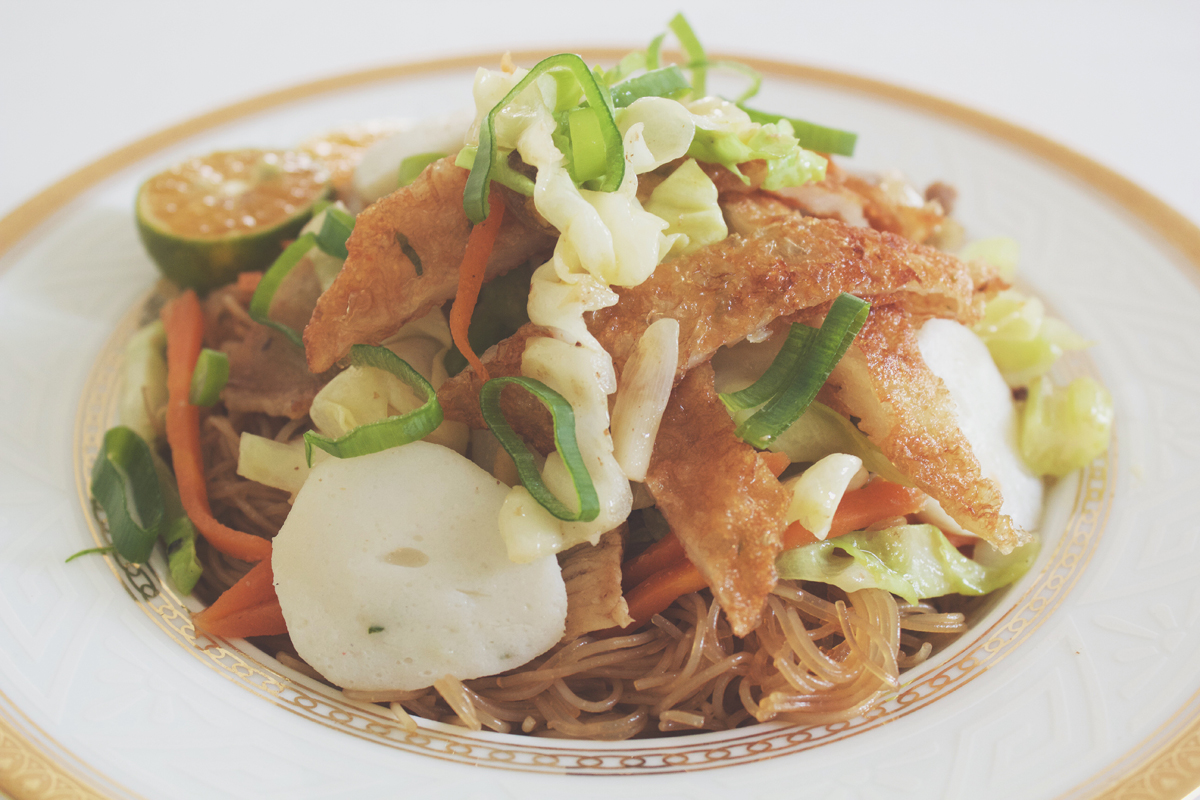
Pancit Bihon Guisado (Filipino Style Stir-Fried Rice Noodles)

Pancit Bihon Guisado (Filipino Style Stir-Fried Rice Noodles)

Hello Everyone! It a whole new month and you already know what that means! A new month on Amcarmen’s Kitchen means a new theme, and for the month of November, I will be sharing with you guys some of my favourite noodle dishes of all time! But before I begin, I’d just like to apologise for my later than usual post – I’ve been super busy for the past three weeks with things I cannot say yet for security reasons, but yes, super busy that I am always mentally drained and find it difficult to just sit down and concentrate on writing for my blog. I’ll probably be able to tell you guys everything somewhere in February next year, but if you really want to know, you can ask me privately. If I don’t tell you, then you’re probably one of the reasons why I can’t talk about why I’ve been busy on any form of social media 😉

Anyway, noodles were first introduced into the Philippines by the Chinese, and since then, noodles have been adopted into local cuisine with endless variations, those popular being pancit bihon guisado, pancit palabok, pancit canton, pancit habhab, etc. The term pancit is actually derived from the Hokkien piān-ê-si̍t (pian i sit) which literally means convenient food. Tonight, I will be kicking it off with a noodle that has been served on our tables countless times over my childhood years up until now – Pancit Bihon Guisado!

Pancit Bihon Guisado (Filipino Style Stir-Fried Rice Noodles)

When one says pancit, it is usually associated with bihon, which is a recipe that uses very thin rice noodles, fried with soy sauce, some citrus, possibly with some fish sauce as well, and some variation of sliced meat and chopped vegetables. The composition of bihon varies quite a lot because it depends on your personal recipe. I can say that the recipe that I will be sharing with you today did even start out like this when my mom first made it for the family – the ingredients have definitely changed over the years! So don’t be afraid to improvise or get creative with the ingredients; s’long as you’ve got the base of the noodles covered with this recipe. You can even take all the meat out and replace the chicken stock with veggie stock for an all vegetarian pancit bihon guisado!

Pancit Bihon Guisado (Filipino Style Stir-Fried Rice Noodles) Ingredients

PREP TIME 15 MINS | COOKING TIME 30-45 MINS | SERVES 8-10

INGREDIENTS

  • 450g bihon noodles
  • 100g fish balls, halved
  • 100g thin fish cake, sliced diagonally
  • 3 pcs dried bay leaves
  • 2-3 garlic cloves, minced
  • 2 celery stalks, sliced
  • 2 pcs thin sliced pork belly, cut into 1cm chunks
  • 1 carrot, julienned
  • 1 chicken crown, breasts removed and sliced, bone reserved
  • 1 small brown onion, diced
  • 1/2 a head of cabbage, sliced
  • 4-5 cups chicken stock
  • 1 tbsp dark soy sauce
  • 1 tbsp fish sauce
  • 1 tbsp oyster sauce
  • Ground black pepper and salt, to taste
  • Spring onions, sliced
  • Whole black peppercorns

METHOD

  1. Add the reserved chicken bone, dried bay leaves, about a teaspoon or two of whole black peppercorns, and salt to a medium-sized pot filled with about 1.5L of hot/boiling water. Turn the heat up to high and leave to boil for about 30 minutes.
  2. Meanwhile heat a large frying pan over medium-high and add in the chunks of pork belly. Cook until browned. The oils released from the pork belly should be enough to sauté the garlic and cook the onions, but if needed, add a little bit more oil if there isn’t enough. Then add the minced garlic and sauté until fragrant and golden brown, about a minute, then followed by the diced onions. Cook until soft, about 2 minutes in total.
  3. Add in the sliced chicken breasts, fish balls, and sliced fish cakes. Season with a bit of salt and ground black pepper and give it a good mix. Cook for about 5 minutes. Then add in the carrots and celery. Mix well and leave to cook for a further 2-3 minutes. Lastly, add in the cabbage and spring onions, and cook until just slightly wilted. Once done, transfer to a bowl and set aside.
  4. In the same frying pan, add the chicken stock to the pan together with the soy sauce, fish sauce, and oyster sauce. Bring to a boil. Once boiling, add the bihon noodles in and cook until all the liquid has evaporated. Make sure that while cooking, you mix and untangle them periodically. Altogether this should take about 10 minutes. Halfway through, add in half of the cooked meat and vegetables to the noodles and mix well.
  5. Serve immediately topped with the extra meat and vegetables, and with calamansi, or alternatively a lemon wedge. Enjoy!

Pancit Bihon Guisado (Filipino Style Stir-Fried Rice Noodles)

Pancit Bihon Guisado (Filipino Style Stir-Fried Rice Noodles)

BON APPÉTIT

– Ally xx

myTaste.com

Pesang Tilapia (Tilapia in Ginger Stew)

Pesang Tilapia (Tilapia in Ginger Stew)

Hello Everyone! I’m feeling sad, are you? Well, the only reason I’m sad is because Seafood Month has come to an end! I can’t believe the month has flown by so quickly. On the bright side, we get to explore a whole new range of dishes for the month of October! I won’t say yet what I have in store for the blog, so you’ll just have to stay tuned as all will be revealed on Thursday!

Pesang Tilapia (Tilapia in Ginger Stew)

So here we go, on to our last recipe for Seafood Month: Pesang Tilapia! Apparently, frying the fish first is not the traditional method in making Pesang Isda (isda means fish in Tagalog just for those who don’t know), it is actually boiled in the ginger stew until tender, and is actually a much healthier option as opposed to frying the fish. However there are a few pros to frying the fish first, mainly for taste and also technique. Firstly, frying makes the fish and stew taste better, and secondly, frying prevents the fish from flaking, because of its stable texture ,when cooked in the stew for a long time.

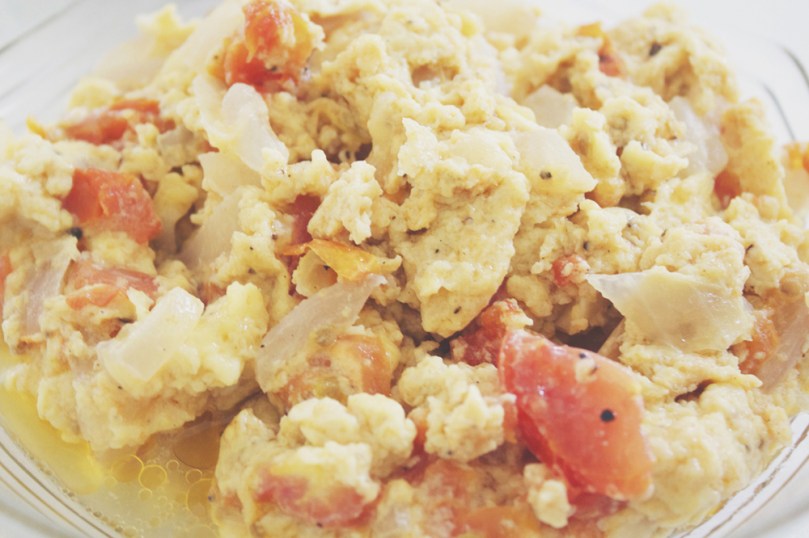
I’ve read a couple of recipes online prior to writing this post up, and a few suggestions have come up on what to serve on the side with this dish. One of the most popular is having some miso sauce as a condiment. I usually just have some fish sauce and calamansi mixed together as a condiment. I’ve also tried searching around for recipes that make any mention of serving this dish with some filo-style scrambled eggs but I haven’t seen any. Nonetheless, it actually tastes really good having the scrambled eggs together with the fish!

Pesang Tilapia (Tilapia in Ginger Stew) Ingredients

PREP TIME 5 MINS | COOKING TIME 20-22 MINS | SERVES 4

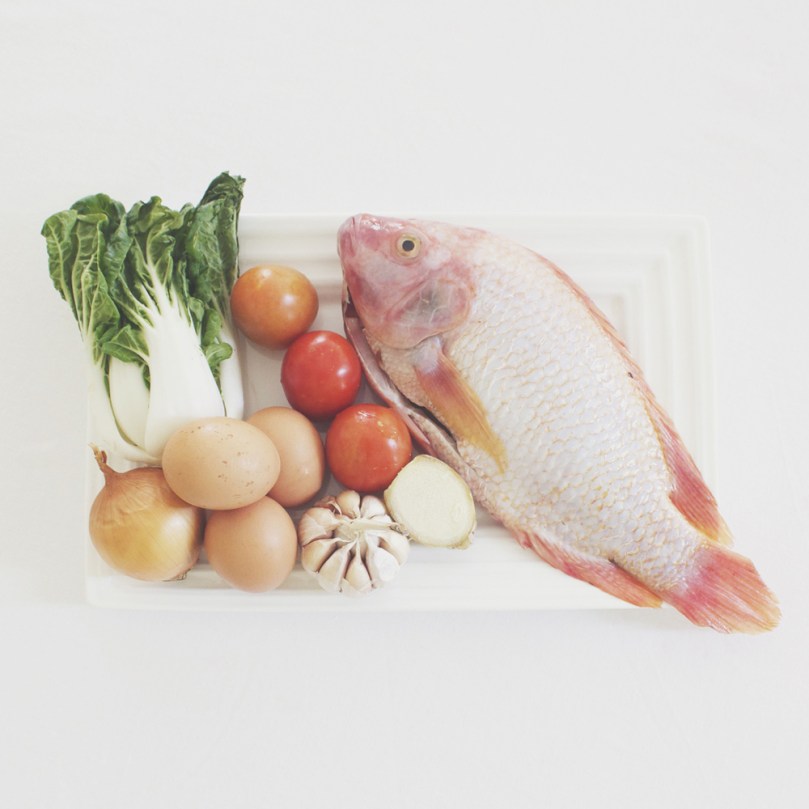
INGREDIENTS

For the ginger stew

  • 800g whole tilapia fish, scaled, gutted and cleaned*
  • 1L water
  • 2-3 bunches of baby bok choy or pechay, cleaned and ends removed
  • 2-3 garlic cloves, minced
  • 1 brown onion, sliced
  • 1 thumb-sized ginger, peeled and sliced
  • 1/2 cup vegetable oil, for shallow frying
  • Ground salt and black pepper to taste

*Alternatively you can use any other types of fish such as catfish, grouper, mudfish, and/or seabass. I know some people who can’t eat fish if it’s still whole; you can still cook this dish with fish cutlets or fillets.

For the Filipino-style scrambled eggs

  • 3 large free range eggs, beaten
  • 3 small ripe tomatoes, diced
  • 2 garlic cloves, minced
  • 1 brown onion, sliced
  • 2 tbsp vegetable oil
  • 1 tsp black peppercorns
  • Ground salt to taste

METHOD

  1. Heat the vegetable oil in a large frying pan over medium-high. Season the fish by rubbing some salt and black pepper. Once the oil is hot, fry the fish until golden brown. Once browned, flip and fry the other side of the fish, about 6-7 minutes per side. Once done, transfer the fish to a serving dish.
  2. Discard the oil, leaving behind about a tablespoon or two, and in the same pan, fry the ginger slices until fragrant. Add in the garlic and sauté until fragrant and golden brown. Finally, add in the onions and cook until soft, about 2 minutes altogether. Then add the water, whole pepper corns and salt, and bring the stew to a boil.
  3. While the stew is simmering away, move on to making your scrambled eggs. Heat the vegetable oil in a small frying pan over medium-high. Sauté the garlic until fragrant and golden brown. Add in the onions and cook until soft, about 2 minutes. Then add in the tomatoes, salt, and black pepper. Cook until the tomatoes are soft.
  4. Once the tomatoes are soft, pour in the beaten eggs and stir with a spoon, lifting and folding it over from the bottom of the pan, until the eggs are softly set and slightly runny in places. Turn the heat off and leave the eggs for a few seconds to finish cooking. Give a final stir before serving.
  5. Turn the heat off from the ginger stew and add the baby bok choy, leaving to cook for about a minute. Pour the stew over the fried fish and serve immediately with some steamed rice and the scrambled eggs. Enjoy!

Pesang Tilapia (Tilapia in Ginger Stew)

Sautéed Egg for Pesang Tilapia (Tilapia in Ginger Stew)

BON APPÉTIT

– Ally xx
myTaste.com

Auguest 2015: Jialng Mew

Polvorón Pops (Popvoróns)™

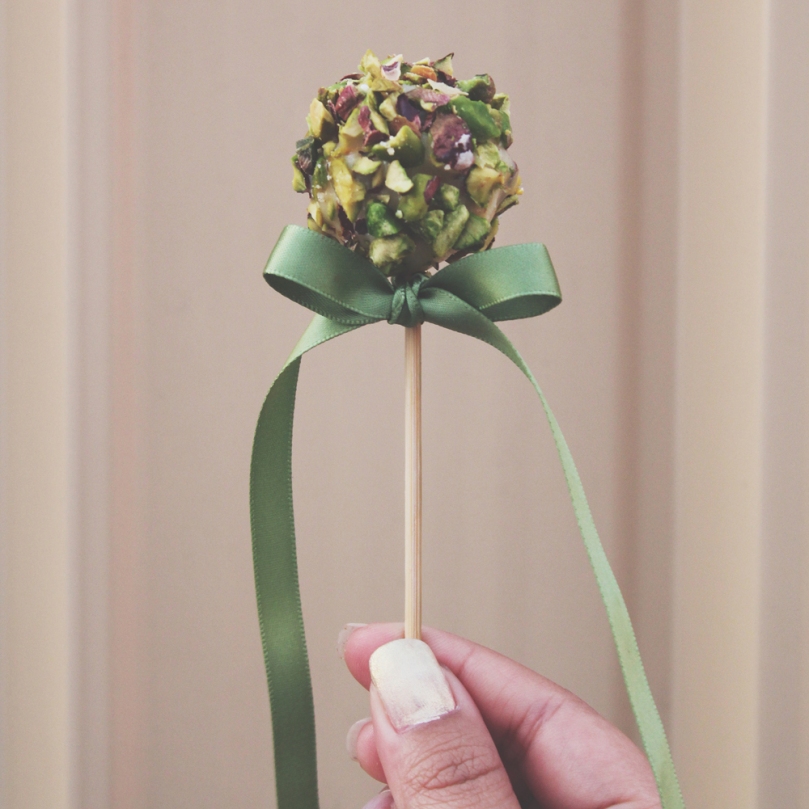
Hello everyone, it’s Jialing again, with my second/final recipe for this week. It’s been a pleasure sharing my recipes with you, and I hope to do it again in the future, but in the meantime, feel free to add me on Instagram – @jialingmew. Also, check out Tuesday’s Chicken Pastel Mini Pot Pies if you haven’t already 🙂 Today’s recipe is another one of my Filipino favourites, but this time based on a sweet treat called Polvorón, which is made with powdered milk and toasted flour and wrapped in colourful cellophane.

Polvorón Pops (Popvoróns)™

I’d previously tried to bring packs of polvoron back to Sydney with me after a trip back to Manila so that my Australian friends could try it, but was told at Sydney Airport Customs that it was on the permanent confiscation list, because of the powdered milk. But fortunately, Australia is not doomed to a polvorón-less fate! The ingredients are actually all very easy to find, and had I realised at the time that they were so simple to make, I wouldn’t have had to go through all that trouble with Customs.

Polvorón Pops (Popvoróns)™

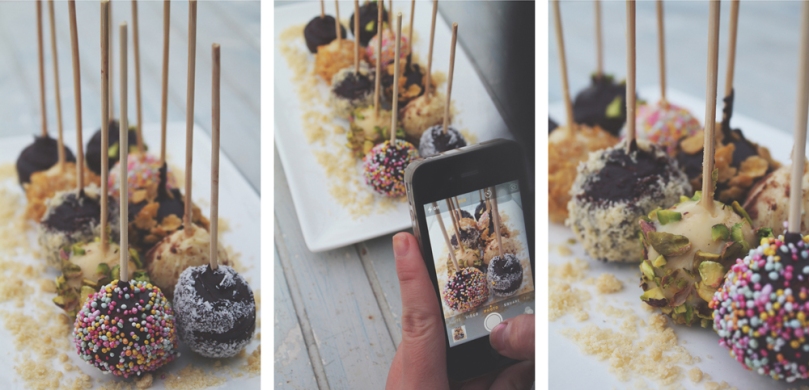
To be quite honest, although I had made polvorón before, a very long time ago, I sort of had to make up this recipe as I went along, adjusting the proportions using some educated guesswork. Traditionally, polvoron is shaped with a special metal tool – that I did not have access to. So I was stuck with the option of cookie cutters, which of course, were nowhere to be found (and probably would not work out at all, looking back in retrospect), and finally, shaping them by hand. I then had one of my pressure and stress-induced moments of genius, and polvorón cake pops happened! Luckily it worked out (better than expected, actually), so I didn’t have to come up with a different recipe, and I can quietly sit down to calmly write about this experience. The recipe can easily be adjusted to make more (or less), which is a bonus! So we all lived happily ever after ❤

Polvorón Pops (Popvoróns)™ Ingredients

PREP TIME 20 MINS | COOKING TIME 15 MINS | MAKES 16-20 POPS

INGREDIENTS

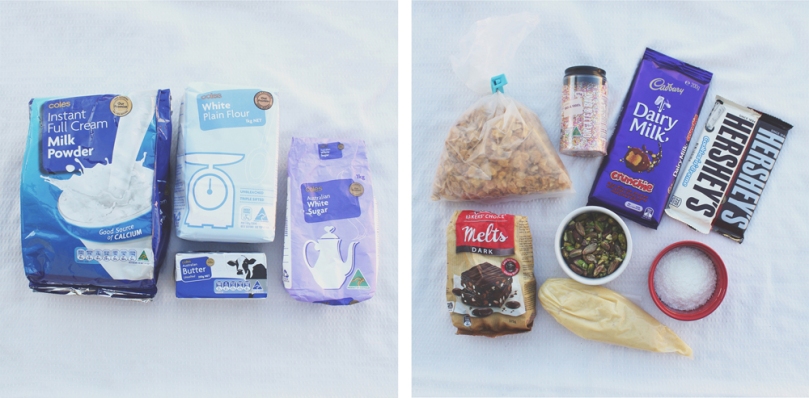
  • 1 cup chocolate chips or melts (I used 1 cup each of dark and white chocolate)
  • 1 cup plain flour, sifted
  • 1/2 cup unsalted butter, melted
  • 1/2 cup powdered milk
  • 1/2 cup white sugar
  • Additional toppings (i.e. crushed nuts or cereal, desiccated coconut, sprinkles, cocoa powder, etc)

METHOD

  1. Using a frying pan or wok, toast the all purpose flour gently on low-medium heat, stirring the flour constantly until it is very lightly browned throughout, about 10-15 minutes. You should notice a change in the aroma of the flour, though the colour change will be very slight, so keep a watchful eye on the pan! Do not overheat, as the resulting taste will be bitter (a helpful tip is to keep a small bowl of all-purpose flour nearby so you can keep checking the colour difference). Once flour is toasted, remove from heat and pour into a large heat-safe mixing bowl.
  2. Make the polvorón mixture by adding the powdered milk and white sugar to flour, stirring until well combined. Add the melted butter and continue to stir (or use hands) until the mixture resembles wet sand, and holds when pinched. At this stage, you can eat some of the polvorón mixture (highly recommended – it’s divine) and add more sugar or powdered milk to your liking. If the polvorón mixture is too dry, add a teaspoon of melted butter.
  3. Using your hands, firmly pack a small amount of the mixture into a 1-inch ball, rolling in between palms to shape. Set completed ball aside on a baking paper-lined plate or small tray, and repeat until the rest of the mixture is used up (should make around 16-20 balls).
  4. Using toothpicks or BBQ skewers (I used BBQ skewers, and cut them in half), very slowly and carefully insert pointed end about 2/3 of the way through each ball. If the ball cracks, gently press around cracked areas and reshape around the inserted skewer. Place the polvorón pops in the fridge to harden while preparing the next step.
  5. Melt chocolate using a double boiler method, being careful not to allow any steam into the chocolate. Alternatively, place into a microwave-safe bowl and heat in the microwave on high for 15 seconds at a time, stirring between intervals, until chocolate is fully melted (please note that you may need to adjust intervals according to your microwave).
  6. Place bowl of melted chocolate on a clean surface, and pour selected toppings separately into small bowls or dishes arranging work surface so that all the bowls and dishes are all adjacent to each other.
  7. Remove polvorón pops from the fridge, and dip one at a time into the melted chocolate mixture (the chocolate will start to set once removed), then immediately into the toppings. Transfer back to the tray and continue dipping and coating the remaining pops.
  8. Serve immediately, or store in a container and keep refrigerated until needed. I’m not exactly sure what the shelf-life of these is, but I’d recommend eating them within 2 weeks – if you can even resist eating them for that long #polvoronparty #theend

Polvorón Pops (Popvoróns)™

Polvorón Pops (Popvoróns)™

Recipe Copyright © 2015 | jialingmew

ENJOY YOUR MEAL!

Jialing.

myTaste.com

Auguest 2015: Jialng Mew

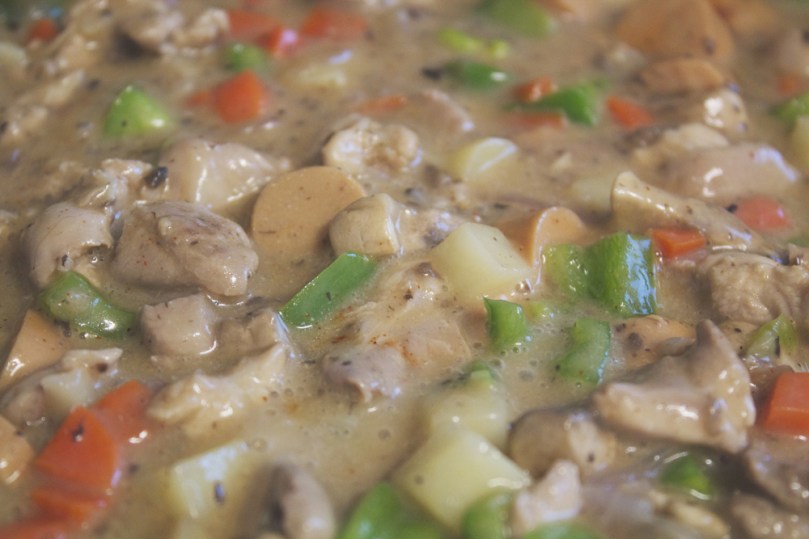
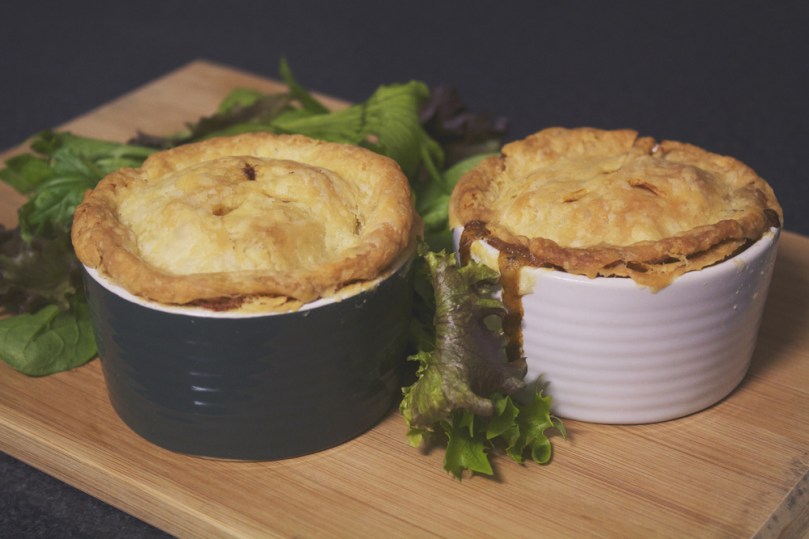
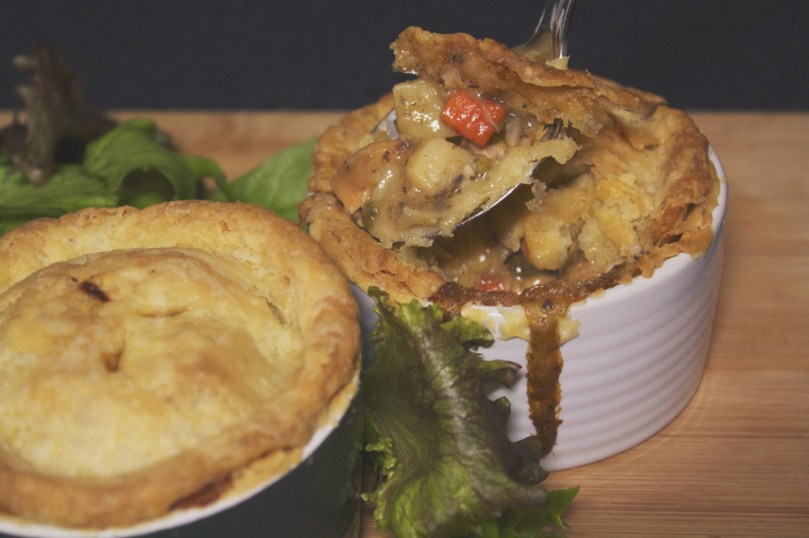
Chicken Pastel Mini Pot Pies

Hello Everyone, I’m Jialing, and I’ll be taking over Amcarmen’s Kitchen for this week, so watch this space for my experimental Filipino fusion recipes! Like Allison, I come from a Filipino background, but didn’t really start doing a lot of cooking until my university years. My cooking style is… hazardous… I may set off the occasional fire alarm, or forget a key ingredient or two, but don’t worry! My recipes for this week have been Amcarmen-approved. Today’s recipe features one of my favourites, Chicken Pastel, which is a cream-based chicken and vegetable dish, typically eaten with rice, as typical with most Filipino cuisine.

Chicken Pastel Mini Pot Pies

Today’s recipe came into existence after I made a batch of chicken pastel using 1kg of meat, then realising too late that I only had 2 cups of rice left in the pantry, and wasn’t due for a Coles-run for another week 😦 I decided to make use of recently purchased ramekin sets by turning the pastel into pot pies, which proved to be a big success with my boyfriend (or so I surmised, after returning to a mountain of empty ramekins). The pastel is adapted from my mother’s recipe, using chicken thighs, which she claims is tastier (and she’s right, of course), but be warned that this recipe makes several servings of pastel, simply because there are a lot of components, but feel free to play around with the ratios.

So apparently, after doing a bit of research, Filipinos adapted this dish from the Spanish Pastel de Pollo – essentially the same thing – which is actually eaten with a pastry crust. Not rice. So… this recipe isn’t so much fusion food as accidentally recreating the recipe in its original state… But… anyway.

Chicken Pastel Mini Pot Pies Ingredients

PREP TIME 2 HOURS | COOKING TIME 1 HOUR 35 MINS | MAKES 6 MINI POT PIES

INGREDIENTS

For the marinated chicken

  • 500g chicken thigh fillets, cubed
  • 3 tbsp light soy sauce
  • 1 & 1/2 tbsp flour
  • Juice of 1/2 a lemon

For the pastry

  • 2 & 1/2 cups plain flour
  • 2/3 cup ice water
  • 250g unsalted butter, chilled and cut into 1 cm cubes
  • 1/2 tsp salt
  • 1/2 tsp white sugar

For the chicken pastel filling

  • Prepared marinated chicken
  • 1 can (420g) cream of mushroom soup
  • 1 can (230g) vienna sausage*, cut into 1/2cm pieces, reserve the liquid
  • 1/2 cup grated tasty cheese
  • 6 large cup mushrooms, diced
  • 3 garlic cloves, minced
  • 2 medium-sized carrots, peeled and cubed
  • 1 large potato, peeled and cubed
  • 1 large red Spanish onion, diced
  • 1 medium-sized capsicum, diced
  • 1 chicken bouillon cube

*Alternatively you can use cocktail sausages or pre-cooked chorizo sausages

METHOD

Preparation

  1. Marinate the chicken: Toss the chicken thigh fillet with lemon juice and soy sauce, and marinate in a large covered bowl for at least an hour (or refrigerate overnight for juicer chicken).
  2. Once you are ready to prepare the chicken pastel (after you have made the pastry), add the flour to the chicken marinade, making sure to mix evenly.
  3. Prepare the pastry dough: Combine the flour, white sugar, and salt in a large mixing bowl. Using a pastry cutter (or a blunt knife, in my case), cut the butter into the flour until it resembles a coarse, pebbly mixture. Be careful not to overwork the mixture as this will cause the butter to melt before baking and reduce the pastry’s flakiness!
  4. Slowly add the iced water, one tablespoon at a time, gently stirring it into the flour until the mixture just holds when pinched (it should still look crumbly, but not doughy).
  5. Carefully shape mixture into two round disks (if the dough does not hold, add another tablespoon of iced water), then cover each with plastic wrap and refrigerate them for at least one hour. While the pastry is chilling, prepare the filling.

Chicken Pastel Filling

  1. Heat a large frying pan over medium-high. When the oil is hot, add the garlic stirring until fragrant and golden brown, followed by the onions. While onion is cooking, add the chicken bouillon cube.
  2. Once the onions are soft and translucent, add the chicken together with the marinade liquids. Stir continuously until the marinade thickens slightly and the chicken is almost cooked through.
  3. Add the carrots and potato, cooking them until softened for about 3-5 minutes. Then add in the capsicum and mushroom, cooking them further for another 3-5 minutes.
  4. Once all vegetables are cooked through, add cream of mushroom soup, plus half the can of water or milk if you prefer, stirring well (if you are using cocktail sausages or chorizo, use one full can of water/milk). Reduce the heat to low and allow the mixture to simmer on the stove for about 15 minutes.
  5. Add the vienna sausage pieces and the reserved liquid to the chicken mixture, and stir, allowing to simmer for another 5-10 minutes until the sauce is thickened.
  6. Remove from stove, and allow the chicken pastel to cool down a bit while preparing the pastry.

Chicken Pastel Mini Pot Pies

Prepare the pastry for the pies

  1. Preheat oven to 200C (200F or gas mark 6). Spray 12 ceramic ramekins with cooking oil (or grease with butter) and set aside.
  2. Sprinkle some flour onto a clean tabletop or surface. Remove one disk of pastry dough from fridge (leave the other in the fridge while you work, to make sure the butter in the mixture remains chilled), and gently work into a ball. Cut into 6 equal portions.
  3. Working with one portion at a time, divide into two pieces – one piece should be approximately 1/3 of the portion (this will be the top) and the remaining 2/3 of the portion will be used to line the inside of the ramekin.
  4. Roll out the larger portion into a circle large enough to fit inside the ramekin. Gently drape the pastry into the ramekin, pressing it onto the bottom and sides. Smooth out the folds of pastry so that the entire interior of the ramekin is covered, with a slight border of pastry going over the lip of the ramekin.
  5. Spoon enough chicken pastel filling into the pastry-lined ramekin, ensuring that it does not spill over the edge.
  6. Roll out the remaining 1/3 portion of pastry into a circle, and gently place on top of the filled ramekin. Join edges to pastry lining the lip of the ramekin, pinching the pastry securely.
  7. Using a small paring knife, cut slits into the top (this will allow the heat to escape, so the pie tops do not explode in your oven).
  8. Repeat with remaining 5 portions (to make process quicker, first divide all the portions into 1/3 and 2/3 pieces, and then roll them out and line the six ramekins. Fill the ramekins, then pinch the tops into place and cut slits).
  9. Arrange the ramekins on a baking tray, lined with baking paper (this will catch any drips from the filling). Bake in preheated oven for 45-60 minutes (may or may not take longer depending on your oven), or until tops are golden and pastry is flaky.
  10. Once the first batch of pot pies are in the oven, repeat steps 13-19 with the remaining pastry dough from the fridge.
  11. Once cool, the pies should come out of the ramekins quite easily, with gentle help from a breakfast knife.
  12. Serve hot and enjoy with a side of a green leafy salad of your choice.

Chicken Pastel Mini Pot Pies Process

Chicken Pastel Mini Pot Pies

Baked pies can be refrigerated for up to one week, or frozen for up to 3 months. Place frozen pies in refrigerator overnight to thaw. To heat refrigerated pies, place in an oven preheated to 200 C for 15-20 minutes.

Unfortunately, the recipe for the chicken pastel filling and pastry don’t quite match up in terms of quantity, so there WILL be leftover chicken pastel. But never fear! It is quite delicious eaten with a bowl of steaming white rice, in true Filipino fashion #pastelfordays

Chicken Pastel Mini Pot Pies

Recipe Copyright © 2015 | jialingmew

ENJOY YOUR MEAL!

Jialing.

myTaste.com

Chicken Adobo

Chicken Adobo

Hello Everyone! For those of you who don’t know (or haven’t read the about me section of this blog), I was born and bred in Brunei, but I have the blood of the Philippines running in my veins. Even though I have never really lived in my country of residence, I am very familiar with the many cuisines the Philippines has to offer. This is through my travels to the Philippines, and of course also from my mothers cooking.

Tonight’s recipe is one that was always on the menu when I was growing up as a kid, and up to today, it is one of my go to dishes if I want a quick and hassle-free dinner. Its got the proteins, and all you really need is to load it up with carbs, which usually is just steamed rice and a side of boiled veggies to go with it. A perfect meal (well for me that is), especially since I get home at around 8/8:30pm after a good workout at the gym, a hassle-free dinner is just what I need. All you really have to do is add all the ingredients to a pot, simmer for 20 minutes and ta-da! How easy is that? I’ve read other recipes where it says to marinate the chicken beforehand anywhere from 30 minutes to 3 hours, but I honestly don’t think it needs the marinating, it tastes just as good the way my mom taught me how to make it!

Chicken Adobo is a very famous Filipino dish. I say famous because, besides swear words being the number one thing people say they know when I tell them I am Filipino, “do you know how to cook Chicken Adobo?” is the next thing they’d ask. It may not look that appetising; I know, I struggled to make Chicken Adobo look aesthetically pleasing on a plate but I just couldn’t, but believe me when I say this dish tastes amazing!

Chicken Adobo Ingredients

PREP TIME 5 MINS | COOKING TIME 20-25 MINS | SERVES 4

INGREDIENTS

Chicken Adobo Ingredients

METHOD

  1. Combine all ingredients in a large pot. Cover and bring to boil. Once boiling, lower the heat and let it simmer for about 20 to 25 minutes until sauce is reduced and thickened, and the chicken is tender. The great thing about this is you don’t have to stir it around!
  2. Serve with steamed rice and a side of veggies of your choice.

Chicken Adobo

As you can see the chicken does produce a lot of oil, so what I usually do is separate the chicken and set the sauce aside in the fridge for a few hours until the oil has settled. Once it has settled, I then scoop out the oil and heat the sauce up again.

BON APPÉTIT

– Ally xx
myTaste.com

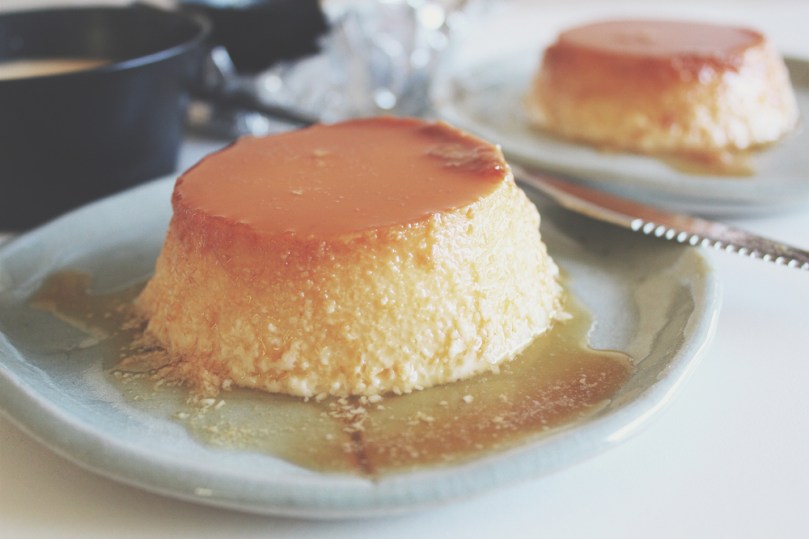
Leche Flan (Crème Caramel)

Leche Flan (Crème Caramel)

Hello Everybody! Today’s recipe is definitely one of my favourite desserts and hands-down a crowd pleaser. It is one of the most-made desserts this year, today being the 4th time and in 3 consecutive weeks in June. Each and everyone of my friends love it, crave it and always look for it whenever I’m around during house parties. I’m pretty sure I’ll be making a lot of people happy by posting this recipe today – hint: Pam, Rachel, and Francesco.

Leche Flan, or also known as Crème Caramel, is a rich and heavenly dessert (the way I make it of course), made up of egg yolks and milk with a soft caramel top. It is widely known throughout the world (especially in Europe) and has been in the dessert menu of most restaurants because of its convenience in preparation – and it really is that simple! In the Philippines, celebrations such as parties and town fiestas won’t be complete without it.

Leche Flan (Crème Caramel) Ingredients

PREP TIME 5 MINS | COOKING TIME 25 MINS MAKES 6 MINI FLANS

INGREDIENTS

  • 6 egg yolks, at room temperature
  • 1 can (395g) condensed milk, at room temperature
  • 1 cup milk, at room temperature
  • 6 tsp caster sugar
  • 1 & 1/2 tsp vanilla extract

Yes, you only need 5 ingredients! And makes 6 small, round flans. Working with ingredients at room temperature is ideal as I found that when I made them with chilled ingredients, the egg yolks started to form and you’ll then find lumps of egg yolk in your flan.

METHOD

  1. Add one teaspoon of sugar to each round metal mould. Caramelise the sugar by placing the mould on the stovetop. Mix thoroughly until the solid sugar turns into liquid (caramel) and turns light brown in colour. Be careful as the sugar can easily burn. Set aside to wait for the caramel to fully solidify and cool down.
  2. In a large bowl, whisk the egg yolks and vanilla extract together. Then whisk in the condensed milk, and finally the milk until well combined. You may see tiny bits of egg yolk starting to form. If so, strain the mixture through a sieve into another bowl.
  3. Pour the mixture equally into the moulds and cover the tops with foil (this is to prevent any water droplets from the steaming process dripping nto the mixture – trust me, I’ve done this once before and I got very watery flans).
  4. Place in a steamer and steam for 15 minutes. Once done, turn the heat off and leave it in the steamer for a further 10 minutes. Remove from the steamer and set aside to cool down before placing them in the refrigerator for at least 4-5 hours before serving.
  5. To plate up, run a butter knife around the edges of the flan, place a serving dish on top of the mould, invert, and enjoy!

Leche Flan (Crème Caramel)

BON APPÉTIT

– Ally xx
myTaste.com

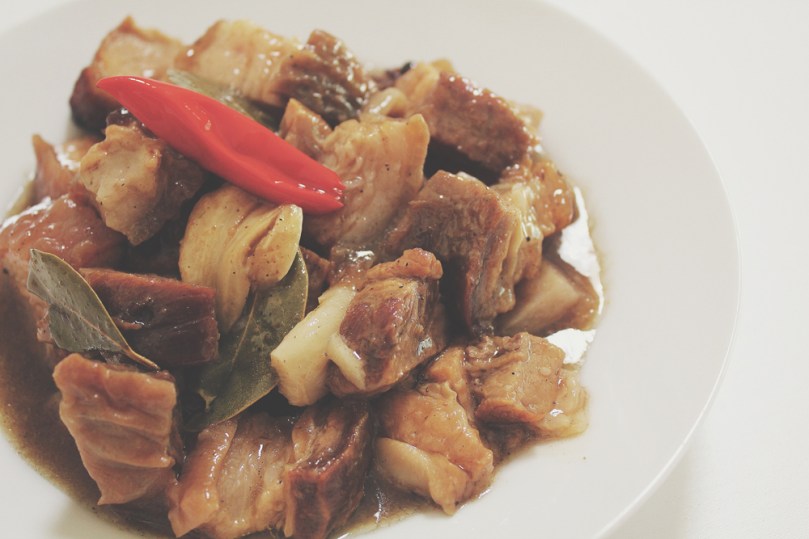
Paksiw na Lechon Kawali

Paksiw na Lechon Kawali

Hello everyone! This is another Filipino dish that I really love. I have a lot of favourite Filipino dishes actually, but there are some that I cannot bring myself to eat – I’m pretty sure they taste good, but a little bit off putting for me, and yes, I am talking about the infamous dinuguan (a savoury stew of meat and/or offal, simmered in a rich, spicy dark gravy of pig blood, garlic, chilli, and vinegar). I get the shivers every time I think about this dish. Anyway, enough about this dish for it’s thankfully not what today’s post will be about.

Lechon Kawali is basically a pan-roasted pork dish popular in the Philippines. It is usually accompanied by sarsa ni mang tomas (basically a sauce blend of liver, vinegar and spices that give that distinct sweet and spicy taste it is famous for), ketchup, or soy sauce with calamansi (Philippine lime). Lechon kawali is cooked by boiling then later deep frying a portion of the pig.

Lechon Paksiw is essentially a term associated to a dish that is cooked with vinegar, garlic, onion, and sarsa ni mang tomas sauce. It is a pork dish made from leftover roast pig which is known as Lechon. However, fresh pork can also be used to make lechon kawali. Traditionally, as mentioned above, the pork is deep fried. Because I don’t like deep frying stuff, I roasted the pork in the oven like I would do for pork crackling – the result I find is better, not oily and the meat remains tender and juicy on the inside where as deep frying has a tendency to make the meat tough and dry.

Paksiw na Lechon Kawali

PREP TIME (see below)* | COOKING TIME 1 HOUR 20 MINS |
SERVES
4-6

*If you plan on making dish, plan for about 1-3 days ahead for resting time in the refrigerator.

INGREDIENTS

  • 1kg fresh pork belly or shoulder
  • 1 bottle (330g) mang tomas all purpose sauce
  • 6 cloves garlic, peeled and crushed
  • 3 bird’s eye chillies
  • 3/4 cup white vinegar
  • 1 cup pork stock
  • 1 tbsp white sugar
  • 6 dried bay leaves
  • 2 tsp whole black peppercorns
  • Ground salt
  • Oil for rubbing

METHOD

  1. Score the skin with a very sharp knife. Place the meat in a large pot with water, 1 tsp of the whole peppercorns and half of the bay leaves. Boil for 20 minutes. Remove from the heat and drain, placing in a large bowl and let to cool to room temperature. Reserve the pork stock for cooking later. Once the meat has cooled down, refrigerate uncovered for at least 24 hours or for up to 3 days for a better result. Refrigerating the meat will help to draw out any remaining moisture. Remove from the refrigerator and bring back to room temperature prior to roasting in the oven
  2. Preheat oven between 220-240C. Rub oil and plenty of salt into the scored skin, really getting it into the slits of the score marks. The fat under the skin will react to the salt and that is what makes the skin puff up and crisp up. Roast in the oven for 20 minutes and then bring the temperature down to 160C and roast for another 10 minutes. Remove from the oven and let the meat rest for 20 minutes. Then cut the pork into chunks.
  3. Add all the remaining ingredients into a large pot together with the pork belly chunks. Simmer for 20 minutes and then serve with steamed rice.

Paksiw na Lechon Kawali

BON APPÉTIT

– Ally xx

myTaste.com