Kamayan sa Palaisdaan

Kamayan sa Palaisdaan

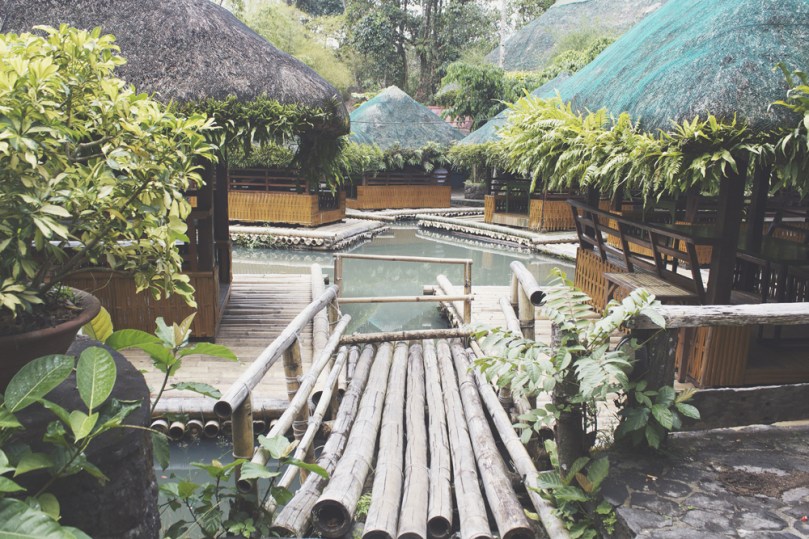
Hello Everyone and welcome back to an all new Review Sunday! Most of the food that you’ll see here have either already been touched on in previous reviews, and/or recipes, so I may not write much about the food only because it’s nothing quite so special. Kamayan sa Palaisdaan has both a Hotel & Resort, as well as a restaurant, both carrying the same menu but differ in ambience. It is the ambience of the restaurant just down the road from the Hotel & Resort that made me want to write a review and share this place with you – floating bahay kubos on bamboo rafts!

Kamayan sa Palaisdaan

Other than the ambience, I couldn’t really pick out anything special from their menu that really made me want to say, “I’m coming back here for this particular dish!” Though they say it’s an ideal getaway restaurant for seafood lovers, the seafood did not really impress – well I mean, we barely ordered any seafood to be honest.

I don’t know why I am so negative when it comes to reviewing Filipino food. The only reason I can think of is that most of the food that you get dining out, you can easily cook it up yourself at home and it tastes exactly the same. From the dishes that you will see below, I can definitely cook up all the dishes. I guess it’s because I know how to cook these dishes, that I comment the way I do. I’m not saying that these are terrible dishes; if anything, they are my favourite dishes to have when eating at home. It’s just that when I dine out, I want to eat something that I can’t cook myself (or I guess in my case, haven’t attempted to cook yet).
Kamayan sa Palaisdaan - SINIGANG atbp: Sinigang na Sugpo
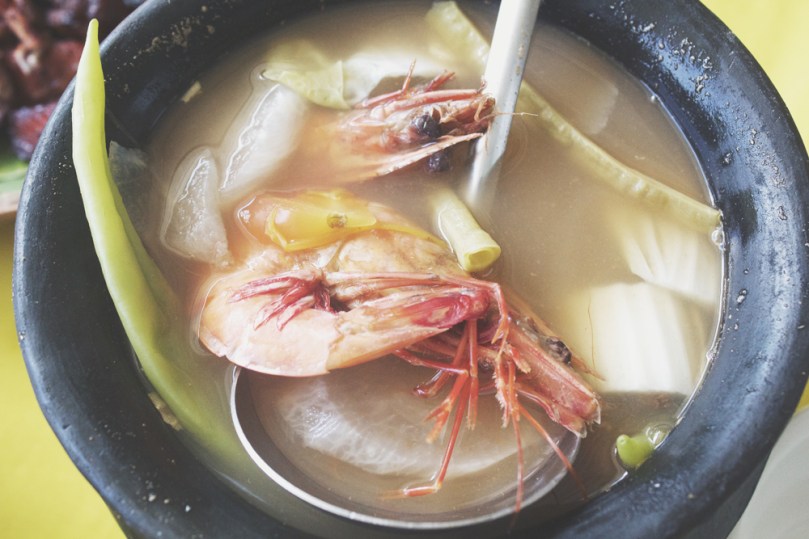
SINIGANG atbp: Sinigang na Sugpo (₱320.00)

Sugpo, as you can already tell from the photograph above is prawn (or shrimp if you’re from that part of the world that calls them that despite being huge-ass prawns). Sinigang is a soup that is characterised by its sour and savoury taste that is most often associated with tamarind. This is a dish that my mom would make a few times a month, varying between different meats such as beef and pork, and seafood like prawns and fish, accompanied by all sorts of vegetables from daikon, water spinach, okra, taro corms, etc. This is a dish I love especially when the weather is quite chilly.
Kamayan sa Palaisdaan - SINIGANG atbp: Tinolang Manok
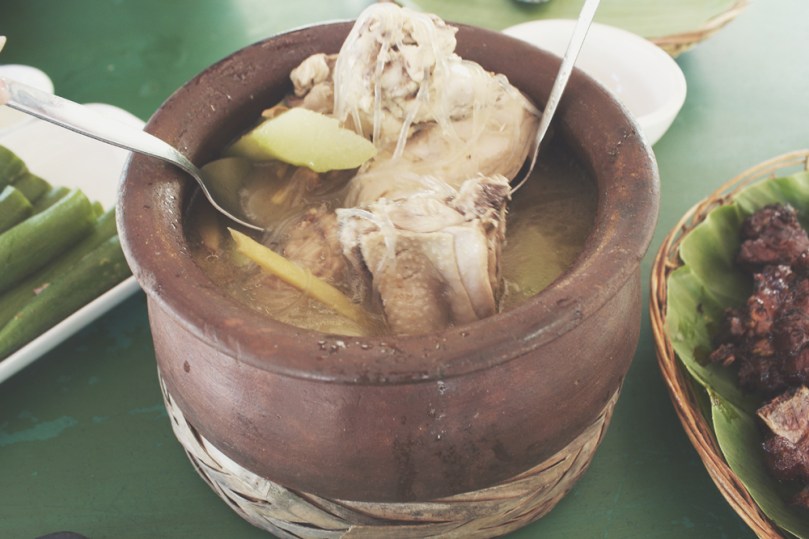
SINIGANG atbp: Tinolang Manok (₱255.00)

This is another dish that my mom would always make, and also great for cold and rainy days. Tinola is a ginger and onion based soup with manok (chicken) as the usual main ingredient, best complimented with green papaya wedges (an alternative is chayote/chokos) and chili leaves. Again, a dish that I love, but very close to the way that I’d make it at home.

Kamayan sa Palaisdaan - SIZZLERS: Sisig Pork
SIZZLERS: Sisig Pork (₱205.00)

Of course, a meal in the Philippines would not be complete without sisig! I was actually quite disappointed with this sisig dish though – it came to the table, not only without a freshly cracked egg on top of it, but it also wasn’t sizzling and was very dry.
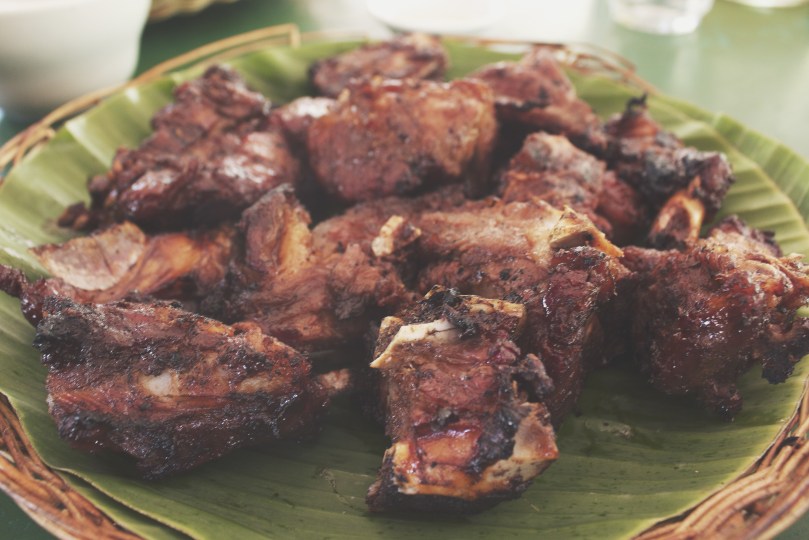
Kamayan sa Palaisdaan - IHAW: Inihaw na Spareribs
IHAW: Inihaw na Spareribs (₱310.00)

I love ihaw, and I love spareribs. Sadly, these ribs were dry and weren’t very tender.

Kamayan sa Palaisdaan - IHAW: Inihaw na Pork Chop
IHAW: Inihaw na Pork Chop (₱320.00)

The pork chop option was much better than the spareribs; juicy, tender, and full of that lovely char-grilled flavour.

Kamayan sa Palaisdaan - VEGETABLES: Chopsuey Chicken
VEGETABLES: Chopsuey Chicken (₱185.00)

Whenever we dine out, we try to avoid dishes like chopsuey, but because we couldn’t decide on any other vegetable dishes (I know there’s chicken in it but it was somehow placed under the ‘vegetables’ section on the menu). Why we try to avoid this dish is simply because it’s basically just stir-fried vegetables and nothing more exciting to that.
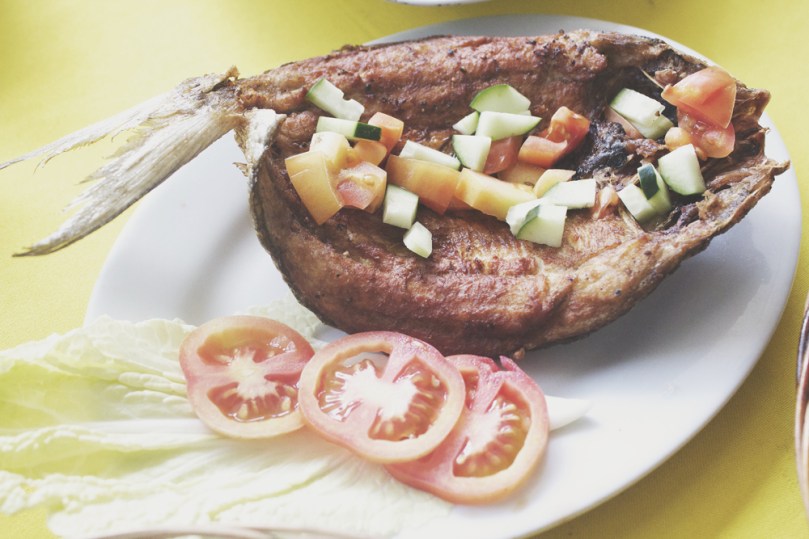
Kamayan sa Palaisdaan - PRITO: Daing na Bangus
PRITO: Daing na Bangus (₱160.00)

Bangus (milkfish) is the national fish of the Philippines and can be prepared and cooked in various ways. ‘Daing’ refers to dried fish from the Philippines. Fish prepared as daing is usually split open, gutted, salted liberally, and then sun and air-dried. I love eating fried bangus with a bit of pickled green papaya on the side with plain rice. But honestly speaking though, why order fried fish at a restaurant? In my case, because I love it and I couldn’t find anything else in the menu that attracted me to it.

Kamayan sa Palaisdaan - SALADS: Ensaladang Pako
SALADS: Ensaladang Pako (₱125.00)

Quite possibly the worst dish from this place based on my taste buds and opinion. For starters, the taste of what seemed to be raw pako (an edible Fiddlehead fern) did not sit too well with me; it tasted bitter. What made it worse for me were the raw onions and the obvious canned sardines in tomato sauce. Why did I order this? Well I didn’t, my uncle did. I don’t think I even touched this dish after a small bite of just the pako.

Kamayan sa Palaisdaan - JUICES: Buko FreshJUICES: Buko Fresh (₱60.00)

Fresh coconut juice straight from the shell, need I say more?

Overall, as I have already mentioned above, the menu is pretty average and can honestly be found in many other restaurants (and homes no matter rich or poor) across the Philippines. I guess it’s safe to say that if you are going to the restaurant for the food, it’s not worth the trip to this place seeing as it is also quite hard to find. However, if you want to dine in a bamboo hut on a bamboo raft floating over water, then you may want to make the trip here just for that experience. Dining at the Hotel & Resort isn’t bad as well as it provides a lot more recreational activities that you can enjoy aside from dining, and it also overlooks Mount Banahaw. So ambience and dining experience is a sure 10 for me. Service probably an 8 as even though there were quite a few staff members, it was pretty hard to flag one down whenever we needed something. Food – probably a 5; 6 if I’m feeling generous, but nothing more.
Kamayan sa Palaisdaan

Barangay. Dapdap
Tayabas, Quezon
Philippines

– Ally xx

Oxtail Kare-Kare

Oxtail Kare-Kare

Hello Everyone! So I was just browsing through all the posts I’ve uploaded since I got into a regular uploading schedule and I realised that I actually haven’t posted a savoury dish in a while. I’ve been posting about cakes, cookies, and muffins these past few months! The last savoury dish that I blogged about was back in October with The Ultimate Brekkie (for those who have not seen it, click on it and prepare to drool, seriously).

Today’s recipe is a little different, or may be different to some of my readers/viewers. It is one of my most favourite dishes of all time, and only because my mom used to make it on a regular-enough basis to always have this orgasmic sensation with every bite. It may not suit the taste buds for many I feel, but seriously, every person I’ve made this for, well okay 3 people, loved it so much that they’ve even gone and tried to make it for themselves!

There are a few things to cover in this recipe that many may not know about, so I’ll start of with what even is Kare-Kare. Pronounced kah-reh kah-reh, it is a traditional Philippine stew flavoured with ground roasted peanuts or peanut butter, onions, and garlic; creamy, rich, and thick. Traditionally, a palayok (clay cooking pot) is used to cook this dish and it is also used as the serving pot. Typical meats that make the base for this stew include oxtail (sometimes this is the only meat used), pork hocks, calves feet, pig feet, beef stew meat; and occasionally offal, or tripe, rarely goat or chicken. Besides the meat, vegetables are also cooked with the stew and these include a range of (but are not limited to): eggplant, Chinese cabbage (or other leafy greens), long beans, okra (lady fingers), daikon, etc. – usually equaling or exceeding the amount of meat in the dish. The overall dish is then coloured (and flavoured) with annatto seeds, which is extracted by add the seeds in oil or water. Since I didn’t have some in handy, I just left them out – I feel like it didn’t have a significant effect to the overall flavour of the dish.

This dish is often served and eaten with shrimp paste known in a Philippines as bagoong (pronounced ba-go-ong). Sometimes it is spiced with chilli, or sautéed with garlic, onions, tomatoes, and sprinkled with calamansi (small round lime) juice. Bagoong paste varies in appearance, flavour, and spiciness depending on the type. Pink and salty bagoong is marketed as “fresh”, and is essentially the shrimp-salt mixture left to marinate for a few days. I sautéed a whole jar of shrimp paste and only used about a generous tablespoon of it on the side for this dish. The rest I put back into the jar and into the freezer until for later use. There are many other dishes that you can make with the sautéed shrimp paste and it may pop up in my blog a few more times!

I cooked up this dish for our supposed International (Asian) Feast Night that we had been planning for a while. I say “supposed” because instead of having food from 5 different Asian Cuisines, we ended up only having 3 and it turned out to also be Lydia’s farewell dinner. Basically Lydia cooked a dish from China, Vidhya from India, and me from the Philippines. Jialing (who did not show up by the way because she had a staff dinner) was supposed to make a dish from Malaysia, and Marissa, who already went on holiday, was supposed to make a Vietnamese dish. I was seriously so tired that night, I mean first of all, I had just come back from my Outback trip and only felt the tiredness after returning back. Secondly, I worked from 9am-5pm that day, and when I got home, I straightaway went into the kitchen to cook. I was SO tired that I actually seriously fell asleep at the table after dinner, during dessert. Talk about an induced food coma!

So for this night, which by the way happened about 3 days after I got back from the Red Centre, I decided to make my famous Oxtail Kare-kare. I also made a chicken version for Vidhya because the only meat she eats is chicken (and fish). I’ve never actually tried the dish with chicken before; it turned out okay but in my honest opinion, it wasn’t as flavourful as the Oxtail. I have made this dish in the past as well where I used pork hock/leg, pork shoulder, beef shank or gravy beef, and my mom made it a few times with beef tripe – all these cuts of meat work perfectly well with the dish. Some butchers sell oxtail either whole or cut. If your local butcher happens to seek them whole, just kindly ask them to cut it into rounds for you, that’s what I did. I remember as a little kid that I would always love the bigger cuts because they had more meat in them… Until someone ruined it for me saying that “the bigger the cut, the closer it is to its bum!”

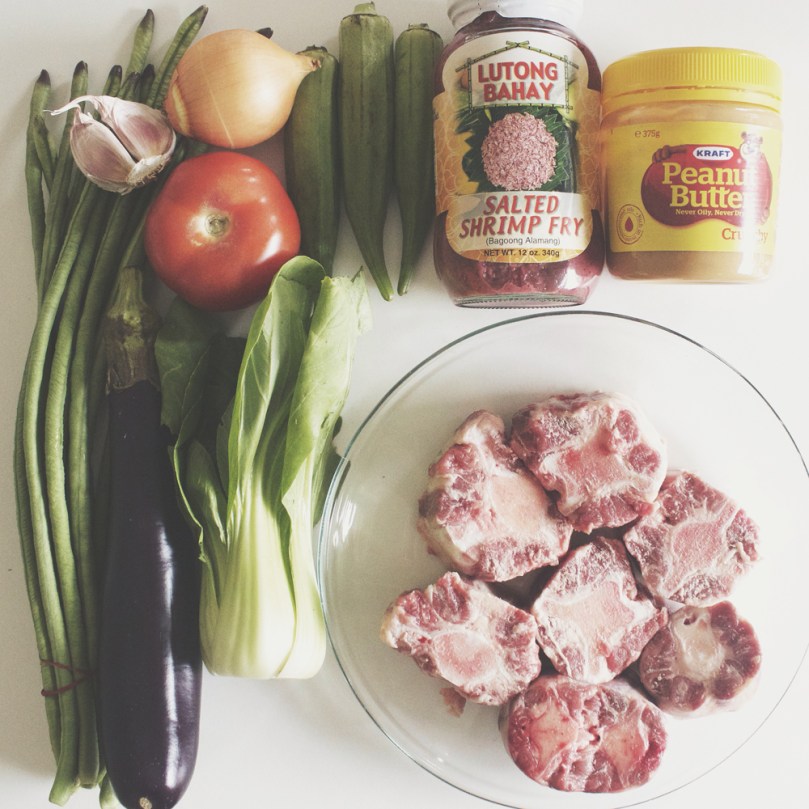
Oxtail Kare-Kare Ingredients

PREP TIME 10 MINS | COOKING TIME 1 HOUR 45 MINS | SERVES 4-6

INGREDIENTS

For the stew

  • 1kg oxtail, cut into rounds
  • 2 cups beef stock
  • 5 dried bay leaves
  • 3 garlic cloves, crushed then minced
  • 1 large onion, halved and then sliced
  • 1 tbsp crunchy peanut butter (a very generous tablespoon)
  • 1 tsp rock salt
  • 1 tsp whole black peppercorns
  • Ground salt and pepper
  • Buk Choy, separated
  • Eggplant, sliced diagonally
  • Long beans, cut into 1-inch long strings
  • Okra (lady fingers), whole and then sliced later once cooked

For the sautéed shrimp paste

  • 345g bagoong alamang (shrimp paste)
  • 3 garlic cloves, crushed then minced
  • 2 large tomatoes, diced
  • 1 large onion, halved and then sliced
  • 1 tbsp sugar

METHOD

  1.  Add the oxtail, bay leaves, rock salt and whole peppercorns to a large pot with about a litre of water, or enough to submerge the meat. Boil for about 1 to 1 and a half hours until tender. If you are using a pressure cooker (which I don’t have), 30-35 minutes should do the trick! Once the meat is tender, remove from the heat and set aside. Do not throw away the stock.
  2. While your meat is tenderising, move onto sautéing the shrimp paste. Heat oil in a medium-sized frying pan and sauté garlic and onions until fragrant. Add the tomatoes in and sauté until they have softened. Add the shrimp paste in and give it a good mix. Add in the sugar and let it simmer for about 5 minutes. Turn the heat off and set aside. You may need to heat it up again before serving.
  3. Heat oil over medium-high heat in another pot and sauté the garlic and onions until fragrant. Add the the oxtails, season with ground salt and pepper, and give it a good stir. Add the peanut butter to two cups of the stock and stir until the peanut butter has softened. Add the peanut butter mix to the oxtail and bring the heat to low. Let it simmer for about 8-10 minutes. If you want your stew to be less creamy and thick, add more stock to your liking.
  4. Meanwhile, bring a medium pot of salted water to a boil and cook your vegetables for no longer than 5 minutes. Drain and transfer the cooked vegetables to your oxtail stew just before serving. Serve hot with sautéed shrimp paste and enjoy!

Oxtail Kare-Kare

BON APPÉTIT

– Ally xx

myTaste.com

Kangkung Belacan

Kangkung Belacan

My mom used to make this dish all the time back home. Honestly, I’ve never made it for myself ever since being here in Sydney, except for today. On occasions though when I’d be eating out with friends in various Asian-Malaysian restaurants, I would come across this on their menu and MY GOODNESS were they overpriced! Like I get the whole profit making thing but honestly, it’s like more than a 500-600% profit for this simple dish! Mamak in Chinatown for example is priced at $14.00 while Delima Restaurant is priced at $17.95. I know Delima adds prawns to their kangkung, but seriously. Overall, if I totalled how much I spent for this dish, it would total to about $3.00 inclusive of all the ingredients, and naturally it’d be even cheaper back home. Here a bunch of kangkung averages to about $1.50 depending where you get it from, while back home you paid 99c for five bunches.

Kangkung, also known as ‘water spinach’, is a vegetable commonly used in Southeast Asian cuisines, mainly Indonesia, Malaysia and Singapore where it is usually stir-fried in a chilli sauce. Kangkung is also evident in other Asian cuisines and I do recommend that you check out how else it can be used by going to wikipedia (I know, the whole conception of wikipedia not being a reliable source, but trust me). Belacan, or sambal belacan, basically consists of fresh red hot chillies, roasted Malaysian shrimp paste and lime, made into a paste or sauce to be used either as a condiment, or as an ingredient in cooking.

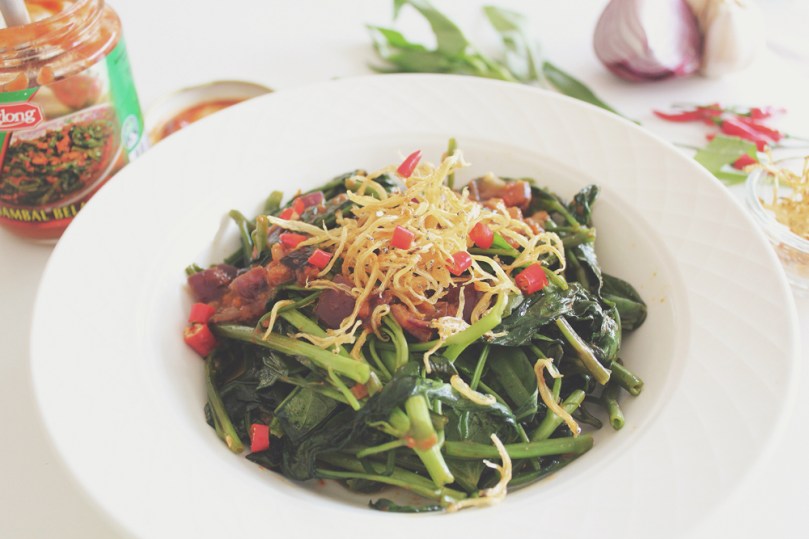
So for today’s recipe as titled: Kangkung Belacan (stir-fried water spinach with chillies and shrimp paste).

Kangkung Belacan

PREP TIME 5 MINS | COOKING TIME 10 MINS SERVES 3-4

INGREDIENTS

  • 2 tbsp canola oil
  • 2 cloves garlic, minced
  • 1/2 red onion, diced
  • 2 red bird’s eye chillies, sliced
  • 1 & 1/2 tbsp sambal belacan*
  • 1 bunch kangkung, washed, leaves separated from the stems, and stems cut into short lengths
  • Handfull of small-sized ikan bilis (dried anchovies)

*I used a store bought paste, but you can always follow a recipe make your own.

METHOD

  1. Heat oil in a medium frying pan over high heat. Add the ikan bilis and fry until crisp. Set aside.
  2. In the same pan, add the garlic and 1 of the sliced bird’s eye chilli and sauté until golden brown. Add in the onions and sauté until soft. Bring the heat down to low and then add in the sambal belacan, cooking the belacan over high heat will cause it to spit all over the stovetop and we don’t want to have a messy cooking area. Cover if needed. Sauté the belacan until fragrant.
  3. Add the the kangkung leaves, stems and a little bit of water to dilute the belacan you think can’t handle the heat. Cover until the leaves start to wilt. Toss around the belacan to coat the leaves and stems evenly (kangkung literally takes only a minute to cook).
  4. Transfer to a serving plate and top with the fried ikan bilis and fresh red chillies. Serve with hot rice.

Kangkung Belacan

BON APPÉTIT!

– Ally xx

myTaste.com