Mango Shake

Mango Shake

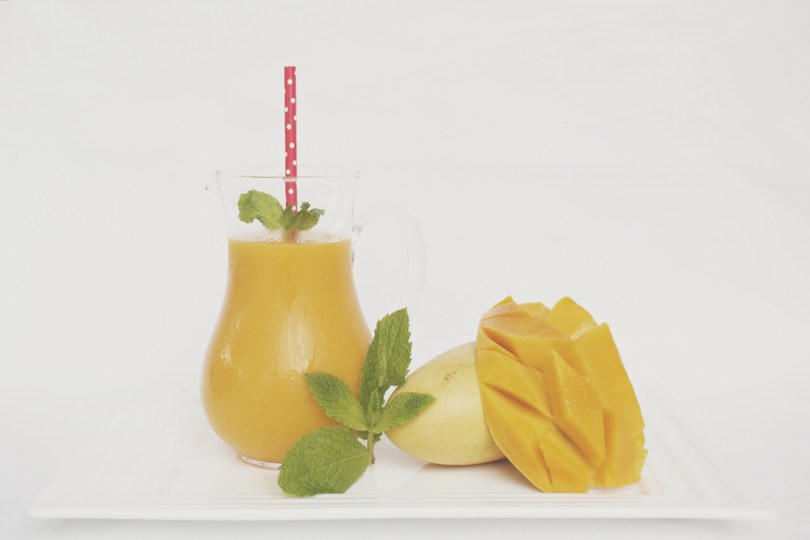
Hello Everyone! I’ll be keeping today’s post very simple and straight forward as tomorrow I will be doing a special post for two very loved people in my life. What I like about being back in the tropics around this time of the year is that it’s summer and summertime means MANGOES! Once, someone asked me a question: “If you were to be shipped to a deserted island and you could only take 1 item of food with you, what would you bring?” I thought a while about this and I remembered that my final answer was mangoes. The moment I said it, everyone nodded and agreed that it was a good choice; I could tell that their mouths watered as soon as I said it.

Mango Shake

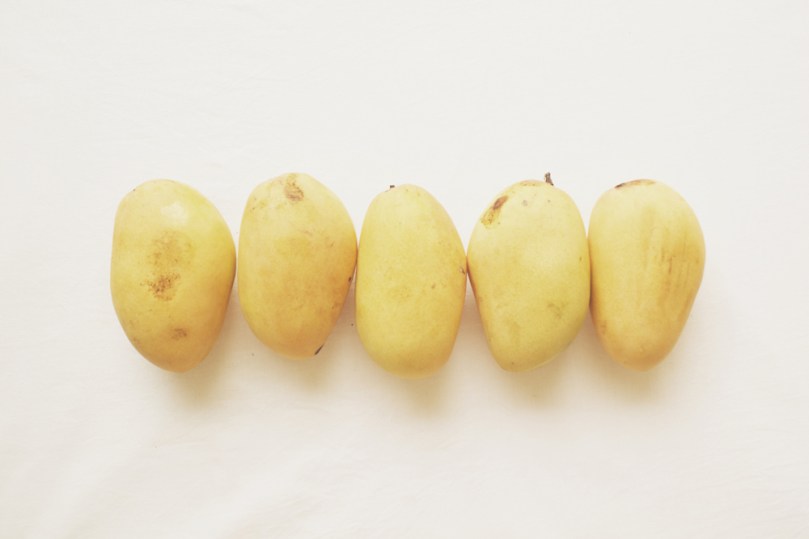
I love mangoes, especially Philippine mangoes. I’m sorry but Kensington Pride mangoes, which are the ones I’ve been buying from Coles during summertime down under, cannot compare. Today’s recipe is very simple, and is definitely much better than what you get at restaurants. I remember the one that I had at Arabela, it was very watered down, and more on ice than mango.

Mango Shake Ingredients

PREP TIME 10 MINS | COOKING TIME | SERVES 4

INGREDIENTS

  • 4 ripe Philippine mangoes, peeled and cut into chunks
  • 2 cups ice
  • 1/4 cup cold water
  • Mint leaves, to garnish

METHOD

  1. Combine all the ingredients, except the mint leaves, into a blender.
  2. Blend until smooth. Pour into a tall glass and garnish with mint leaves.
  3. Serve and enjoy a refreshing drink in the summer sun!

Mango Shake

BON APPÉTIT

– Ally xx

myTaste.com

Fresh Fruit Salad

Fresh Fruit Salad


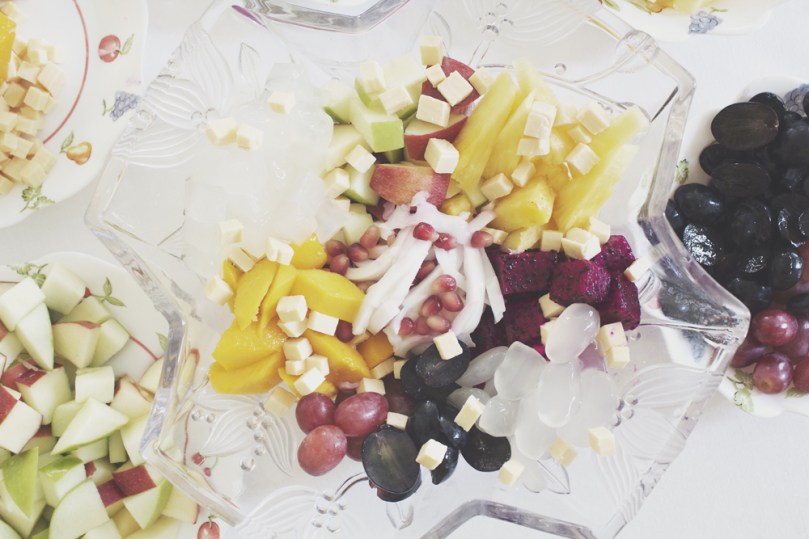
Hello Everyone! Today’s post is a special one as this is my 100th recipe on the blog! I wanted to make something special, for my 100th recipe post, but I wasn’t in the mood to bake a cake for it because I baked one just last week, and I will be baking one this coming Thursday ready for my Mom’s birthday on Friday!

Fresh Fruit Salad

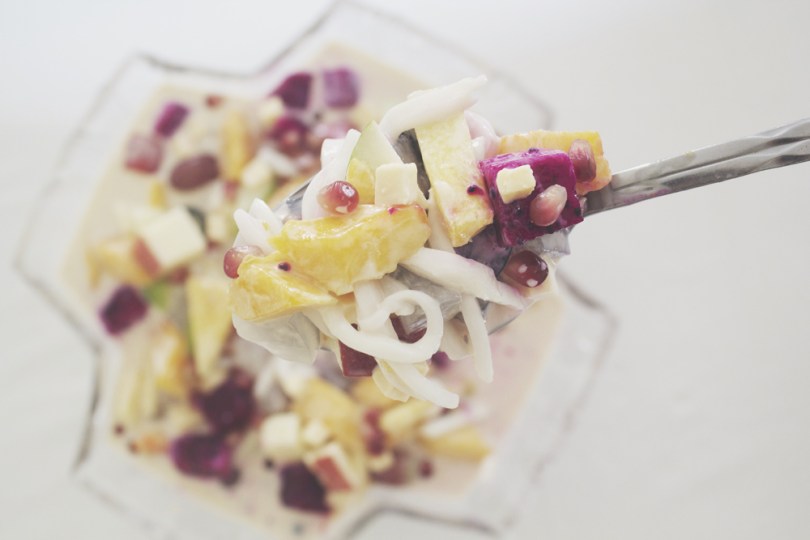
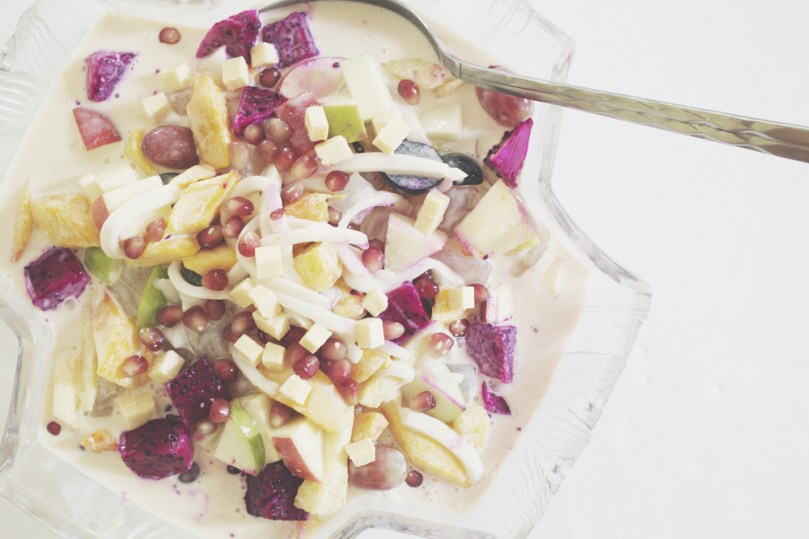
Anyway, today’s recipe is a classic dish that you will find on every Filipino’s table during Noche Buena (the eve of Christmas) and/or Media Noche (New Year’s eve) feasting celebrations. ‘Fruit Salad’ is a general term referring to a dish that is typically composed of an assortment of fruits, fresh or canned. The Filipino version of the fruit salad consists of these fruits, condensed milk, and table cream, making the dish a rich and sweet dessert. I personally don’t like the use of canned fruits just because of the amount of preservatives in them. Anyway, there are plenty of fresh fruits that can be bought at the local markets – and Philippine mangoes are in season right now so why substitute that for canned fruit cocktail?! However, buying a can of fruit cocktail is definitely cheaper for the average Filipino.

Here’s what you’d get if you use canned fruit cocktail to make your fruit salad; not as vibrant as the one above right? Also, by using fresh fruits, you get to play around not only with the type of fruit but with the many colours as well, for example vibrant green kiwis or bright orange mandarins/papayas? Take your pick! Just don’t forget to include bright yellow mangoes and definitely those luscious red dragonfruits.

Fruit Salad

Now, I’ve had a look at a few recipes online and none that I have come across add cheese in their fruit salads. From what I know, or I guess what my mom has told me is that, since this would normally be a dish served during Christmas and New Year’s time, a fruit salad would not be complete without the addition of pieces of queso de bola. Queso de Bola (translated: “ball of cheese”) is just Edam cheese, traditionally sold in spheres with a pale yellow interior and a coat of red paraffin wax.

Other than fruits, fresh or canned, and cheese, palm seeds and nata de coco can also be added. I love nata de coco; I’d always fish these out from the serving bowl! Nata de Coco, for those of you who don’t know, is produced by the fermentation of coconut water. It is translucent and has a jelly-like and chewy texture.

Fresh Fruit Salad Ingredients

PREP TIME 25 MINS | COOKING TIME | SERVES 8-10

INGREDIENTS

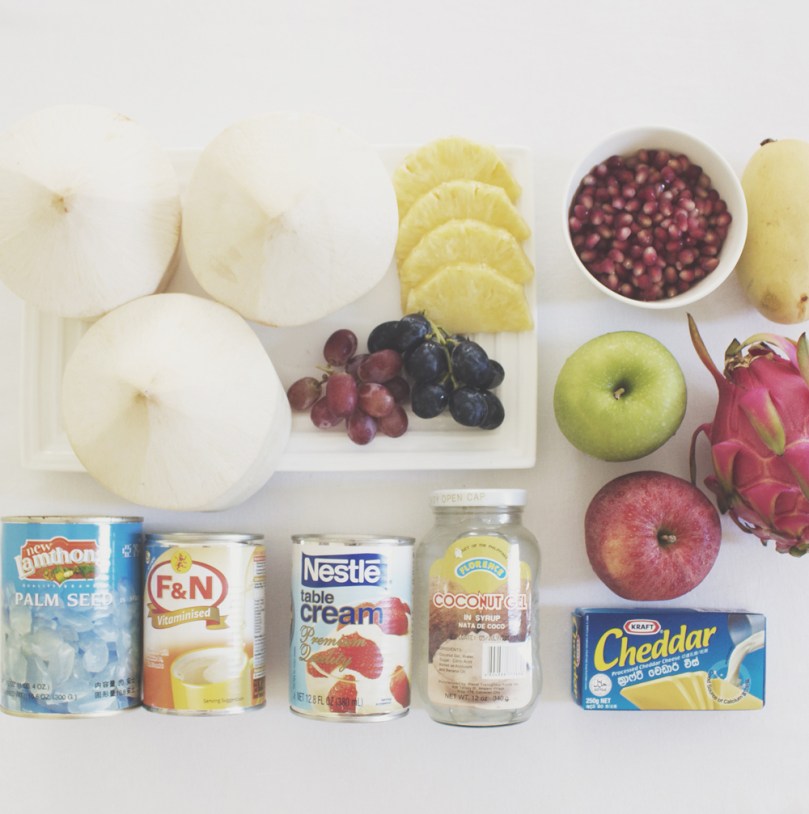
  • 3 young coconuts, flesh removed and shredded*
  • 1 can (380ml)  Nestlé cream
  • 1 can (570g) palm seeds, with syrup
  • 1 jar (340g) nata de coco, drained
  • 1 red dragonfruit, cut into chunks
  • 1 green apple, cut into chunks
  • 1 red apple, cut into chunks
  • 1 ripe Philippine mango, cut into chunks**
  • 1/2 block (125g) cheddar cheese, diced
  • 1/2 pineapple, cut into chunks
  • 1/2 large pomegranate, peeled and deseeded
  • 3 tbsp condensed milk
  • Handful of small black and red grapes

*The best thing about using fresh young coconut is that you get to have a nice tall glass of fresh coconut juice! The best thing in the world especially if you’re living right on the equator and experiencing high 30s all year round!

**You can use any other kinds of mango i.e. Kensington Pride mangoes, but honestly, Philippine mangoes are simply the best!

METHOD

  1. Combine all the fruits (except the dragonfruit), cheese, palm seeds with syrup, and nata de coco in a large serving bowl. If you add the dragonfruit in now and mix everything together, its colour will bleed into the cream and make everything pink!
  2. Add the condensed milk and cream and mix well, being careful though so that the fruits still remain intact and do not get crushed when mixing. Once everything is mixed, top with the dragonfruit chunks.
  3. Chill in the fridge/freezer for at least three hours.
  4. Serve and enjoy!

Fresh Fruit Salad

Fresh Fruit Salad

BON APPÉTIT

– Ally xx

myTaste.com

Mesa Filipino Moderne - FRESH CATCH: Tilapia

Mesa Filipino Moderne

Hello Everyone and welcome back to an all new Review Sunday! I’ve got three more places from the Philippines that I want to touch on before I start reviewing a couple of places here in Brunei. I’ve actually visited quite a number of places in the Philippines, but I feel like I haven’t had the full dining experience yet in terms of what their menu has to offer. Then there are some other places that I was thinking of writing about, but when I look back at their food, it was all too similar and nothing special really.

Anyway, what I realised when dining out in the Philippines, food is always the same no matter where I go. For example, dishes like sisig, crispy pata, kare-kare, sinigang, laing, buko pandan, leche flan, and many other classic and famous Filipino dishes, though I imagine cooked slightly different to separate themselves from others, all taste quite similar no matter where we have it. In tagalog, I would normally say “nakakasawa”, if you eat the same food over and over you will say or have that feeling nakakasawa, but maybe its because I’ve been eating in the wrong places.

Mesa caught my eye as I was roaming around SM North Edsa with my sisters while my Mom was somewhere along Quezon Avenue doing medical checkups. We were looking for new places to eat, and when a saw ‘new’ I just mean nothing like Barrio Fiesta or Gerry’s Grill – not places that we have been to over and over again every time we visit the Philippines. I had never heard or encountered Mesa in my pervious trips, and what intrigued me was the modernity and interpretation of classic traditional Filipino dishes. I was definitely intrigued when I saw Ostrich on their menu even though I didn’t have any.

Mesa Filipino Moderne - SISIG: Sisig in a pouch
SISIG: Sisig in a pouch
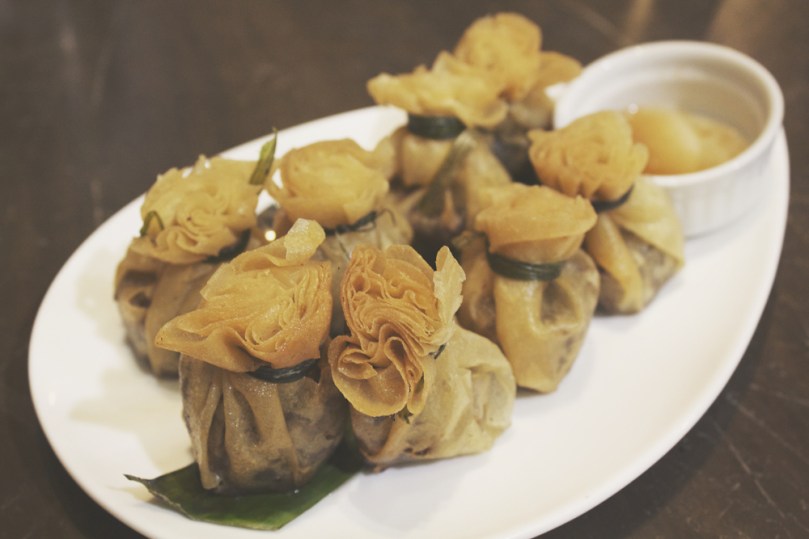
Savoury pork sisig wrapped in a pouch (₱190.00)

As mentioned probably in a previous review, sisig is a dish that I never fail to have whenever I visit the Philippines. I was attracted to this dish because I’ve never had sisig this way before. It was a perfect way to start out our lunch at Mesa; the pouches had a very nice golden brown finish to them, and it gave each bite a nice crunch to the sisig filling inside. It was paired nicely with a side of spicy vinegar as well.

Mesa Filipino Moderne - SOUP: Sinigang na baboy in guava and pineapple
SOUP: Sinigang na baboy in guava and pineapple
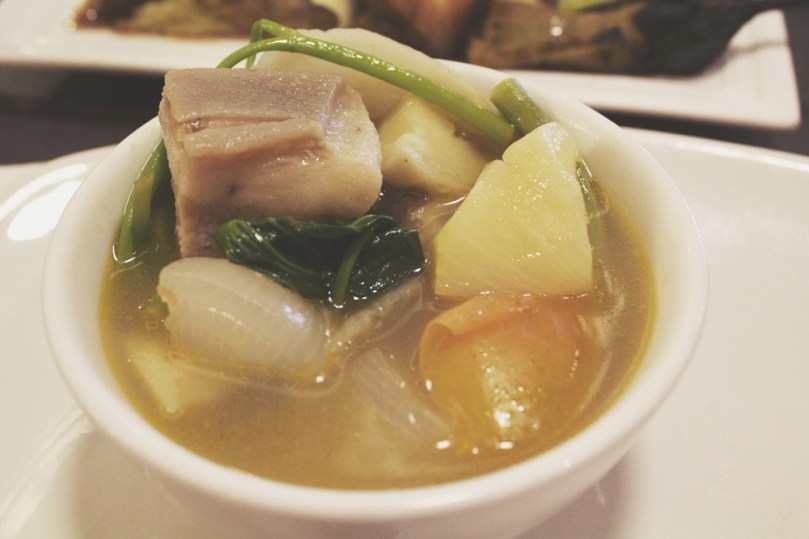
Pork simmered in broth with guava and fresh pineapple; serves 4-5 (₱290.00)

What caught my eye with this dish as I was browsing the menu was the guava and pineapple part. I’ve never had sinigang with these two fruits before so I was indeed very intrigued to know how the strong flavours would blend together. It actually worked quite well to an extent. I say ‘extent’ because there was one time I had a whole heap of guava flavour in my spoon of soup and the taste overkilled. Nevertheless, an enjoyable dish.

Mesa Filipino Moderne - FRESH CATCH: Hito
FRESH CATCH: Hito
Crispy boneless with mangga salad (₱340.00)

The only thing that concerned me about this dish was where’s the mango salad? If you’re going to make mention “with” mango salad, I expect it to be of reasonable portioning as a side dish and not just “topped” over the fried fish. Slightly disappointing.

Mesa Filipino Moderne - FRESH CATCH: Tilapia
FRESH CATCH: Tilapia
Crispy boneless served with four sauces (₱340.00)

Well, just like the crispy boneless hito, nothing quite special about the four sauces that went with fried fish that in my opinion had not much flavour in the flesh itself. Verging on being overcooked? Quite possibly.

Mesa Filipino Moderne - VEGETABLES: Laing 2 ways
VEGETABLES: Laing 2 ways
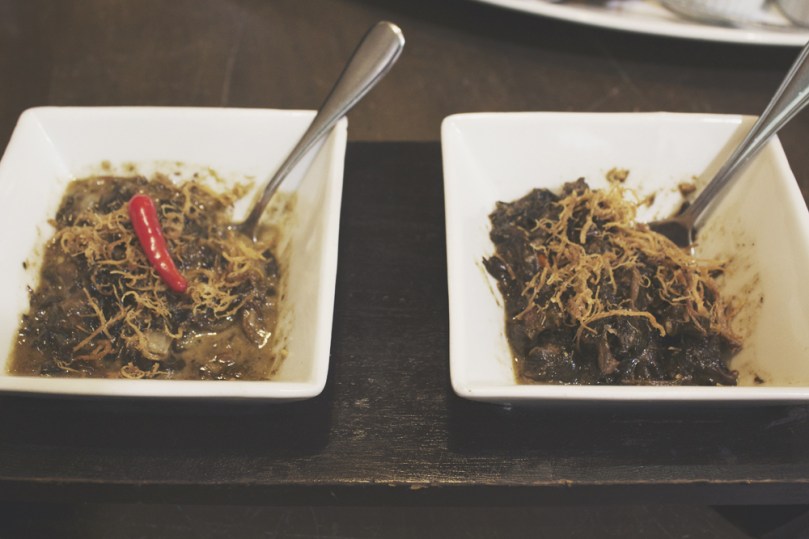
Taro leaves, pork, shrimp paste, and coconut cream topped with adobo flakes, served original and crispy (₱170.00)

The taro, or also known as gabi in the Philippines, is low in saturated fat, sodium, and cholesterol, and in contrast, high in dietary fibre, vitamin E, vitamin B6, potassium, and manganese. The leaves, stems, and corms are all consumed and form part of the local cuisine, a dish known as Laing. Laing originated from the Bicol region, and no matter where you have it at, and no matter the way it is cooked, it always ends up looking like a pile of… 🙂 I’ve had my fair share from many eateries, and even home-cooked laing, and it always looks like this. But I assure you that it tastes so much better than it looks. I like how Mesa served this dish two ways – basically one with sauce and the other without. Both tasted pretty good and the adobo flakes on top added that extra flavour and crunch to the dish.

Mesa Filipino Moderne - MEAT: Pinatayong Manok
MEAT: Pinatayong Manok
“Standing” whole chicken carved right at your table (₱415.00)

Quite possibly one of the reasons why I stopped in front of the restaurant and had a look at their menu; I saw a picture of this dish and I immediately knew I wanted to eat that. It was basically a whole roasted chicken that didn’t particularly have any special taste to it in my opinion, but what I enjoyed was the way it was served to us. It was brought to our table “standing” and carved for us at our table. The chicken was cooked well and was very tender.

Mesa Filipino Moderne - MEAT: Pork Binagoongan
MEAT: Pork Binagoongan
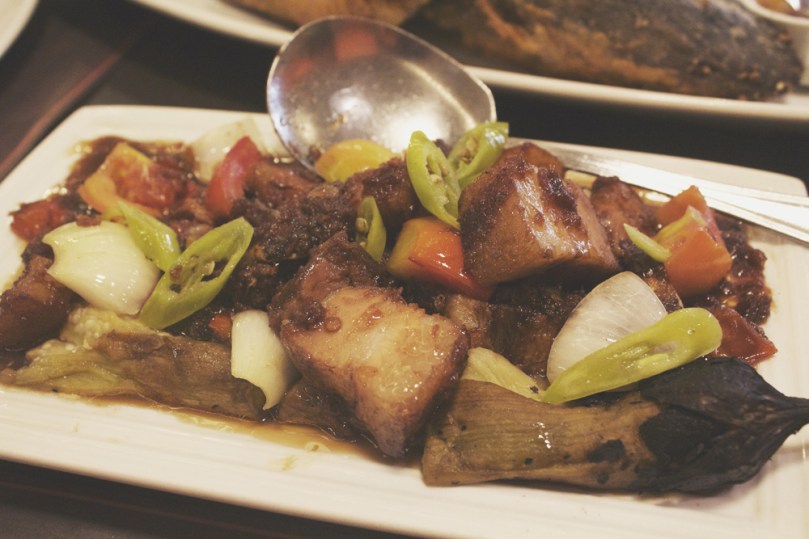
Pan fried pork belly sautéed in shrimp paste (₱190.00)

This dish I enjoyed because I love the pairing of a well-cooked pork belly, shrimp paste, and grilled eggplant. This dish did not disappoint at all unlike the others.

Mesa Filipino Moderne - DESSERT: Pandan Macapuno Rumble
DESSERT: Pandan Macapuno Rumble (₱75.00)

I was intrigued to know what modern twist they would put on a classic buko pandan dessert. Nothing special to be honest except the fact that the coconut meat was set with the jelly? That’s all that I could point out that seemed different to the classic ones I’ve had multiple times. Other than that, flavour was good.

Mesa Filipino Moderne - DESSERT: Crispy Leche Flan
DESSERT: Crispy Leche Flan (₱70.00)

This was the dessert that I was most looking forward to only to be disappointed in the end – small, not so crispy rolls of flan that didn’t quite taste like flan in my opinion and more like steamed egg. I was disappointed only because I had a much better first experience with crispy leche flan when I was travelling the city of Lucena just a couple of days before I visited Mesa again.

Mesa Filipino Moderne is definitely a place to visit if you want to experience modern Filipino cooking at an affordable price. I say that it is affordable because the pricing of their dishes are quite reasonable for the portions you get, so definitely a good value for money indeed. But as I have mentioned in another review before, these prices are not very affordable for the average Filipino, so I guess the value for money on a more general scale wouldn’t be so good. The food I would rate no more than a 6 to be honest – at first glance I was very excited to experience modern Filipino cuisine, but after having dined and looked back at the dishes that I’ve had, I can’t say I was left excited to go back for more. The only dish that I really enjoyed was the pork sisig in a pouch. Everything else was mediocre. Service 8 out of 10; it was exceptional nor was it bad, and the ambience is a sure 10 for me.

Now that I look back at all the dishes that I’ve had and my small disappointments with each of the dishes I ordered, I wonder how they were able to achieve the Best Food Retailer award. I may be jumping into conclusions a bit early as I’ve only tried probably an eighth of the dishes they have on offer, but if I am off to a non-promising start with their menu, I can’t be sure on how the rest will unfold if I visited a few more times and trying other dishes. Anyway, my opinion is my opinion; it may be biased, it may be not. You may agree with me, you may not, that is, if you’ve dined at Mesa.

I’m not sure if there are other restaurants that are much better at modern Filipino cuisine, but this is the first step of my journey to finding out how far we can modernise classic dishes. There is one place I have yet to visit, but have been closely following their Instagram page, and it’s called Sarsá Kitchen+Bar. I must say that their Sinigang Fried Chicken looks very enticing. Maybe on my next adventure to the Philippines I’ll be able to drag some family members over to have some eats.

Mesa Filipino Moderne
3/F SM City North EDSA, Main Building
EDSA corner North Avenue
Quezon City, Metro Manila
Philippines

– Ally xx

Avocado & Roast Pumpkin, Kale Salad

Avocado & Roast Pumpkin, Kale Salad

Hello Everyone! Sorry for not getting this post up on Tuesday night (please forgive me) – it was quite a stressful day for me trying to get important things done. I hoped to have finished them by the evening so that I could move on and write this post for you, but it didn’t happen. Today I am a little bit more relaxed as I pretty much finished what I could do yesterday. So here is what was meant to go up for Tuesday’s post, today!

This recipe is one that started off a little bit more simpler than what you’ve seen above. It was one that I used to make a while back during my second year of University, and during that time avocados were not only in season, but cheap as well! I wanted to try out various recipes that used avocados and I came across a simple avocado and roast pumpkin mixed leaf salad. I would always pair it with marinated oven-baked chicken drumsticks or a whole chicken leg. I won’t post the marination recipe for our chicken on my blog as it’s a secret blend of ingredients that my mom came up with, but I mean, you can basically pair it with your own secret recipe or keep it simple with just the salad.

Avocado & Roast Pumpkin, Kale Salad

Over time I started to add a few extra ingredients here and there that I thought might jive well together in terms of flavour and texture. I added toasted walnuts, and then pomegranate seeds after I made the dish a few times with just the addition of the walnuts. There was also one time where our avocados were very overripe and basically couldn’t add it to the salad, and instead I added marinated feta cheese because that’s what I had in my fridge at the time that was sort of creamy in texture to substitute; of course flavour was no where near. Lastly, the supermarket didn’t have pre-bagged mixed leaf salad leaves so I had to go with what they did have on the shelves – kale! Quite a transformation from just an avocado and roast pumpkin mixed leaf salad to begin with I must say.

Avocado & Roast Pumpkin, Kale Salad Ingredients

PREP TIME 15 MINS | COOKING TIME 20 MINS | SERVES 4

INGREDIENTS

  • 2 small avocados, peeled, pitted, and cut into small chunks
  • 1 bunch kale, stems and leaves coarsely chopped
  • 1/2 medium-sized butternut pumpkin, cut into chunks
  • 1/2 large pomegranate, peeled and deseeded
  • Handful of walnuts, toasted and roughly chopped
  • Marinated feta cheese
  • Salt and ground pepper to taste

METHOD

  1. Preheat oven to 180C (350F or gas mark 4). Season the pumpkin with a bit of salt, ground pepper, and olive oil. Line a baking tray with foil and spread the pumpkin over the lined tray. Roast in the oven for about 20 minutes or until tender.
  2. Meanwhile, bring a pot of salted water to a boil. Once boiling, add in the kale and simmer for about 6-8 minutes. Drain and transfer to a serving plate.
  3. Top the kale with avocado, roasted pumpkin, feta, pomegranate seeds, and walnuts.
  4. Enjoy the salad as it is or as a side with your preferred choice of meat.

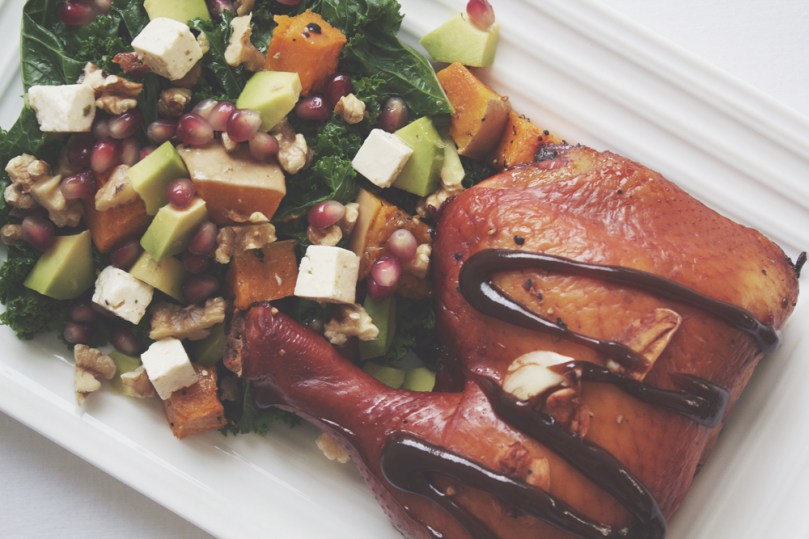
We had ours with Mama G’s Special Spicy Roast BBQ Whole Leg Chicken!

Avocado & Roast Pumpkin, Kale Salad with Roast Chicken

BON APPÉTIT

– Ally xx

myTaste.com

BR Nina's Itikan & Restaurant - SPECIALITIES: Kalderitik

BR Nina’s Itikan & Restaurant

Hello Everyone and welcome back to an all new Review Sunday! Today’s post is on a restaurant that can be found along the Sta. Clara Bypass Road in Sta. Maria, Bulacan. My cousin first introduced me to this place when we were visiting the Philippines last month. I told her that I wanted to dine at local eateries that are natively special to Bulacan and this is where she took my family and I. If I am not mistaken, itik is quite popular in Bulacan as there are also many balut hatcheries in the area. For those of you who do not know what a balut is, it is basically a developing duck embryo (fertilised duck egg) that is boiled and eaten in the shell.

Anyway, I could not appreciate the atmosphere at the time that we went with my cousin for it was during dinner and although the place was well lit, it felt dark to me. So my mother, my two sisters, and myself decided to come back to this place for lunch and the ambience had a bigger impact on me than it did the first night we dined at BR Nina’s Itikan. I think the fact that we were the only table there as well made a difference for it was less noisy (I mean, excluding the traffic along the bypass) and we had the whole place to ourselves. The place is an outdoor restaurant with a main dining area upon entering, and a few bahay kubos at the back where you could also dine. A bahay cubo is known as the national shelter, native house of the Philippines and is made from using indigenous building materials like bamboo and nipa. Its name is said to have originated from the Spanish word, cubo, which means “cube” because of the bahay kubo‘s rectangular/cubic shape. Nowadays you’ll see many eateries adapting the bahay kubo into small, private eating huts, big enough to seat between 4-8 people.

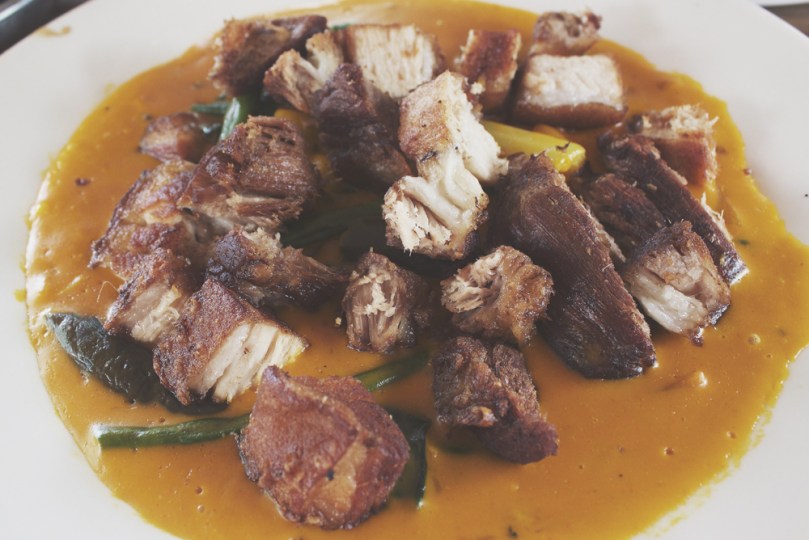
BR Nina's Itikan & Restaurant - BR NINA’S FIESTA: Crispy Kare-Kare Liempo
BR NINA’S FIESTA: Crispy Kare-Kare Liempo (₱250.00)

When I first had dinner at this place, I was very much intrigued by the ‘crispy’ part of the name of this dish, only because I’ve never had kare-kare before with crispy meat. The sauce, even though for me it felt like it was straying away from a traditional kare-kare, was nice and flavourful. The sauce tasted like it had coconut milk in it and didn’t taste so much like the peanut buttery goodness that I love; it was still creamy though. The vegetables were cooked to perfection, as in it wasn’t overcooked, and though some of the cuts of pork meat was cooked well, some were a bit hard and overdone.

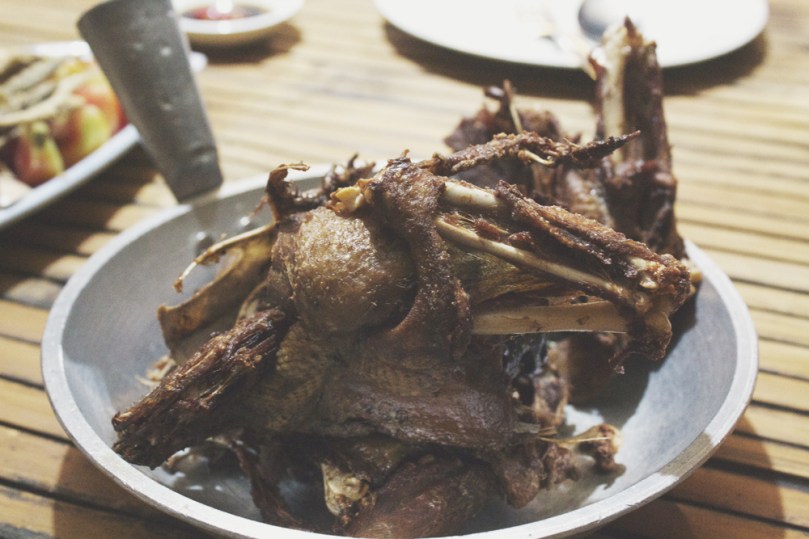
BR Nina's Itikan & Restaurant - SPECIALITIES: Fried Itik
SPECIALITIES: Fried Itik (₱160.00)

The first time we came here we had the fried itik as recommended by my cousin. For me it was just okay, nothing much special to it other than the fact that it’s an itik and that it definitely tastes different than any normal fried chicken. The meat was quite dry and because there was no sauce to go with it either, besides the very basic condiment of soy sauce and calamansi, the overall dish was very dry. If we didn’t have the bulalo soup to pair with it, it would’ve been a very dry meal.

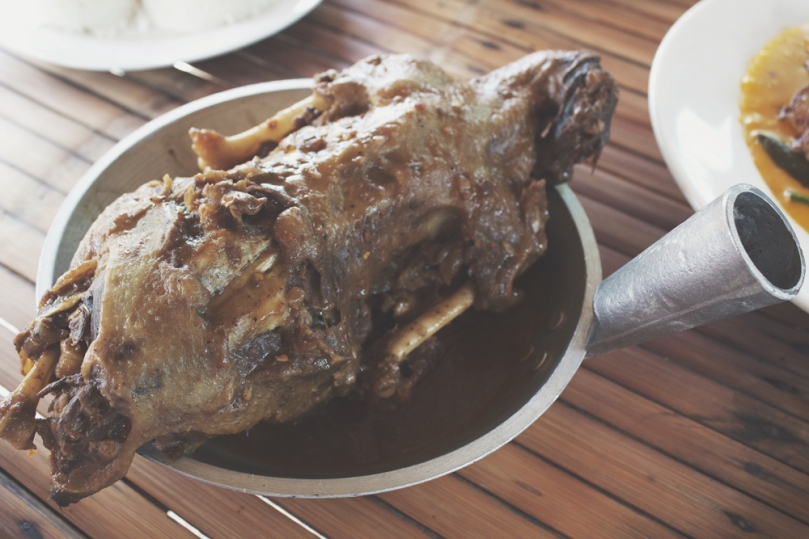
BR Nina's Itikan & Restaurant - SPECIALITIES: Kalderitik
SPECIALITIES: Kalderitik (₱170.00)

Since itik is their speciality here in this restaurant, we decided to order at least more than just one on their specials menu and experience itik cooked in many different ways. The itik was really tender and flavourful. It was so tender that it was fall-off-the-bone perfection. It also had a little bit of spice to it as well. This dish is one that I very much like from their specials, even though it doesn’t look very well presented – but this is pretty much home-style cooking.

BR Nina's Itikan & Restaurant - SPECIALITIES: Adobong Itik
SPECIALITIES: Adobong Itik (₱170.00)

Though it doesn’t look as appetising (let’s face it, pretty much everything you’ll see here doesn’t look appetising), it tastes better than it looks. However, compared to the kalderitik, this dish was quite dry. The sauce came as a side with the dish, but because the itik was deep fried, it was quite dry. Also, I felt that there was a little bit too much garlic on the dish. It did have that adobo flavour to the itik though!

BR Nina's Itikan & Restaurant - SPECIALITIES: Sisig Itik
SPECIALITIES: Sisig Itik (₱170.00)

Sisig is a Filipino dish traditionally made from parts of a pig’s head and liver, seasoned with calamansi and chilli peppers. I love me a good sisig dish. I never fail to have a flavourful sizzling plate of sisig whenever I visit the Philippines. I was drawn to this dish only because I’ve never had itik sisig before, I’ve always and only have ever had pork sisig. This sisg dish is by far my favourite of all sisigs I’ve ever had in the past. The flavour was on point and the addition of fresh chillies on top added that extra kick of heat that the dish, in my opinion, needed.

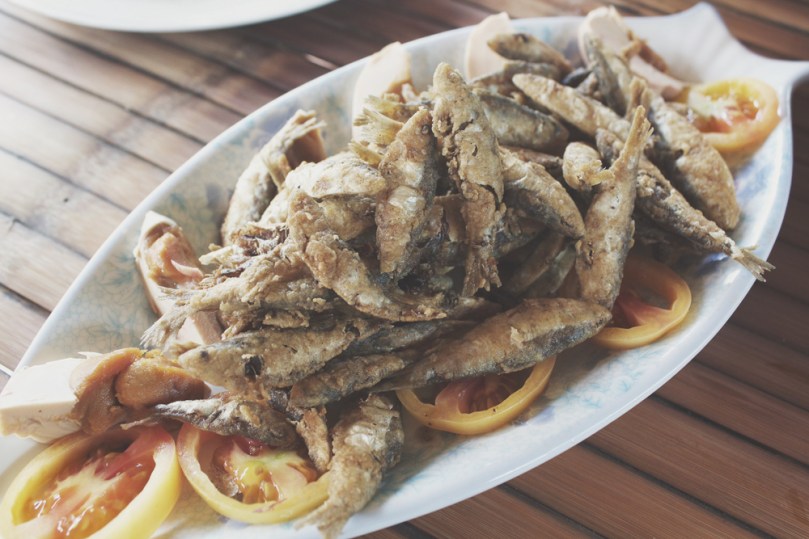
BR Nina's Itikan & Restaurant - FRIED: Crispy Tawilis with Salted Egg
FRIED: Crispy Tawilis with Salted Egg (₱150.00)

Sardinella tawilis, or known by Filipinos as just tawilis for short, is a small freshwater sardine, reaching up to 15cm and weighing less than 30g. On its own, it doesn’t actually have much flavour to it. But all your really need is the salted egg and tomatoes on the side to go with it and you have a match made it heaven. Even with just a little bit of achara to go with the crispy fried tawilis and you’re pretty much hooked on it. You can eat the fish whole as well, yes, including its head, tail, and bones!


SOUPS: Bulalo (₱220.00)

Besides their specialities, this bulalo soup is by far the tastiest of all bulalo soups I’ve had in the past. The broth is harboured all the flavours from the meat, and what’s good about it also is that the broth doesn’t have a lot of oil in it and isn’t very fatty at all. The meat was very tender and the vegetables still had a bit of crunch to them. It was definitely much better in terms of flavour than the bulalo soup that I cooked myself.

BR Nina’s Itikan have quite a lot to offer on their menu beside their specialities of various itik dishes; many also praise their crispy kare-kares from Facebook comments and reviews that I’ve have seen. Overall, I thought that the food that we’ve had at this place were generally quite good. I haven’t had any major issues with any of the dishes only that the fried itik and the adobong itik itself are quite dry, but other than that, everything else were pretty much on point for me. I love love love their duck sisig, and for that I’d say that their food is a sure 7 out of 10 for me. Ambience 8 out of 10 and service is variable between 7 to 9 out of 10. I say this because there are only two waiters running the floor and serving probably a total of 10 tables. So when the place is packed, it’s quite hard to flag down a waiter when you’re ready to order or wanting to request for more water or tissue for your table – that’s the downside. Otherwise, they’re friendly and always quick on their feet. You’ll see then running around trying to get to every table and fulfilling every customer’s requests. It’s also relatively cheap so therefore a good value for money, where their specialities of itik only costs about AUD$5.00 – a whole duck for just $5.00? Quite impossible ain’t it? That is, if it were sold in Australia.

BR Nina’s Itikan & Restaurant
Bypass Road Sta. Clara
Sta. Maria, Bulacan
Philippines, 3022

– Ally xx

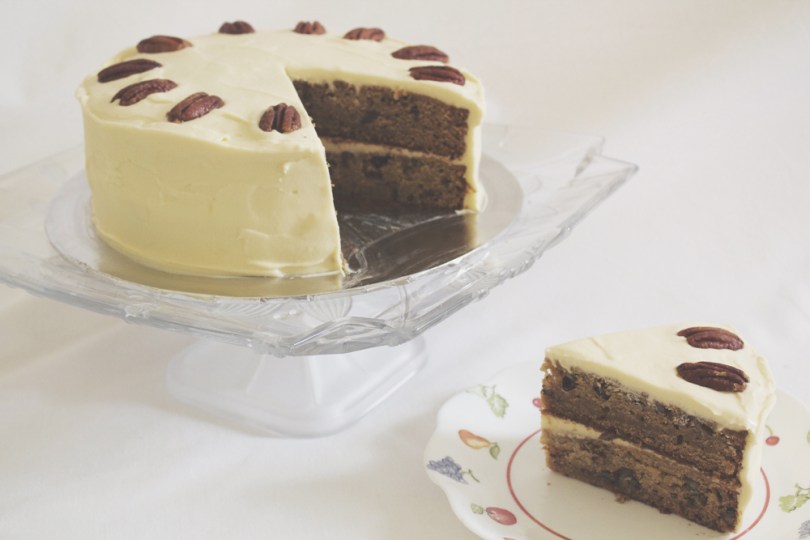
Vermont Maple-Pecan Cake

Vermont Maple-Pecan Cake

Hello Everyone and welcome to a very special post as today officially marks the 1-year anniversary of my food blog! I started up this food blog exactly a year ago during spring break, and instead of slaving away on the many assignments/projects I had at that time, I decided to spontaneously start up a blog, out of pure procrastination really. Since it was quite spontaneous, I didn’t quite put much effort into it in the beginning, as in I wasn’t bothered to purchase my own domain name, and buy a theme and customise it. I wasn’t sure of how long I’d be able to keep up with this blog (because I have tried many times and failed). I am happy that I am able to finally keep one up and running, posting 3 times a week, almost.

Vermont Maple-Pecan Cake

For the next few months or so, I will work on developing an aesthetic and a colour scheme for my blog that reflects who I am as a person – not just one who loves to cook and is passionate about all things food, but also my personality and my design style. The pink and brown was sort of a “yeah that will do for now” because it fit the default theme that I picked (which was more like “I prefer this theme that the others I’ve seen”). Anyway, so to celebrate my blog turning 1 today, I decided to bake a cake for this occasion. I wanted to bake a citrus poppyseed cake at first but for some reason, lemons were nowhere to be found in every supermarket and market that I went to. Instead, I found another recipe that stood out to me – Vermont Maple-Pecan Cake. Why I chose to attempt this cake was because I already had maple syrup in the fridge and CREAM CHEESE; like who could say no to cream cheese?!

The quantities from the original recipe that can be found on Taste of Home, makes two 6-inch round cake layers, but since my baking pans were about 8.5-inches, I decided to double the recipe until I realised that I should’ve tripled it when I poured the batter into the pans; they barely filled halfway. So I made another batch to top them off. Therefore, the quantities below have been tripled from the original to make two 8.5-inch round cake layers. Once again, Happy Anniversary to Amcarmen’s Kitchen!

Vermont Maple-Pecan Cake Ingredients

PREP TIME 20 MINS | COOKING TIME 20-25 MINS | SERVES 8-10

INGREDIENTS

For the cake batter

  • 2 & 1/2 cups plain flour
  • 1 & 1/2 cup buttermilk*
  • 1 cup toasted pecans, roughly chopped
  • 3/4 cup sugar
  • 3/4 cup packed brown sugar
  • 1/2 cup maple syrup
  • 170g unsalted butter, melted
  • 1 & 1/2 tsp baking soda
  • 3/4 tsp salt
  • 3/4 tsp vanilla extract
  • 1/3 cup finely chopped pecans, toasted

For the frosting

  • 1 package (250g) cream cheese, softened
  • 100g unsalted butter, softened
  • 1 & 1/2 cups confectioners’ sugar
  • 4 tbsp maple syrup
  • Toasted pecan halves, to decorate

*I could not find any buttermilk at the supermarket, so I made my own by using a tablespoon of white vinegar for every cup of milk. Set it aside for about 5 minutes for the milk to react to the vinegar. You can also substitute the vinegar for lemon juice.

METHOD

  1. Preheat the oven to 180C (350F or gas mark 4).
  2. Grease two 8.5-inch cake pans with a little butter and set aside
  3. For the cake batter: Combine the plain flour, sugars, baking soda, and salt in a large bowl. In a separate bowl, combine the buttermilk, butter, syrup, and vanilla, and stir into dry ingredients until just combined. Fold in chopped pecans.
  4. Pour into the prepared pans and bake for 20-25 minutes or until a toothpick inserted near the centre comes out clean. Cool for 10 minutes before removing the cakes from the pans to wire racks to cool down completely.
  5. For the frosting: Using an electric handheld mixer, beat the cream cheese, butter, and maple syrup in a small bowl until smooth. Then beat in the confectioners’ sugar.
  6. Assembly: Place one cake layer on a serving plate and spread with about 1/2 cup of frosting. Top with the second layer of cake and frost the top and sides of the cake. Decorate with toasted pecan halves and store in the fridge before serving. Enjoy!

Vermont Maple-Pecan Cake

BON APPÉTIT

– Ally xx

myTaste.com

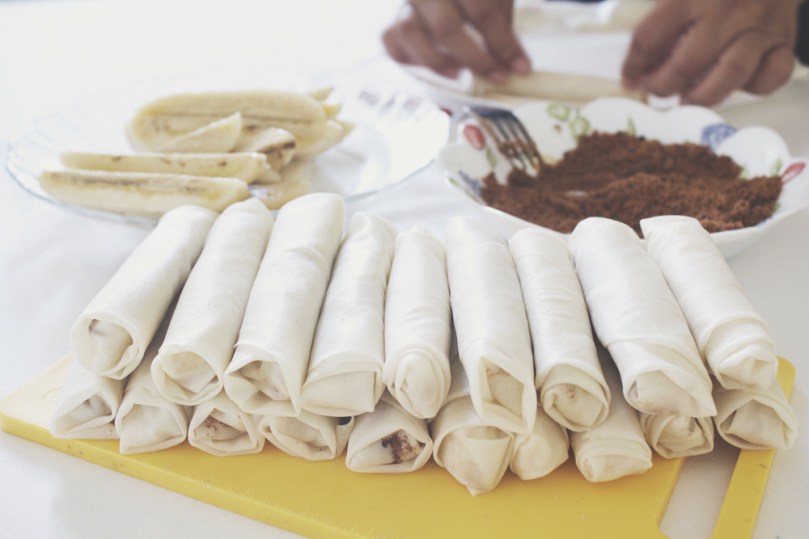
Turón Plátanos (Banana Spring Rolls)

Turón Plátanos (Banana Spring Rolls)

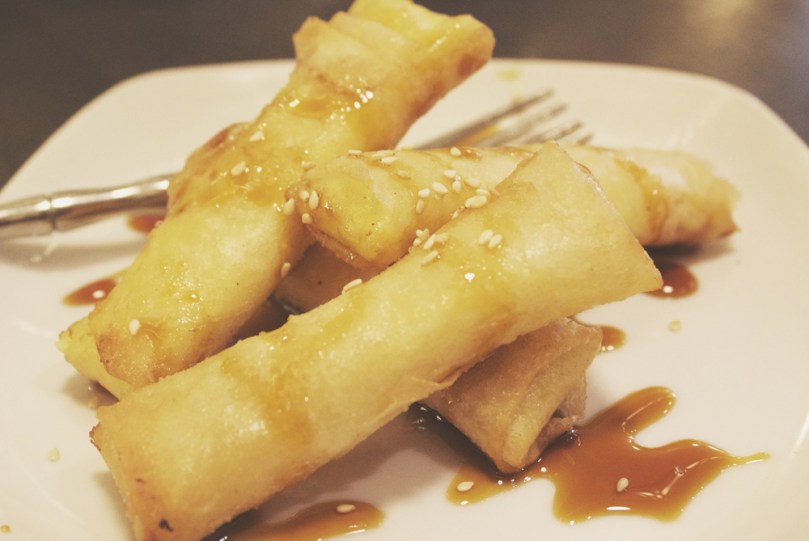
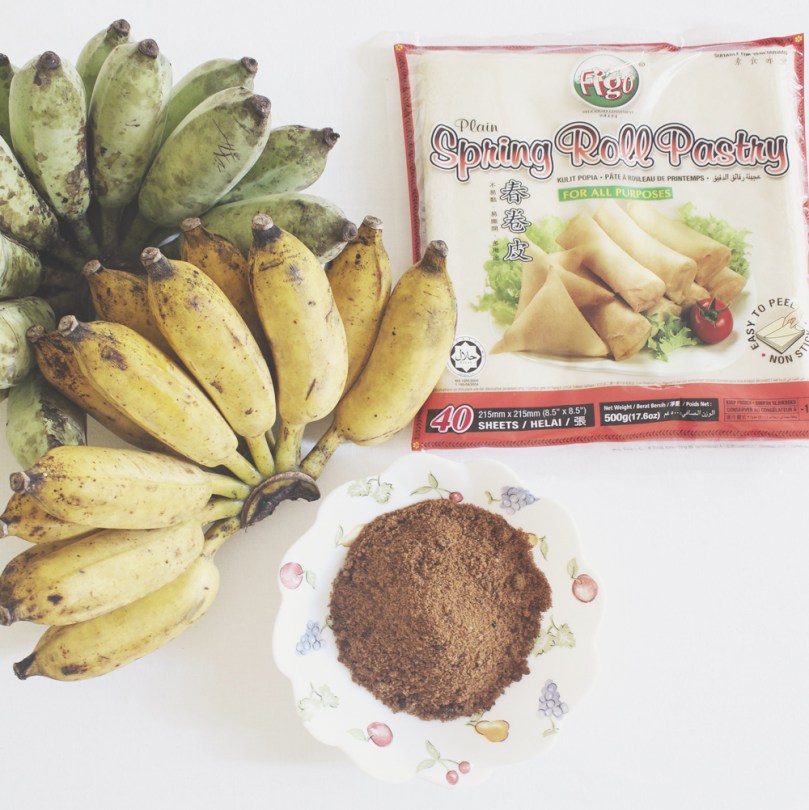
Hello Everyone! Today’s recipe is one that my mother has been making for a while now and is loved not just by my sisters and myself, but also by my high school friends who have had the lucky chance to indulge in these simple but delicious banana fritters, or also known as Turón Plátanos. For short, it is known in the Philippines as Turón and is a very popular street food snack/meryenda. It is made up of thinly sliced bananas (preferably saba or plantains) and a slice of jackfruit, dusted with brown sugar, rolled in a spring roll wrapper and fried. Since I am not a huge fan of jackfruit, we skipped that ingredient so that I could have some to eat! You can classify it as a dessert as well as others call it a caramel banana spring roll and serve it with ice cream on the side.

Turón Plátanos (Banana Spring Rolls)

Turón Plátanos (Banana Spring Rolls)

One day, I’m guessing probably 5 or 6 years ago, my mom fried these up for breakfast/afternoon tea(?), I actually cannot remember for what meal of the day, and I wanted to dip these spring rolls into something so I took a bottle of ketchup and poured it into a small plate. I then dipped a spring roll into the ketchup, bit into it, and was surprised to find out that it wasn’t a savoury spring roll (because during that time she also made spring rolls that had minced pork filling). The taste was unbearable, as in the pairing of tomato ketchup and banana was just not a good one. I told my mom and sisters about it and they could not stop laughing, and even to this day they would still ask me if I would like some ketchup with my turón.

Here’s a tip that you might want to follow: what my mom does is that she makes a whole bunch of turóns, 40 to be exact, as there are 40 sheets in a pack of spring roll wrappers. Once they have been wrapped, she puts them into a container and freezes them overnight and fries them the next day, straight from the freezer, no defrosting required. She says that this way the rolls are crispier when fried. Also, making them in big batches and freezing them allows you to fry them over a few days/weeks instead of having to make just a few each time  you feel like having some.

Turón Plátanos (Banana Spring Rolls) Ingredients

Turón Plátanos (Banana Spring Rolls)

PREP TIME 24 HOURS* | COOKING TIME 4-5 MINS | MAKES 40 ROLLS

*This includes setting aside the rolls in the freezer overnight before frying.

INGREDIENTS

  • 10 ripe plantains, cut into 4 lengthwise
  • 1 pack (40 sheets) large spring roll wrappers
  • 1 cup brown sugar
  • Cooking oil, for frying

METHOD

  1. Add the brown sugar to a small plate so that you can roll the plantains over it and coat them with enough sugar. Then place the sugar coated plantain on top of a spring roll wrapper and fold, locking the wrapper on each side.
  2. Place in a container and repeat until all the plantains have been sugar coated and wrapped. Freeze overnight.
  3. In a small (or medium, depending on how many you’re going to fry) pan, heat the oil over medium-high. Make sure it is quite hot before adding the wrapped plantains in. Fry until the wrapper turns golden brown.
  4. Drizzle with caramelised sugar (optional) and serve hot for dessert or meryenda – with ice cream on the side if you wish. Enjoy!

Turón Plátanos (Banana Spring Rolls)

BON APPÉTIT

– Ally xx

myTaste.com

Arabela, Camello's Bakehaus & Coffee Shop - DESSERTS: RED VELVET

Arabela, Camello’s Bakehaus & Coffee Shop

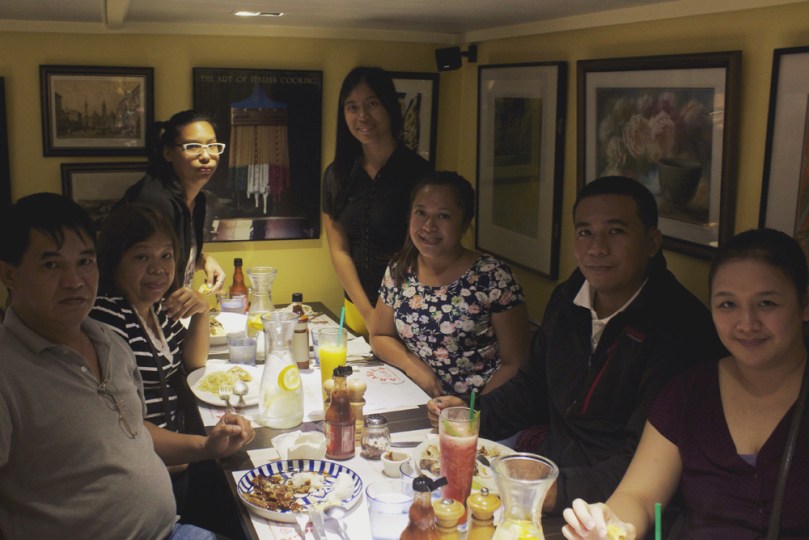
Hello Everyone! Finally we are back on track with Review Sundays! It’s been a while hasn’t it? Anyway today’s review will be on a popular Italian Restaurant on the little streets of Liliw, well known as the shoe and flipflop capital of the province and the Southern Luzon area. The first time I visited Liliw was back in 2010 if I am not mistaken. My cousin introduced this place to me while my family and I were visiting his place in Lucena. I don’t remember how many pairs of shoes I bought for myself, but I’m guessing that we had at least 3 or 4 pairs of shoes/flipflops each between the 4 of us for under ₱1,500 (approx. AUD$44)! After shoe shopping, we’d head on over to Arabela for lunch. This has since become a must do every time we come down to Lucena to visit my cousin and my family; in 2010, 2012, and our recent March 2015 trip. Since our last visit in 2012, Arabela changed the look and colours of their interior from, if I’m not mistaken, pastel green to orange. They still kept their low ceiling which is what I love about this place – it makes me feel tall! People who are just a tad bit taller than me would have to bend over while walking around the restaurant, and be cautious when standing up from their table if they have forgotten how low the ceiling is.
Arabela, Camello's Bakehaus & Coffee Shop
Just for a reference, my sister who is standing up straight is about 5’2″

But before I begin, here’s a little history on Arabela:

Bobby and Antonette Camello, husband and wife, owners of Arabela, named after their two daughters: Ara & Bela, started in 2002 with literally two tables. Back then, the two tables were not intended to be used by customers, but instead used for selling pasta dishes & pastries to buyers within the neighbourhood. The couple were then inspired to set up a formal food business as they gained an increasing number of customers that keep on coming back. The business, transformed into a coffee shop/restaurant, opened in October 23, 2003 with 5 tables, a seating capacity of 15 persons, and a capital of ₱100,000. From there it grew beyond the owner’s expectations, and today Arabella can accommodate up to 40 persons with an array of dishes to choose from – steaks, pizza, pasta, pastries, coffee, blended drinks, and more. Arabela has earned its publicity through word of mouth and personal blogs on the internet which were all unsolicited. To date, they have been able to maintain their character and uniqueness – the ambience and of course the good food.

Arabela, Camello's Bakehaus & Coffee Shop - SPECIALTY DRINKS: STRAWBERRY FRAPPÉ, RIPE MANGO & STRAWBERRY SHAKE
SPECIALTY DRINKS: STRAWBERRY FRAPPÉ (₱120.00), RIPE MANGO (₱100.00), & STRAWBERRY SHAKE (₱100.00)

An array of fresh fruit shakes, smoothies, and drinks to choose from on their menu; I went for the ripe mango fresh fruit shake and it was very refreshing even though it was a rainy day.

Arabela, Camello's Bakehaus & Coffee Shop - FRESH SALAD: CEASAR SALAD
FRESH SALAD: CEASAR SALAD
Romaine leaves with bacon (₱200.00)

This was also a starter dish that we shared amongst ourselves alongside the four cheese pizza. A good dish, but again nothing too special – nothing quite stood out to me to really praise the dish for it great flavour.
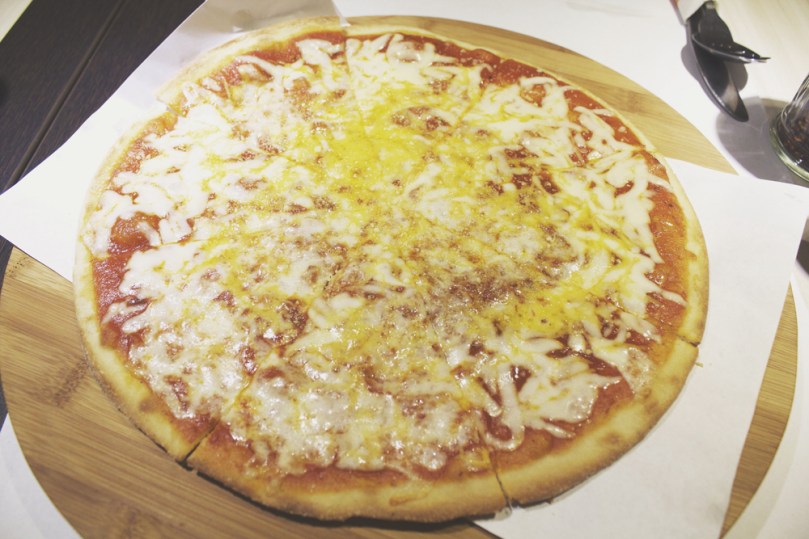
Arabela, Camello's Bakehaus & Coffee Shop - PIZZA: FOUR CHEESE XL
PIZZA: FOUR CHEESE XL
Mozarella, red cheddar, romano & parmesan (₱325.00)

A great dish to kick off our feast at Arabela, but in my opinion there wasn’t anything special about the taste, I mean it’s just a four-cheese pizza.
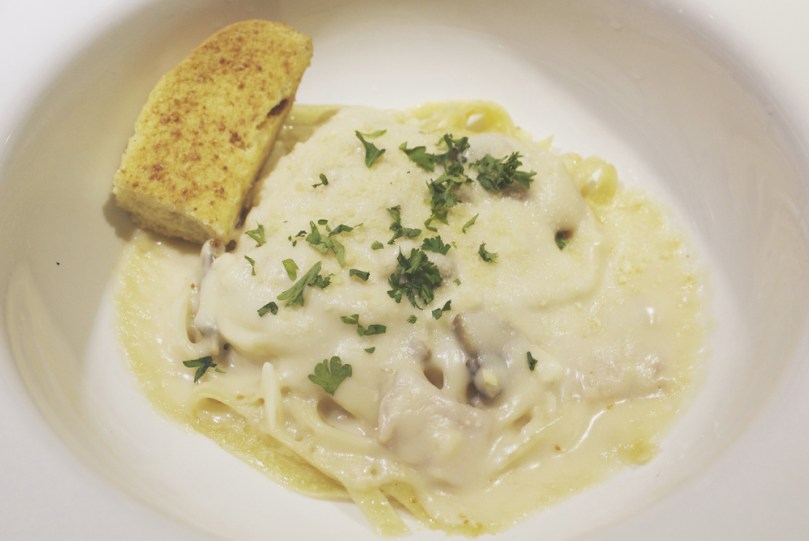
Arabela, Camello's Bakehaus & Coffee Shop - PASTA (PASTA IN WHITE SAUCE): FETTUCCINE WITH HAM & MUSHROOM
PASTA (PASTA IN WHITE SAUCE): FETTUCCINE WITH HAM & MUSHROOM (₱100.00)

This was a dish that my cousin ordered, and when it came to her, she showed the plate to me and gave me a sad look – I understood her pain. It was a massive deep dish, that made the pasta look tiny and underwhelming. I’m not sure if it filled her up, but it certainly wouldn’t have filled me up! Even though I didn’t taste this dish, it looked quite plain.

Arabela, Camello's Bakehaus & Coffee Shop - HOUSE SPECIALS (OLIVE OIL): FISH IN WHITE WINE
HOUSE SPECIALS (OLIVE OIL): FISH IN WHITE WINE
Dory fish fillet cooked in white wine sauce serve with pasta (₱220.00)

From the menu, my mom wanted a pasta dish, and knowing her preferences, I ordered this for her. She prefers olive oil-based dishes as well as fish – so this was the perfect pick for her. At first glance, it almost looks like they overdid the garlic just a bit too much; garlic slices tossed through the pasta and minced garlic on top of the fish? Yeap, that’s quite a bit! Other than that, the fish was cooked well, still moist on the inside, but again nothing quite special.

Arabela, Camello's Bakehaus & Coffee Shop - HOUSE SPECIALS (OLIVE OIL): VONGOLE
HOUSE SPECIALS (OLIVE OIL): VONGOLE
Clam in olive oil with garlic (₱230.00)

This was the dish thAT I had, and at first I didn’t want to order this dish because I can make a good vongole myself; but nothing else in the menu stood out to me. Vongole for roughly AUS$6.00? That’s value for money there as the dish had a generous amount of baby clams! Taste was good, but again nothing too special for me.
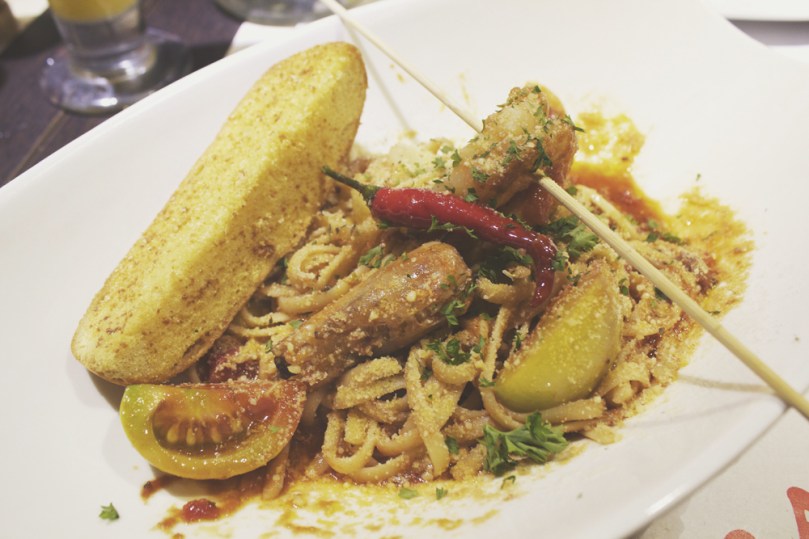
Arabela, Camello's Bakehaus & Coffee Shop - HOUSE SPECIALS (TOMATO BASED): SHRIMP POMODORO
HOUSE SPECIALS (TOMATO BASED): SHRIMP POMODORO
Pieces of shrimp with pomodoro sauce (₱230.00)

This dish I only got to taste a bit of, and I can’t remember what it tasted like so I asked my sister. She said that it was a bit salty for her liking (she finds everything she eats salty anyway so it’s hard to trust what she says), and that she didn’t like the biscotti because it was too thick for her liking (I liked it).
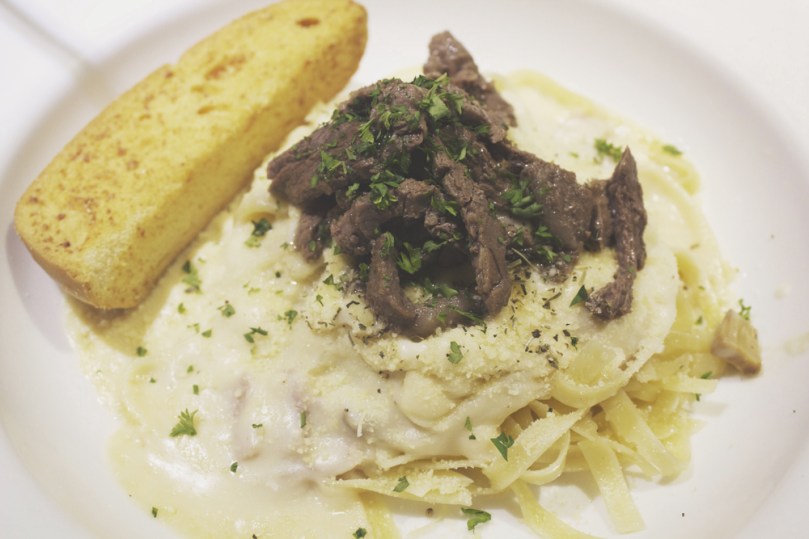
Arabela, Camello's Bakehaus & Coffee Shop - HOUSE SPECIALS (CREAM BASED): SIRLOIN FETTUCCINE
HOUSE SPECIALS (CREAM BASED): SIRLOIN FETTUCCINE
Strips of sirloin in fettuccine sauce (₱210.00)

I ordered this dish for my other sister because I’ve never heard of sirloin fettuccine before. I imagined a nice char-grilled sirloin steak, striped and tossed through a classic fettuccine in creamy white sauce – but no, it looked like boiled(?) strips of sirloin garnished on top of an ordinary plate of fettuccine.

Arabela, Camello's Bakehaus & Coffee Shop - HOUSE SPECIALS (BABY BACK RIBS): BABY BACK PORK 2PCS
HOUSE SPECIALS (BABY BACK RIBS): BABY BACK PORK 2PCS
Served with mixed vegetables and mashed potato or rice (₱200.00)
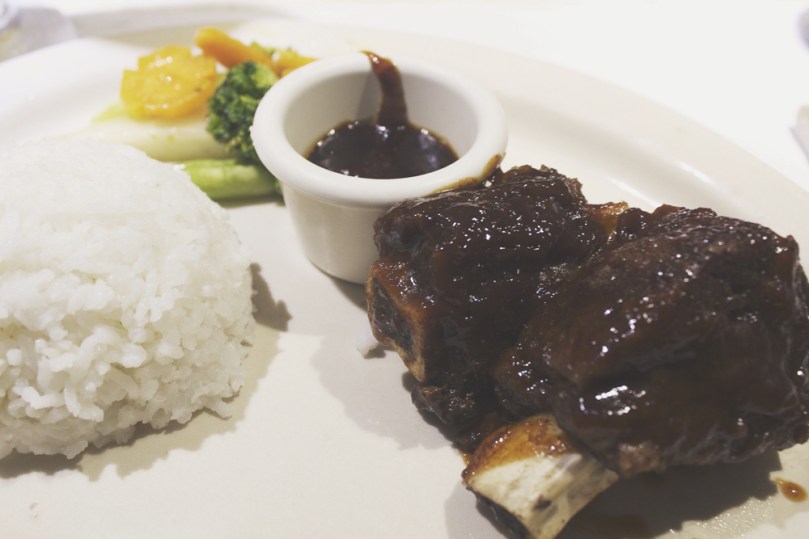
Arabela, Camello's Bakehaus & Coffee Shop - HOUSE SPECIALS (BABY BACK RIBS): BABY BACK BEEF 2PCS
HOUSE SPECIALS (BABY BACK RIBS): BABY BACK BEEF 2PCS
Served with mixed vegetables and mashed potato or rice (₱230.00)
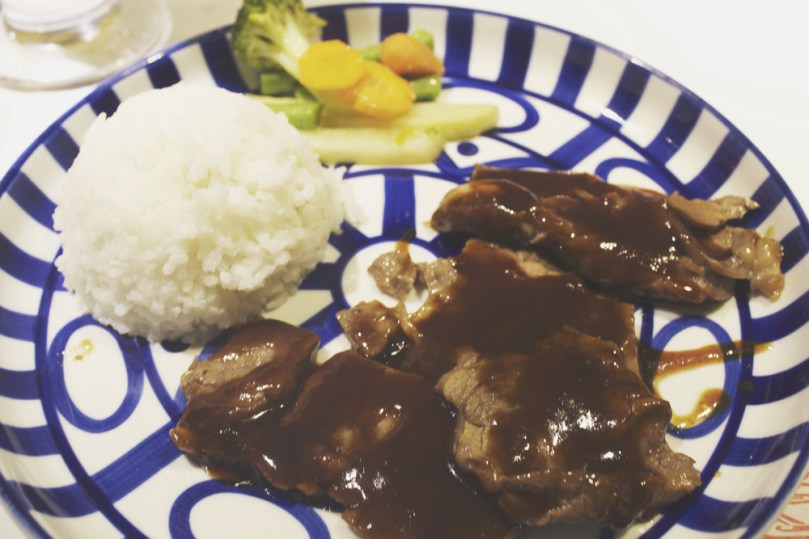
Arabela, Camello's Bakehaus & Coffee Shop - HOUSE SPECIALS (ANGUS BEEF): MESS OF SIRLOIN
HOUSE SPECIALS (ANGUS BEEF): MESS OF SIRLOIN
Served with rice and mixed vegetables (₱200.00)

The three dishes that you just saw above I cannot comment on the taste just because my uncle and my cousins had these dishes. I saw the disappointment in my cousin’s face when his food arrived to the table – two tiny pieces of ribs for a person who could probably eat a whole rack of ribs for a meal. He had to order another rib dish to feel satisfied enough. But just by looking at the three dishes above, they don’t really look that appetising to me.

Arabela, Camello's Bakehaus & Coffee Shop - DESSERTS: CHOCO LAVA
DESSERTS: CHOCO LAVA (₱110.00)

Probably my favourite out of the two desserts we shared – the cake was definitely molten and very rich in chocolate goodness.
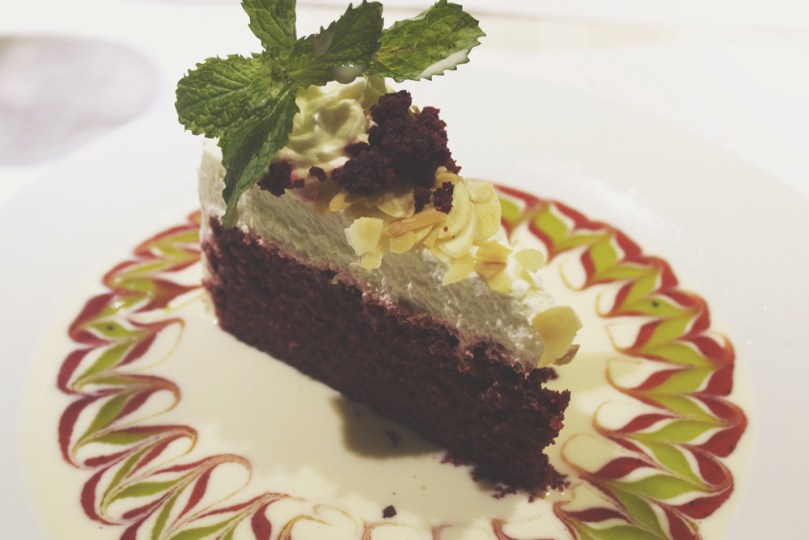
Arabela, Camello's Bakehaus & Coffee Shop - DESSERTS: RED VELVET
DESSERTS: RED VELVET (₱135.00)

I am a huge fan of red velvet; I even made this cake for my birthday last year and it’s not that I’m being cocky or anything, but mine was definitely better. This cake was a bit dry and crumbly for my liking and the taste was average. The thing that was appealing about this was the design on the plate that surrounded the cake, or as my mom referred to it “the placemat.”

Most of the pasta (and even meat dishes) portion sizes were really small; maybe I’m just used to seeing bigger portions of food having lived and dined in and about Sydney for the past 4 years. Then I look at the price and I thought, yes, it makes sense now why the portions are relatively small – think approximately $3.00-$6.00 Australian dollars on average per meal from this restaurant.

You may have also realised that I’ve said for many of the dishes above that they weren’t anything special in terms of overall flavour; I don’t want this post to appear biased and end up being a comparison between Arabela’s menu to others that I’ve had in Sydney because in my eyes, Arabela cannot compare. So I’ve asked my sisters and my mom to give a fair and honest rating for the food, and they gave an average score of 4.6 out of 10. My mom said: “[the food is] very simple, nothing special, but for local Filipino’s, it’s probably something special for them because Arabela is the only of its kind within the area.” Which is very true because from what my cousin has said, a lot of the foreigners come to dine at Arabela, and every time we’ve been, we’ve had to queue up for a table. Ambience though is a sure 8/9 out of 10; like I mentioned above I find the low-ceiling concept quite a unique dining experience. Service: 8/9 out of 10 as well. Value for money is arguable in terms that for us it is affordable, but for an average Filipino on an average/below average income, this place is probably too fancy for them.

Arabela, Camello’s Bakehaus & Coffee Shop
503 Rizal Street
Liliw, Laguna
Philippines, 4004

– Ally xx

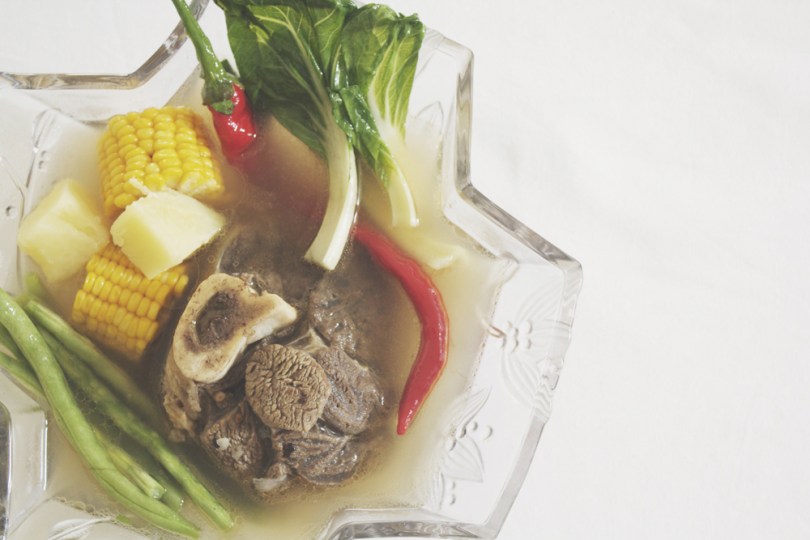
Bulalo (Beef Bone Marrow Soup)

Bulalo (Beef Bone Marrow Soup)

Hello Everyone! So today’s dish is also a classic and most favourite Filipino main dish that can be found on, if not all, most menus across the Philippines. Bulalo, as stated in the title above, is a beef bone marrow soup that is light in colour and as the name states, uses beef shanks and marrow bones paired with various vegetables such as bok choy, corn cobs, green beans, etc. Because of the popularity of this dish, many restaurants and eateries across the Philippines specialise in Bulalo. Some of the most famous “Bulalohan” can be found in Tagaytay City (Cavite) and Santo Tomas (Batangas).

It is not a very hard dish to prepare – simple ingredients and simple cooking is all it really takes. In fact, all your really need for this dish is time and patience. The key to preparing this dish though is to choose the appropriate meat, shanks to be specific, and to make it as tender as possible. To achieve this is to simmering the beef for longer periods of time; it also releases all of its flavour. For me, the best tasting bulalo I’ve had to date was at Nina’s Itikan in Santa Clara, Bulacan. Even though they specialise in itik (duck), their bulalo was very rich in flavour. Even my dish that I am going to share with you today cannot match to its flavour!

Bulalo (Beef Bone Marrow Soup) Ingredients

PREP TIME 10 MINS | COOKING TIME 2 HOURS 10 MINS | SERVES 4

INGREDIENTS

  • 1kg beef shank
  • 2L water
  • 3 cloves garlic, crushed
  • 1 corn on a cob, cut into 4 equal parts
  • 1 large potato, cut into chunks
  • 1 long red chilli
  • 1 medium sized onion, quartered
  • 1 small bunch bok choy
  • 1 small bunch green beans, trimmed
  • 1 stalk lemon grass, halved and bruised
  • 2 tsp salt
  • 2 tsp whole black peppercorns

METHOD

  1. Pour water into a large cooking pot together with the salt, peppercorns, and lemongrass. Bring the water to a boil. Once boiling, add the beef shanks in and simmer for about 1 and a half hours; if you are using a pressure cooker then 30 minutes should do the trick.
  2. Then add in the chilli, garlic, and onions, and simmer for a further 30 minutes until the meat is tender. Add in the corn, green beans, and potatoes, and simmer for another 10 minutes, then followed by the bok choy. If broth needs a bit more salt, then add in a few teaspoons of fish sauce to season to taste.
  3. Serve hot with steamed rice and enjoy! A great dish to share during cold, rainy day/night to warm up your insides!

Bulalo (Beef Bone Marrow Soup)

BON APPÉTIT

– Ally xx
myTaste.com

Crispy Pata (Deep-fried Pork Leg)

Crispy Pata (Deep-fried Pork Leg)

Hello Everyone! After spending the past month in the Philippines, I thought that it’d be a good idea to share some of the foods that I came across and ate along the way. A classic dish that I will be sharing with you is the very famous Crispy Pata, or Deep-fried Pork Leg. Crispy Pata can be found in most eating places in the Philippines; one place that we dined at while staying Lucena City specialises in this dish and is even called Bubbles Crispy Pata & Restaurant. I remember the first time I came here with my cousins from the Barrientos side, my cousin JR joked about ordering a crispy para dish EACH. I think we ended up ordering one between two people, which, looking back, in my opinion is still quite a lot to eat between two; but just like me, he loves him some crispy pata. What I love about this very simple dish, is the crispy skin and of course the very tender meat beneath that layer of crispy goodness.

Crispy Pata (Deep-fried Pork Leg) Ingredients

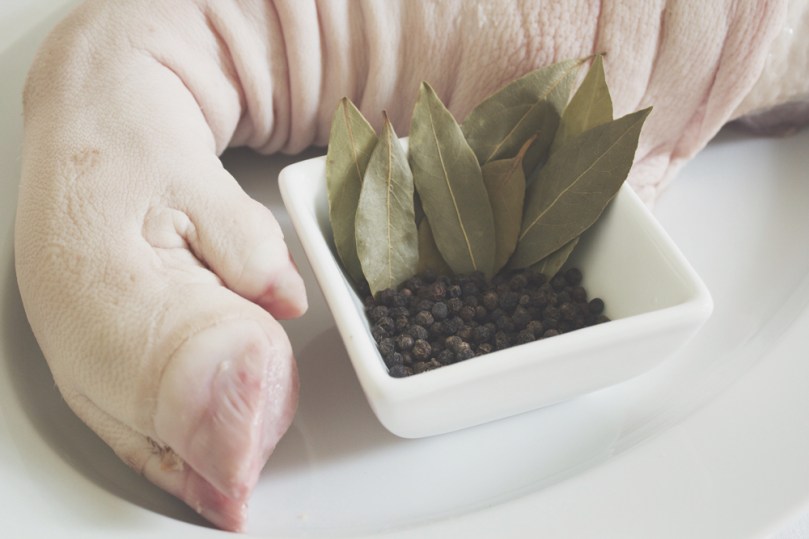
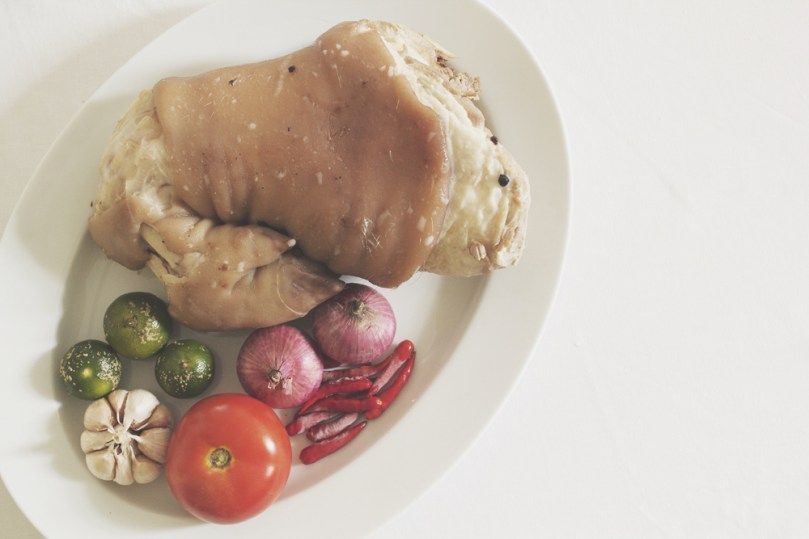
As you probably would’ve already figured out from my description above, and the photographs, Crispy Pata is a famous Filipino pork dish that uses a whole pig’s leg. The leg (or pata) is made tender by simmering in water along with other spices, mainly peppercorns and bay leaves. It is then deep-fried until the texture becomes very crunchy. The dish is then served with various dipping sauces, the main being a soy-vingear sauce with chopped onions, or along with some pickled green papaya known as atchara, served as either a main dish with steamed rice, or as beer food known as pulutan.

Crispy Pata is definitely an easy dish to cook, but be cautious as the process does involve dangerous steps. Deep frying a whole leg can cause the hot oil to be uncontrollable. It is a must to slightly (not fully, as the cover can pop-up due to pressure) cover the cooking pot while frying. What my mom does is that instead of submerging the whole leg in scalding hot oil, she adds enough oil to submerge at least half of the leg and fries it for about 15 minutes or until golden brown. She then cautiously turns the leg and fries the other side for the same amount of time in medium heat until it becomes crispy. This is quite possibly one of the reasons why I only ever have crispy pata at a restaurant or when I’m home and my mom is there to do it for me – I don’t like the frying process!

Crispy Pata (Deep-fried Pork Leg) Ingredients

PREP TIME 24 HOURS* | COOKING TIME 2 HOURS 30 MINS | SERVES 4

*Includes setting aside the boiled pork leg in the fridge overnight to draw out the moisture before deep-frying.

INGREDIENTS

  • 1 whole pig’s leg (about 2 or 2.5kg)
  • 12 to 15 cups water
  • 8 to 12 cups cooking oil
  • 6 pcs dried bay leaves
  • 2 tbsp whole black peppercorns
  • 1 & 1/2 tsp salt

For the soy dipping sauce

  • 1/3 cup dark soy sauce
  • 1 small red onion, diced
  • 1 small tomato, diced
  • Juice of two calamansi**

For the vinegar dipping sauce

  • 1/3 cup white vinegar
  • 3 cloves garlic, crushed
  • 3 red bird’s eye chillies, halved
  • Whole peppercorns

**Calamansi (or calamondin), is a hybrid between a mandarin orange and a kumquat. It is widely cultivated in the Philippines and primarily used in cooking to flavour foods and drinks. If calamansi isn’t available, you may substitute it with lemon or lime, but the taste will not be the same. I can’t say exactly what the difference in taste is, but I think calamansi is a tad more sour than a lemon/lime, and has a slight orange taste to it.

METHOD

  1. Pour water into a large cooking pot along with the bay leaves and peppercorns. Bring to a boil. Once boiling, add in the whole pork leg and simmer under mediumm-high heat until the leg becomes tender (about 1.5 to 2 hours).
  2. Remove the tender leg from the cooking pot, transfer to a plate large enough to fit it and set aside until the temperature goes down. Once it has cooled down, place a clean cloth above the leg and refrigerate overnight. Remove from the fridge a few hours before cooking to bring it back to room temperature. Some recipes I’ve seen don’t require you to refrigerate the meat, I do it so that it draws out excess moisture from the leg.
  3. At this point you may want to rub on some different spices such as garlic powder, ground black pepper, and salt onto the skin. If you do, let it stand for 15 minutes for the leg to absorb the rub. If you don’t want to season it any further, which is what I did, then you can move onto frying.
  4. Heat a clean large cooking pot (preferably with cover), over high heat and pour the cooking oil in. When the oil becomes hot, turn the heat down to medium high. Carefully lower the leg into the hot oil and deep fry. Cook until one side becomes brown and crispy, about 10 to 15 minutes, and then cautiously flip the leg to brown and crisp the other side. Be extra careful in doing this procedure.
  5. Turn the heat off and remove the crispy pork leg. Transfer it to a wide serving plate.
  6. Combine all the ingredients together for the separate dipping sauces dance serve together with the crispy pata!

Crispy Pata (Deep-fried Pork Leg)

BON APPÉTIT

– Ally xx

myTaste.com