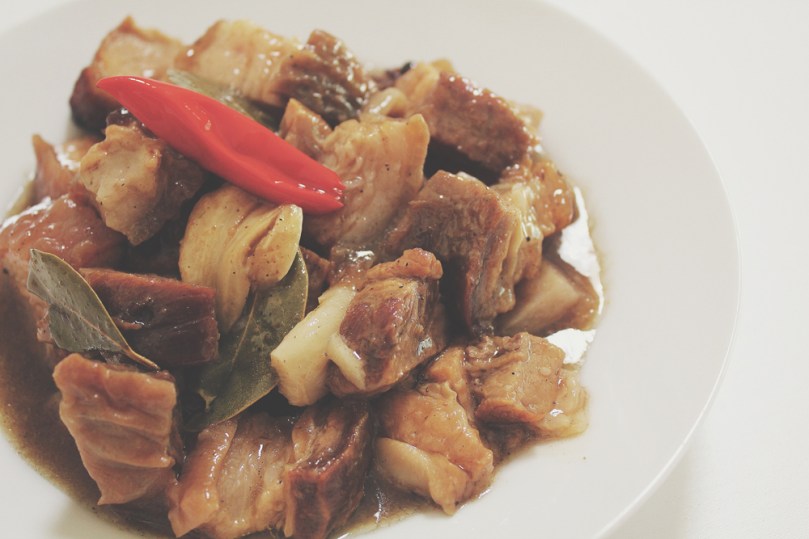
Salmon Belly Paksiw sa Gata (Stewed in Vinegar & Coconut Milk)

Salmon Belly Paksiw sa Gata (Stewed in Vinegar & Coconut Milk)

Hello Everyone! I find it hard to believe that it’s already the middle of the month – oh how time flies by so quickly! I don’t have a long-winded tangent to go on about tonight so this post will most likely be shorter than the previous two.

Paksiw sa Gata is a Filipino cooking procedure that involves two cooking styles – Paksiw (stewed in vinegar), and Ginataan (stewed in coconut milk/cream). This cooking procedure is a quick and easy way of preparing a fish dish; a staple amongst Filipino families.
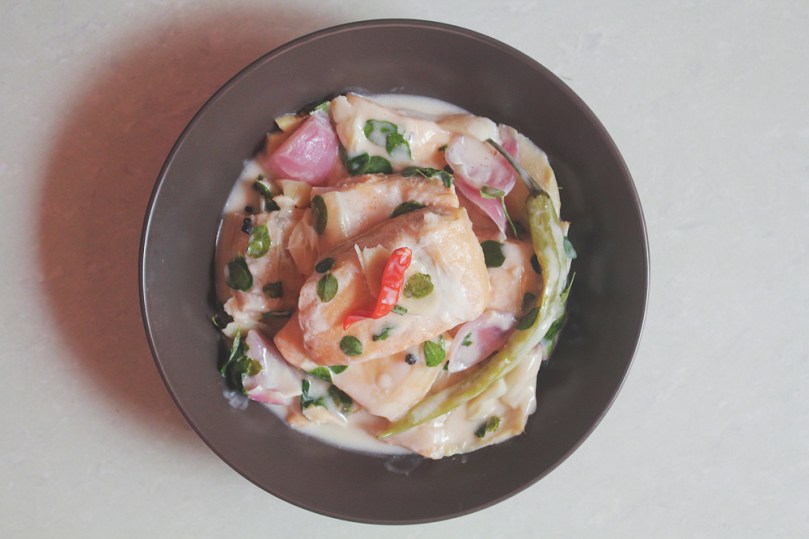
Salmon Belly Paksiw sa Gata (Stewed in Vinegar & Coconut Milk)

You can use other cuts of salmon such as the heads, tails, and the flesh itself. Likewise, you can also use other types of fish such as Threadfin Bream (Bisúgo) and this unnamed White/Silver Fish that my mom used to get from the markets in Brunei for her paksiw (without the gata) dishes that we grew up on. The only reason why it’s unnamed is because I don’t actually know the name of it *cheeky grin*

Besides the protein, it is also an easy dish to incorporate greens into. Bitter melon (ampalaya) leaves are most common, but not restricted to. I absolutely detest bitter melon and its leaves, and so I opted to use malunggay leaves for this dish. Other common/favourite alternatives include spinach, water spinach (kangkong), and chilli leaves.
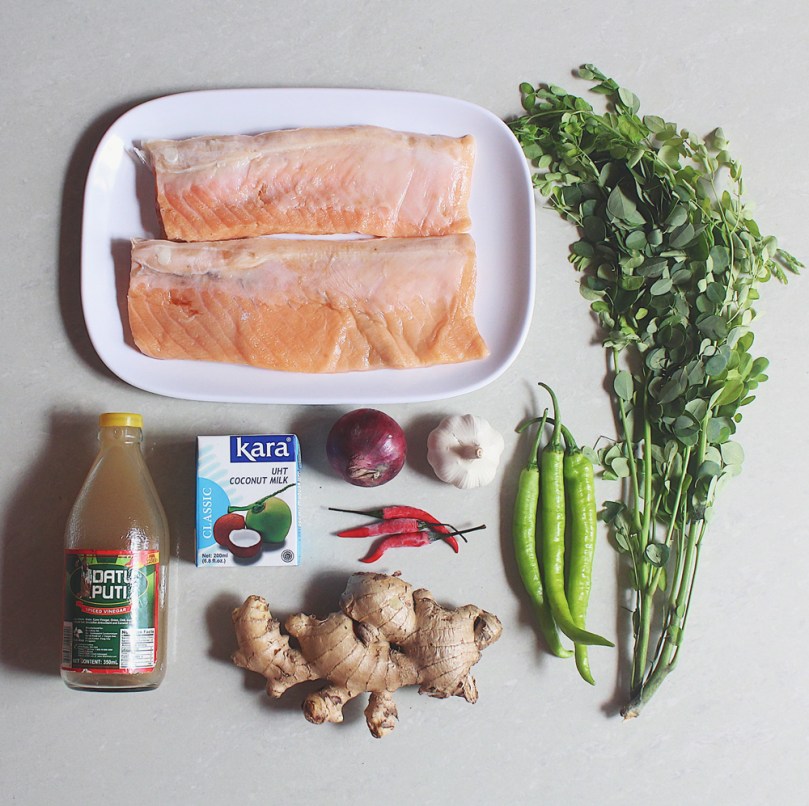
Salmon Belly Paksiw sa Gata (Stewed in Vinegar & Coconut Milk) Ingredients

PREP TIME 10 MINS | COOKING TIME 20 MINS | SERVES 6

INGREDIENTS

  • 1 kg salmon belly, washed, scaled and, cut into large chunks
  • 1 cup coconut milk (fresh, canned, or frozen)
  • 1 cup water
  • 1/2 cup spicy vinegar*
  • 3 long green chillies
  • 3 red bird’s eye chillies**
  • 2-3 garlic cloves, crushed
  • 1 small red onion, quartered
  • 1 bunch malunggay leaves
  • Thumb-sized ginger, peeled and sliced
  • 1 tsp whole black peppercorns
  • Salt, to taste

*Or you can always use normal white vinegar if you don’t sit well with spice

**Optional – only if you want your paksiw sa gata to have a spicy kick to it or not

METHOD

  1. Add the ginger, garlic, onions, chillies, black peppercorns, vinegar, and water into a medium-sized cooking pot. Heat over medium-high and bring to a brisk boil. Continue boiling for about 10 minutes to allow the vinegar to cook and for the aromatics to infuse into the liquid.
  2. Turn the heat down to low, and slowly stir in the coconut milk in and season with a touch of salt. Bring to a slow boil. It is important to bring it back to a boil slowly to avoid curdling the coconut milk. This happens when it is heated too quickly.
  3. Add in the salmon belly chunks and allow to cook for a further 5-7 minutes before adding the malunggay leaves in. Turn the heat off and cover for about 30-60 seconds to allow the malunngay leaves to wilt.
  4. Transfer to a serving plate and enjoy with steamed jasmine rice. Paksiw and Ginataan dishes are always best eaten with rice!
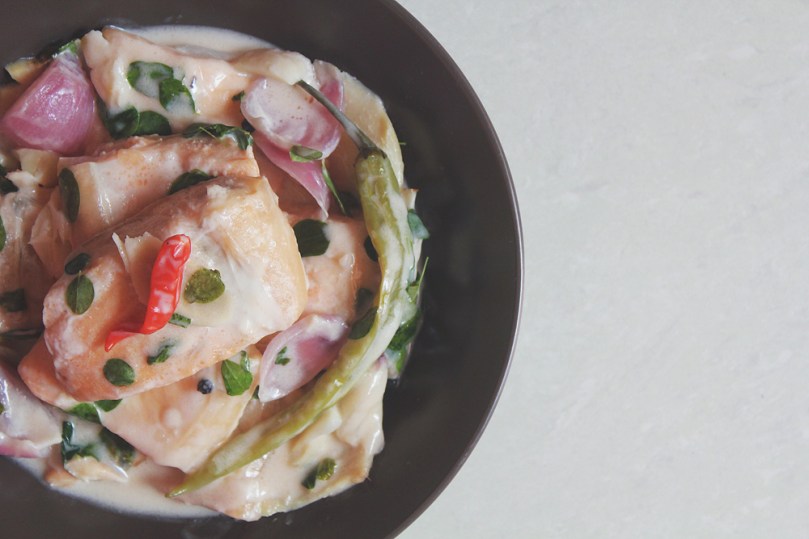
Salmon Belly Paksiw sa Gata (Stewed in Vinegar & Coconut Milk)

This only just came into mind as I was finishing this post off. I thought back to popular (highly viewed) dish that I made a while back that also uses Salmon Belly (Pan-fried Salmon Bellies).

The next time I make this dish, I’m going to pan-fry my salmon bellies to get it nice and crisp. Then, cook the vinegar and coconut milk sauce separately and just pour it over the pan-fried bellies. There’s nothing I love more than a mouthful of crispy yet melt-in-the-mouth belly fat!

BON APPÉTIT

– Ally xx

myTaste.com

Paksiw na Lechon Kawali

Paksiw na Lechon Kawali

Hello everyone! This is another Filipino dish that I really love. I have a lot of favourite Filipino dishes actually, but there are some that I cannot bring myself to eat – I’m pretty sure they taste good, but a little bit off putting for me, and yes, I am talking about the infamous dinuguan (a savoury stew of meat and/or offal, simmered in a rich, spicy dark gravy of pig blood, garlic, chilli, and vinegar). I get the shivers every time I think about this dish. Anyway, enough about this dish for it’s thankfully not what today’s post will be about.

Lechon Kawali is basically a pan-roasted pork dish popular in the Philippines. It is usually accompanied by sarsa ni mang tomas (basically a sauce blend of liver, vinegar and spices that give that distinct sweet and spicy taste it is famous for), ketchup, or soy sauce with calamansi (Philippine lime). Lechon kawali is cooked by boiling then later deep frying a portion of the pig.

Lechon Paksiw is essentially a term associated to a dish that is cooked with vinegar, garlic, onion, and sarsa ni mang tomas sauce. It is a pork dish made from leftover roast pig which is known as Lechon. However, fresh pork can also be used to make lechon kawali. Traditionally, as mentioned above, the pork is deep fried. Because I don’t like deep frying stuff, I roasted the pork in the oven like I would do for pork crackling – the result I find is better, not oily and the meat remains tender and juicy on the inside where as deep frying has a tendency to make the meat tough and dry.

Paksiw na Lechon Kawali

PREP TIME (see below)* | COOKING TIME 1 HOUR 20 MINS |
SERVES
4-6

*If you plan on making dish, plan for about 1-3 days ahead for resting time in the refrigerator.

INGREDIENTS

  • 1kg fresh pork belly or shoulder
  • 1 bottle (330g) mang tomas all purpose sauce
  • 6 cloves garlic, peeled and crushed
  • 3 bird’s eye chillies
  • 3/4 cup white vinegar
  • 1 cup pork stock
  • 1 tbsp white sugar
  • 6 dried bay leaves
  • 2 tsp whole black peppercorns
  • Ground salt
  • Oil for rubbing

METHOD

  1. Score the skin with a very sharp knife. Place the meat in a large pot with water, 1 tsp of the whole peppercorns and half of the bay leaves. Boil for 20 minutes. Remove from the heat and drain, placing in a large bowl and let to cool to room temperature. Reserve the pork stock for cooking later. Once the meat has cooled down, refrigerate uncovered for at least 24 hours or for up to 3 days for a better result. Refrigerating the meat will help to draw out any remaining moisture. Remove from the refrigerator and bring back to room temperature prior to roasting in the oven
  2. Preheat oven between 220-240C. Rub oil and plenty of salt into the scored skin, really getting it into the slits of the score marks. The fat under the skin will react to the salt and that is what makes the skin puff up and crisp up. Roast in the oven for 20 minutes and then bring the temperature down to 160C and roast for another 10 minutes. Remove from the oven and let the meat rest for 20 minutes. Then cut the pork into chunks.
  3. Add all the remaining ingredients into a large pot together with the pork belly chunks. Simmer for 20 minutes and then serve with steamed rice.

Paksiw na Lechon Kawali

BON APPÉTIT

– Ally xx

myTaste.com