Dragon Fruit & Calamansi Shake

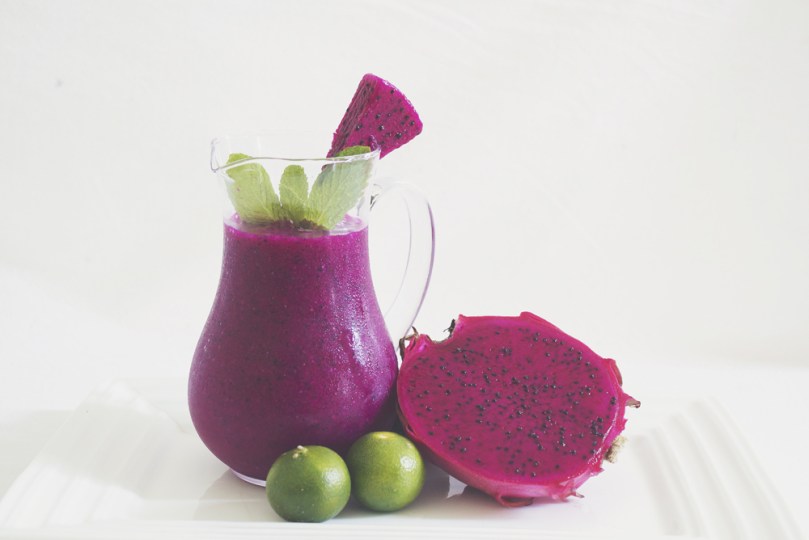
Dragon Fruit & Calamansi Shake

Hello Everyone! Today’s recipe as you can see is a very vibrant one indeed; but colour aside, the dragon fruit (or also known as pitaya) has many health benefits. For starters, it is low in cholesterol and even though the fruit does have small amounts of fat because of the many seeds in the edible part of the fruit, it has little to no unhealthy cholesterol producing fats. Dragon fruits also contain high amounts of vitamin C that provide you a rich balance of nutrients. These are only some of the health benefits that dragon fruits have to offer and you can head on over to Natural Food Benefits for further information.

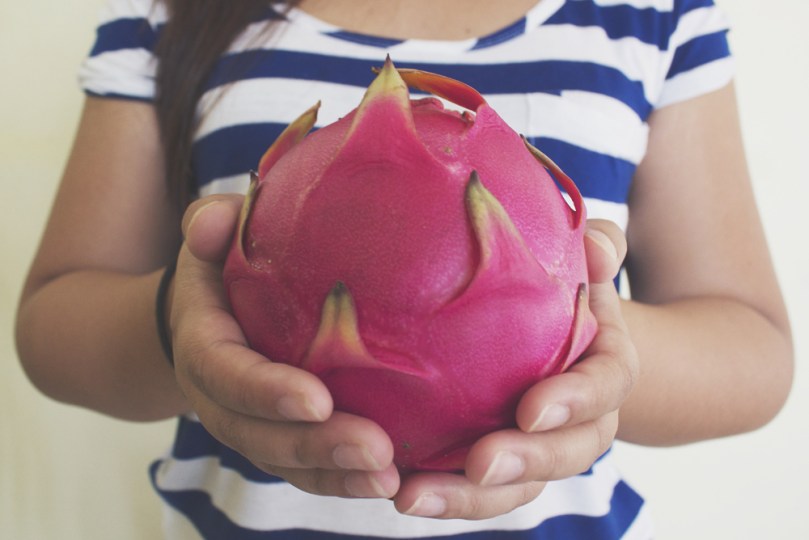
Pink Dragon Fruit

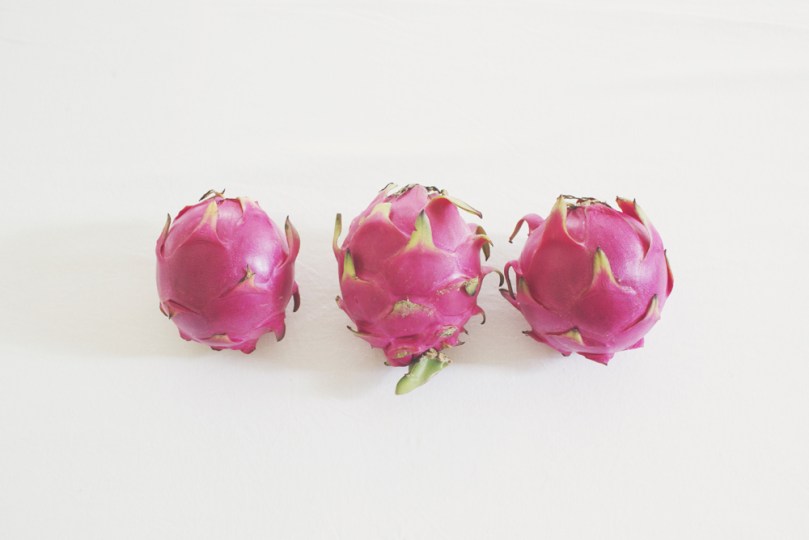
The Pitaya is the fruit of several cactus species and are originally native to Mexico, and are now cultivated in East Asian, South Asian, and Southeast Asian countries. It is commonly know as the dragon fruit as it traces back to its Asian names, for example: the Thai kaeo mangkon (แก้วมังกร) (dragon crystal), the Vietnamese thanh long (green dragon), and the Chinese huǒ lóng guǒ (fire dragon fruit) or lóng zhū guǒ (dragon pearl fruit) to name a few. The dragon fruit comes in three different colours; a red-skinned fruit with either white or red flesh, or a yellow-skinned fruit with white flesh. With the red-skinned fruit, you can’t tell the colour of the flesh unless you ask the man or lady who sells them at the local markets, otherwise, supermarkets usually label them according to the colour of the flesh.

I cannot remember if I’ve touched on what a calamansi is on a previous blog, but I’ll give a brief description on what it is for those of you who don’t know. The calamansi citrus is like a cross between mandarin oranges and kumquats. The flavour is slightly sweeter than a lime, but has the taste of a sour orange. The fruit is grown throughout Southeast Asia, primarily in the Philippines and Malaysia, and is an ingredient used to flavour dishes and make them taste truly authentic. Other than that, it can be sipped on its own as a refreshing drink.

Dragon Fruit & Calamansi Shake

We bought these brightly coloured fruits in the market 2 weeks ago and we didn’t know what to do with them besides just eating them. Then I remembered that a had a red dragon fruit smoothie when I was back in Sydney and decided to turn these fruits into a drink of my own. I searched for recipes online and found one that had the addition of lime and other ingredients in it. I think at the time that I wanted to make this drink, I didn’t have any of the ingredients in the pantry but I had calamansi; and so I decided to give that a go and combine just the two. It tasted really good! The mild sweetness of the dragon fruit paired wonderfully with the sourness of the calamansi.

Pink Dragon Fruit

PREP TIME 10 MINS | COOKING TIME | SERVES 4

INGREDIENTS

  • 2 red dragon fruits, skins peeled* and cut into chunks
  • 2 cups ice
  • 1/4 cup cold water
  • Juice of 5 calamansi
  • Mint leaves, to garnish

*First slice the fruit into quarters, lengthwise, and then you can peel back its skin easily.

METHOD

  1. Combine all the ingredients, except the mint leaves, into a blender.
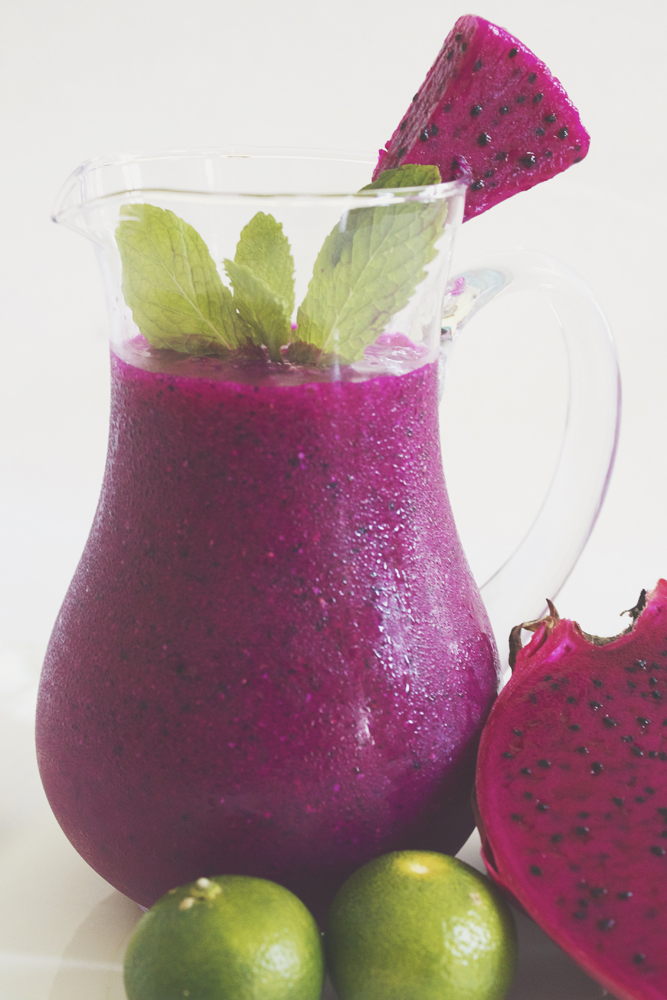
  2. Blend until smooth. Pour into a tall glass and garnish with mint leaves.
  3. Serve and enjoy a refreshing drink in the summer sun!

Dragon Fruit & Calamansi Shake

PS: Consumption of significant amounts of red-fleshed dragon fruit may result in a harmless pinkish/reddish colouration of the urine and poop.

BON APPÉTIT

– Ally xx

myTaste.com

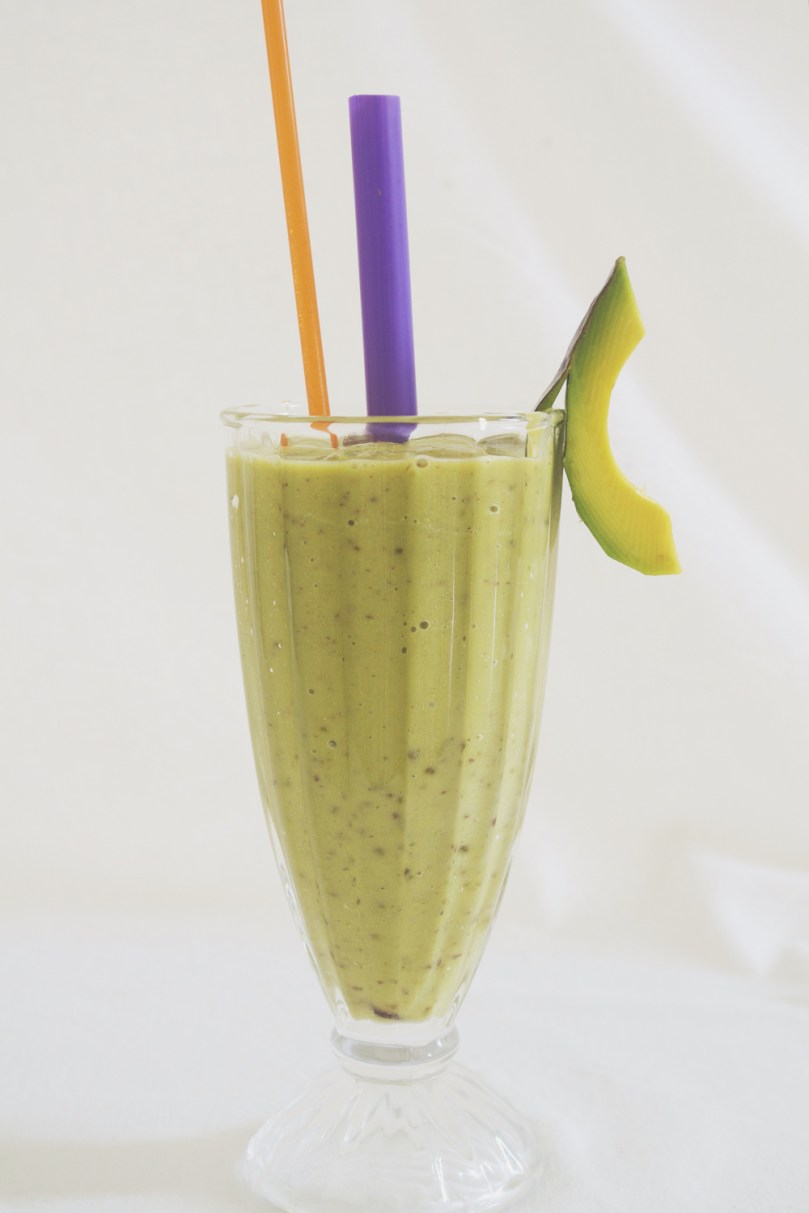
Avocado & Date Smoothie

Avocado & Date Smoothie

Hello Everyone! Today’s recipe was inspired by a smoothie drink that I had about a few weeks ago from The Energy Kitchen here in Brunei. I really loved the taste of it and I was surprised by how little ingredients it contained. It was not only rich and flavourful, but it is also healthy indeed. However, the drink was very pricey; if I’m not mistaken I think it was about $9.00, maybe almost $10.00 for a large glass (11oz maybe). Because of that, I decided to then give this smoothie a try with local avocados that cost $4.00/kg; and you get about 5-6 avocados depending on their size per kilo. Dates were probably around $4.00 per 500g and a carton of almond milk was about $5.00. I with all this, I was able to make at least 4 large glasses with these and still had a lot of dates and almond milk leftover for another 2 rounds of this smoothie. It’s definitely much cheaper making it at home!

Avocados have several proven health benefits including an abundance of nutrients such as vitamins B5, B6, C, E, K, potassium (even more than bananas), and small amounts of magnesium, manganese, copper, iron, zinc, phosphorous, etc. Avocados are also loaded with heart-healthy monounsaturated fatty acids, in which the majority of the fat is oleic acid; beneficial in that these acids activate the part of your brain that makes you feel full. In addition, oleic acid has been linked to reduced inflammation and has beneficial effects on genes linked to cancer. To find out more on the health benefits of avocados, visit the Authority Nutrition page.

This drink also doesn’t contain any sugar. Instead they contain dates that are naturally sweet, and not only that, dates are also known to have many health benefits; to name a few, they relieve constipation, intestinal disorders, heart problems, anemia,  sexual dysfunction, diarrhea, abdominal cancer, and many other conditions. Dates are rich in several vitamins, minerals and fibre too, containing oils, calcium, sulfur, iron, potassium, phosphorous, manganese, copper, and magnesium; all of which are beneficial for our health health. To read up more on the health benefits of dates, visit the Organic Facts page.

Pair these two together with about 3/4 cup of almond milk (you can use any other type of milk if you wish, and also add more milk if you want you smoothie to be a little bit thinner), and you’ve got yourself a rich and healthy drink. I didn’t add any ice to this drink so make sure that your milk is cold or place your smoothie in the freezer for about 10 minutes before drinking.

Avocado & Date Smoothie Ingredients

PREP TIME 10 MINS | COOKING TIME | SERVES 4

INGREDIENTS

  • 6 ripe avocados, peeled, pitted, and cut into chunks
  • 1/2 cup dates, pitted and roughly chopped
  • 1/2 cup almond milk (or any other milk)

METHOD

  1. Combine all the ingredients into a blender. Blend until smooth.
  2. Pour into a tall glass and enjoy a healthy smoothie!

Avocado & Date Smoothie

BON APPÉTIT

– Ally xx

myTaste.com

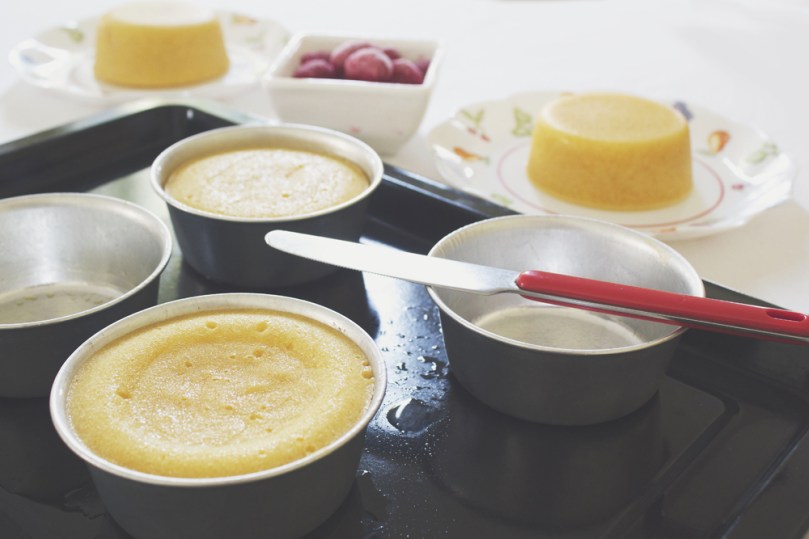
Lemon Molten Cakes with Raspberry & Cream

Lemon Molten Cakes with Raspberry & Cream

Hello Everyone and Happy Mother’s Day to all mothers out there, and most especially to my mother. You are braver than you believe, stronger than you seem, smarter than you think, and loved more than you know. Happy Mother’s Day to you Mumu; love you forever and always, even if we sometimes don’t see eye to eye.

Happy Mother's Day
There is nothing more sincere than a mother’s love for her children, and this picture clearly portrays your love for me while I care more about putting my hairband on for the picture (but really I’ve got my eye on the food).

Last week after my Mom’s birthday celebration (and that whole fiasco that I had with baking her cake), I asked her what she wanted me to bake for her for Mother’s Day, and I’m not gonna lie, but said aloud to her, “please not another cake” – the troubles of my mother being born a week before Mother’s Day. We both started thinking for a while, and then I remembered that I wanted to make this cake back when I was still in Sydney. Now I know I said no cakes, but this technically isn’t a massive layered cake, but instead, mini molten lava cakes.

Lemon Molten Cakes with Raspberry & Cream

Somewhere back in July last year, I hosted a tea and scones party for some of my favourite ladies, and one male housemate. We had an assortment of tea of course, homemade scones, homemade strawberry jam, and homemade lemon curd. I had a lot of strawberry jam left over, but I had a way of finishing it by having it with toast in the mornings with a cup of tea. Lemon curd on the other hand I had no clue on how to consume it. I then searched for other recipes that used lemon curd, except for the obvious lemon meringue pie/tart since I am not a huge fan of meringue. I then came across this recipe and I instantly knew that this was the recipe that I was going attempt – but never got around to doing so. Reasons? I actually don’t remember. I think it was because the lemon curd had been sitting in the fridge for weeks and probably already off at the time I decided that I want to make these molten cakes. After that, I wasn’t bothered to make a whole new batch of lemon curd just for this dessert to happen. But now for Mother’s Day – I don’t see any better chance to have a go at these!

The original recipe can be found on The Gallery Gourmet and this recipe makes about 8 cakes but I guess differs on the size of your moulds/ramekins.

Lemon Molten Cakes with Raspberry & Cream Ingredients

PREP TIME 15 MINS | COOKING TIME 13-15 MINS | MAKES 4 CAKES

INGREDIENTS

  • 120g white baking chocolate, roughly chopped
  • 100g unsalted butter
  • 3/4 cup Homemade Lemon Curd
  • 2/3 cup plain flour
  • 1/2 cup confectioners’ sugar
  • 4 large free range eggs, lightly beaten
  • 4 large free range egg yolks, lightly beaten
  • 2 tsp freshly grated lemon zest
  • 1/2 tsp vanilla extract
  • Pinch of salt
Accompaniments
  • Confectioners’ sugar for dusting
  • Whipped cream
  • Fresh raspberries

METHOD

  1. Preheat the oven to 220C (425F or gas mark 7). Grease 8 ramekins with softened butter or non-stick baking spray.  Place them onto a baking tray and set aside.
  2. Melt the butter and white chocolate in a large microwave-safe bowl, stirring every 15 seconds (for a total of 60-90 seconds) until melted and smooth. Remove from the microwave and whisk until smooth.
  3. Add the flour, sugar and salt; mix well. Then add in the eggs, egg yolks, lemon curd, lemon zest, and vanilla extract and whisk until well blended. Divide the batter evenly into the prepared ramekins.
  4. Bake for about 13-15 minutes or until the edges are just starting to to turn golden brown, and the centre is puffy and just beginning to set. Transfer the ramekins to a wire rack and let cool for 5 minutes.
  5. Run the tip of a paring knife around the edges of the cakes to loosen them and then invert the cakes onto small dessert plates or dishes.
  6. Dust the top with confectioners’ sugar, garnish with fresh raspberries, and serve with whipped cream.
  7. Share with the family (or friends) and enjoy!

Lemon Molten Cakes with Raspberry & Cream Process

Lemon Molten Cakes with Raspberry & Cream

PS: I completely forgot about the whipped cream when I was photographing the cakes, and by the time I had the cream ready and whipped, I found out that my Mom and my sister had already dug into the perfect molten cake that I specifically set aside for my photograph (the other cakes weren’t as runny as the one I had opened for the photo). The whipped cream nicely balances out the sweetness and tartness of the cakes.

BON APPÉTIT

– Ally xx

myTaste.com

Masala Chai Tea with Soy Milk Ingredients

Masala Chai Tea with Soy Milk

Hello Everyone! So on Tuesday I posted a recipe for homemade soy milk. The first thing I thought after making having made the soy milk was what other things could I do with it to make another delicious drink. So today’s recipe uses the soy milk that I made to make a masala chai tea. I mean, you can always use store bought soy milk, or any other milk for that matter.

Masala Chai (literally translated: ‘mixed-spice tea’) is basically a flavoured tea beverage made by brewing black tea with a mixture of aromatic Indian spices and herbs. Nowadays, it is a very popular and feature drink in many coffee and tea houses. Chai is traditionally prepared by brewing green cardamom pods, cinnamon sticks, ground cloves, ground ginger, and black peppercorn together with black tea leaves. Most retail versions of this tea includes tea bags for infusion, instant powdered mixtures, and concentrates. I used tea bags for mine only because I could not find any loose black tea leaves in stores.

I love chai tea. In fact, I ordered it almost every time I went to a café, aside from a café latte that is. I was surprised that it was that easy to make when I came across a recipe online on how to make you own chai tea.

Masala Chai Tea with Soy Milk Ingredients

PREP TIME 5 MINS | COOKING TIME 10-15 MINS | SERVES 4-5

INGREDIENTS

  • 3 cups water
  • 1 cup homemade soy milk (or any other type of milk)
  • 1/4 cup loose black tea leaves (or about 5 tea bags)
  • 3 tablespoons granulated white sugar
  • 1/4 inch of ginger root, peeled and sliced thinly
  • 6 cardamom pods
  • 6 whole cloves
  • 2 cinnamon sticks
  • Several peppercorns

Other optional spices that you can add to your chair tea inlaced: vanilla, almond, nutmeg, bay leaves, star anise, or fennel and allspice; I added star anise to mine.

METHOD

  1. Combine the water, spices, and tea in a medium-sized saucepan. Turn the heat to high and bring to a boil. Once boiling, let it boil for a further 5 minutes and then turn the heat off. Let the mixture steep for at least 10-15 minutes.
  2. Strain the tea mixture and discard the spices. Add the soy milk and sugar to the strained tea mixture and stir well. Then reheat the tea until piping hot.
  3. Enjoy! Serves about 4 cups of tea.

Masala Chai Tea with Soy Milk

BON APPÉTIT

– Ally xx

myTaste.com

Homemade Soy Milk Ingredients

Homemade Soy Milk

Hello Everyone! I’ve got a few drinks that I want to cover on the blog for the next two weeks; simple but very tasty indeed! Today’s recipe is pretty straight forward, just plain regular soy milk, but definitely much richer than those that you find at the stores/markets because the ones I’ve bought are usually very watered down. By making your own soy milk as well, you ensure that no other extra ingredients go into them, especially sugar in my case (or more like in the case of my mom who is a diabetic).

Homemade Soy Milk Process

Homemade Soy Milk Process

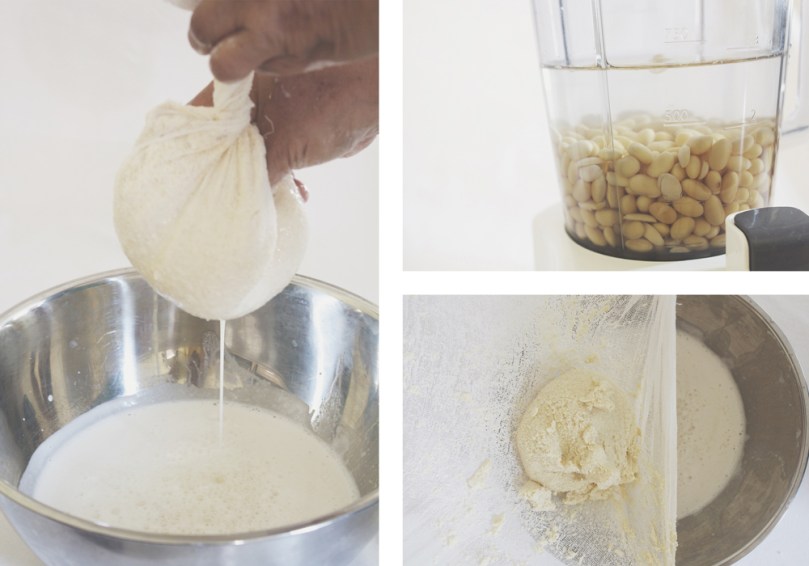
Though it sounds very simple and the process doesn’t require a lot of skill, it requires a lot of time. Firstly having to soak the beans for a couple of hours until they are soft takes about 4-5 hours of waiting (the longer the better I guess). Then having to blend the beans with water and strain out the liquids using a muslin cloth, batch by batch; and then finally boiling it with the pandan leaves for about 30 minutes. Indeed simple, but can be time consuming. Whenever I make soy milk, I always needs another pair of hands in the kitchen and it’s usually my mom who does the straining while I do the blending.

Homemade Soy Milk Ingredients

PREP TIME 5 HOURS 30 MINS | COOKING TIME 30 MINS | SERVES 10-12

INGREDIENTS

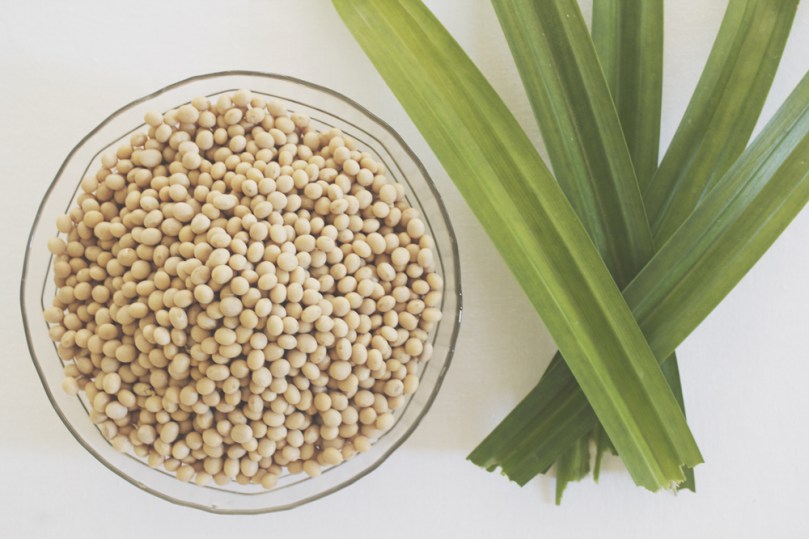
  • 1kg soybeans
  • 5 pandan leaves
  • 3 litres water

METHOD

  1. Place the soybeans in a large bowl of water and soak for 4-5 hours or until the beans have doubled in size and have softened. Drain.
  2. Working in batches, add about 2 cups of the softened soybeans into the blender together with about 3 cups of water. Blend until the mixture is smooth.
  3. Pour out the mixture onto a muslin cloth placed over a large bowl. Strain and squeeze out as much of the liquids as possible. Transfer the remaining soybean pulp into another bowl.
  4. Repeat steps 2 and 3 for the remaining soybeans.
  5. Transfer the raw soy milk to a large cooking pot and together with the pandan leaves, boil of about 30 minutes. Stir the mixture at intervals to avoid the milk sticking to the bottom of the pot. Skim the top to get some of the foam off.
  6. Add about a quarter cup of sugar if you wish (we usually add a teaspoon of sugar afterwards in our mug of soy milk), or flavour it up any way you want. Some flavouring suggestions include: chocolate, honey, vanilla, etc.
  7. Drink and enjoy either hot or cold!

Homemade Soy Milk Process

Homemade Soy Milk

PS: Don’t throw the leftover bean pulp away! You can make your very own homemade tofu from it! Visit this the Food Network for more on how to make your own tofu.

BON APPÉTIT

– Ally xx

myTaste.com

Kamayan sa Palaisdaan

Kamayan sa Palaisdaan

Hello Everyone and welcome back to an all new Review Sunday! Most of the food that you’ll see here have either already been touched on in previous reviews, and/or recipes, so I may not write much about the food only because it’s nothing quite so special. Kamayan sa Palaisdaan has both a Hotel & Resort, as well as a restaurant, both carrying the same menu but differ in ambience. It is the ambience of the restaurant just down the road from the Hotel & Resort that made me want to write a review and share this place with you – floating bahay kubos on bamboo rafts!

Kamayan sa Palaisdaan

Other than the ambience, I couldn’t really pick out anything special from their menu that really made me want to say, “I’m coming back here for this particular dish!” Though they say it’s an ideal getaway restaurant for seafood lovers, the seafood did not really impress – well I mean, we barely ordered any seafood to be honest.

I don’t know why I am so negative when it comes to reviewing Filipino food. The only reason I can think of is that most of the food that you get dining out, you can easily cook it up yourself at home and it tastes exactly the same. From the dishes that you will see below, I can definitely cook up all the dishes. I guess it’s because I know how to cook these dishes, that I comment the way I do. I’m not saying that these are terrible dishes; if anything, they are my favourite dishes to have when eating at home. It’s just that when I dine out, I want to eat something that I can’t cook myself (or I guess in my case, haven’t attempted to cook yet).

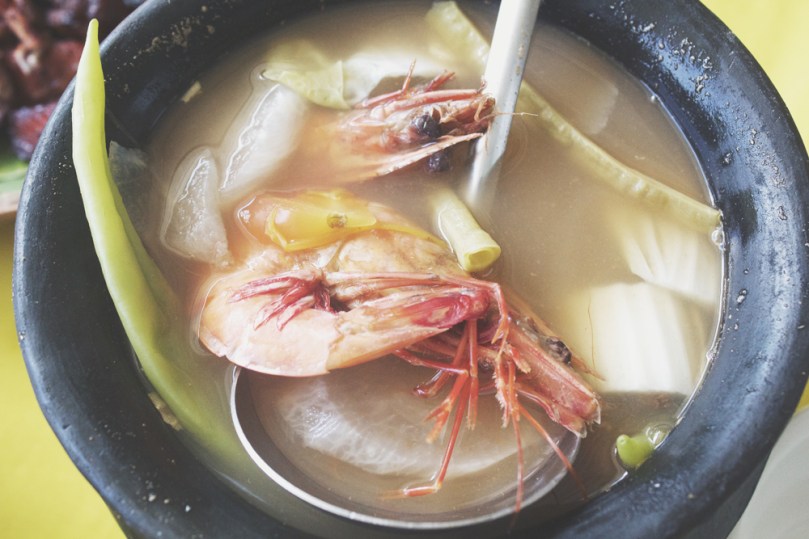
Kamayan sa Palaisdaan - SINIGANG atbp: Sinigang na Sugpo
SINIGANG atbp: Sinigang na Sugpo (₱320.00)

Sugpo, as you can already tell from the photograph above is prawn (or shrimp if you’re from that part of the world that calls them that despite being huge-ass prawns). Sinigang is a soup that is characterised by its sour and savoury taste that is most often associated with tamarind. This is a dish that my mom would make a few times a month, varying between different meats such as beef and pork, and seafood like prawns and fish, accompanied by all sorts of vegetables from daikon, water spinach, okra, taro corms, etc. This is a dish I love especially when the weather is quite chilly.

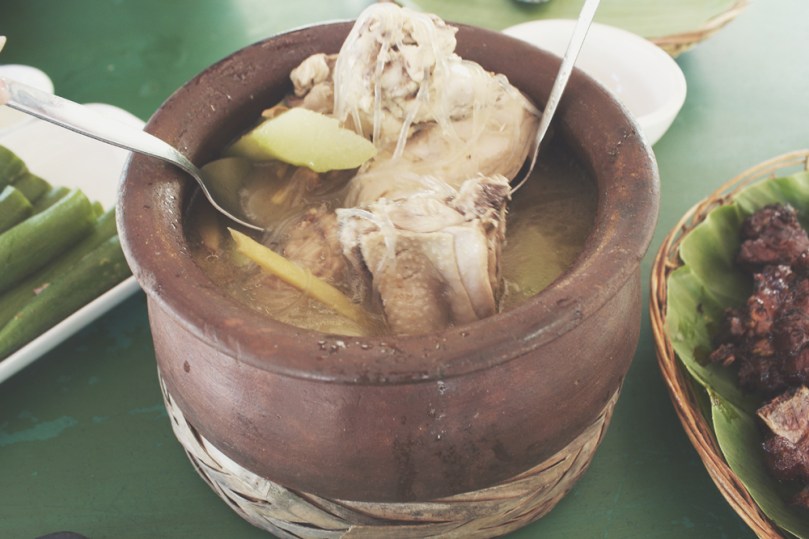
Kamayan sa Palaisdaan - SINIGANG atbp: Tinolang Manok
SINIGANG atbp: Tinolang Manok (₱255.00)

This is another dish that my mom would always make, and also great for cold and rainy days. Tinola is a ginger and onion based soup with manok (chicken) as the usual main ingredient, best complimented with green papaya wedges (an alternative is chayote/chokos) and chili leaves. Again, a dish that I love, but very close to the way that I’d make it at home.

Kamayan sa Palaisdaan - SIZZLERS: Sisig Pork
SIZZLERS: Sisig Pork (₱205.00)

Of course, a meal in the Philippines would not be complete without sisig! I was actually quite disappointed with this sisig dish though – it came to the table, not only without a freshly cracked egg on top of it, but it also wasn’t sizzling and was very dry.

Kamayan sa Palaisdaan - IHAW: Inihaw na Spareribs
IHAW: Inihaw na Spareribs (₱310.00)

I love ihaw, and I love spareribs. Sadly, these ribs were dry and weren’t very tender.

Kamayan sa Palaisdaan - IHAW: Inihaw na Pork Chop
IHAW: Inihaw na Pork Chop (₱320.00)

The pork chop option was much better than the spareribs; juicy, tender, and full of that lovely char-grilled flavour.

Kamayan sa Palaisdaan - VEGETABLES: Chopsuey Chicken
VEGETABLES: Chopsuey Chicken (₱185.00)

Whenever we dine out, we try to avoid dishes like chopsuey, but because we couldn’t decide on any other vegetable dishes (I know there’s chicken in it but it was somehow placed under the ‘vegetables’ section on the menu). Why we try to avoid this dish is simply because it’s basically just stir-fried vegetables and nothing more exciting to that.

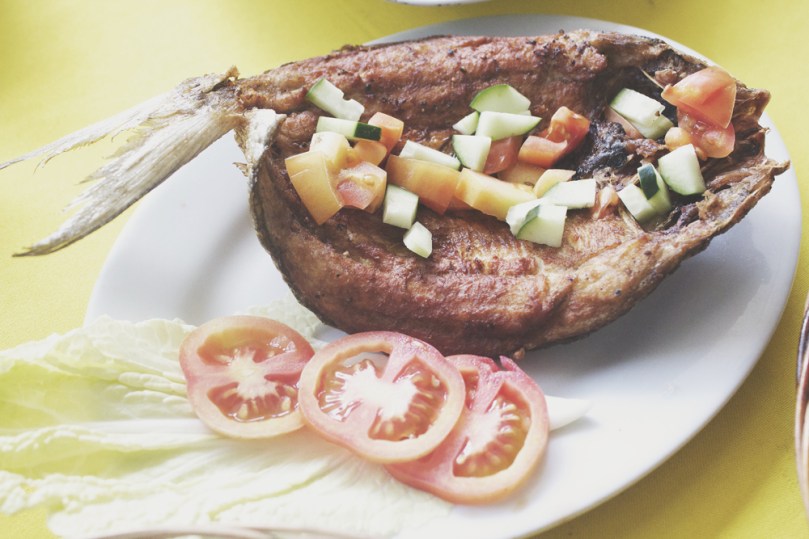
Kamayan sa Palaisdaan - PRITO: Daing na Bangus
PRITO: Daing na Bangus (₱160.00)

Bangus (milkfish) is the national fish of the Philippines and can be prepared and cooked in various ways. ‘Daing’ refers to dried fish from the Philippines. Fish prepared as daing is usually split open, gutted, salted liberally, and then sun and air-dried. I love eating fried bangus with a bit of pickled green papaya on the side with plain rice. But honestly speaking though, why order fried fish at a restaurant? In my case, because I love it and I couldn’t find anything else in the menu that attracted me to it.

Kamayan sa Palaisdaan - SALADS: Ensaladang Pako
SALADS: Ensaladang Pako (₱125.00)

Quite possibly the worst dish from this place based on my taste buds and opinion. For starters, the taste of what seemed to be raw pako (an edible Fiddlehead fern) did not sit too well with me; it tasted bitter. What made it worse for me were the raw onions and the obvious canned sardines in tomato sauce. Why did I order this? Well I didn’t, my uncle did. I don’t think I even touched this dish after a small bite of just the pako.

Kamayan sa Palaisdaan - JUICES: Buko FreshJUICES: Buko Fresh (₱60.00)

Fresh coconut juice straight from the shell, need I say more?

Overall, as I have already mentioned above, the menu is pretty average and can honestly be found in many other restaurants (and homes no matter rich or poor) across the Philippines. I guess it’s safe to say that if you are going to the restaurant for the food, it’s not worth the trip to this place seeing as it is also quite hard to find. However, if you want to dine in a bamboo hut on a bamboo raft floating over water, then you may want to make the trip here just for that experience. Dining at the Hotel & Resort isn’t bad as well as it provides a lot more recreational activities that you can enjoy aside from dining, and it also overlooks Mount Banahaw. So ambience and dining experience is a sure 10 for me. Service probably an 8 as even though there were quite a few staff members, it was pretty hard to flag one down whenever we needed something. Food – probably a 5; 6 if I’m feeling generous, but nothing more.

Kamayan sa Palaisdaan

Barangay. Dapdap
Tayabas, Quezon
Philippines

– Ally xx

Ube Cake with Mango Cream Cheese Frosting

Ube Cake with Mango Cream Cheese Frosting

Hello Everyone! As I already mentioned in yesterday’s post, I have a very special recipe for all of you today as today is my Mother’s 55th Birthday! Not only that, it is also my Cousin’s 35th Birthday! A very Happy Birthday to the both of them! Not only do they share the same birthday, but they also share the same-ish name. My mom’s name is Josephine, while my cousin’s name is Joseph; and my mother is also his godmother in both his baptismal and wedding. So yes, these two people are very important to me.

Happy Birthday Mom Josephine & Kuya JR
Happy Birthday to my mom Josephine & my cousin Joseph Russell! This is the latest photo that I could find of the two of them. This photograph dates back to December 2012 when my cousin JR got married. Kuya J, payat mo oh! Anyare? Hehehe.

To be completely honest, this cake has given me a lot of headaches to the point where I just had to redo everything again. The plan was to bake it the day before so that it would be in the fridge overnight; that obviously didn’t happened. Something went wrong in the batter; it was very pale and it looked like the batter and the eggs whites separated because when I took them out of the oven, the top half was very airy white the bottom half was cake-y. Since I had quite a tiring day yesterday, I gave up on baking the cake and decided to bake it early the next morning (today). The cake this time went well, I just mixed the batter very well and added some food colouring to bring out the purple a bit more.

Ube Cake with Mango Cream Cheese Frosting

However, today my frosting decided that it wanted to wreck havoc. The frosting was actually an experiment, because I wanted to incorporate mango into the cream cheese frosting somehow. The big mistake that I did was that I mixed the mango purée together with the cream cheese and and butter instead of smoothening out the cream cheese and butter first. I ended up with a mess of what looked like really bad scrambled eggs. I tried so hard to save it, but in the end I started all over again. At one point I kind of just had about enough with this cake… But I told myself to carry on because it’s a special cake for my Mom’s Birthday! The flavours were all there, form the cake in the beginning, and even the frosting, but it would’ve ended up looking like a shit cake if I hadn’t redone the whole thing.

Anyway, all mishaps aside, the cake turned out to be pretty good! But what decided to ruin everything yet once again was the weather. It was pitch black and raining when I was about to do the final touches on the cake and I have no natural light to photograph my cake. I am so devastated. It was as if everything was trying to ruin this cake for me… Thank goodness that it was still a little bit bright outside, but I really had to put my ISO up and decrease my shutter speed to get some light!

Ube Cake with Mango Cream Cheese Frosting Ingredients

PREP TIME 30 MINS | COOKING TIME 30-35 MINS | SERVES 8-10

INGREDIENTS

For the cake batter

  • 2 & 1/2 cups cake flour*
  • 1 cup ube (purple yam), cooked and finely grated**
  • 1 cup white sugar
  • 7 egg yolks, lightly beaten
  • 7 egg whites
  • 3/4 cup milk
  • 1/2 cup corn syrup***
  • 1/2 cup vegetable oil
  • 3 tsp baking powder
  • 1 tsp salt
  • 1 tsp vanilla extract
  • Blue & red food colouring (optional)

For the frosting

  • 1 very ripe mangoes, puréed
  • 1 package (250g) cream cheese, softened
  • 100g unsalted butter, softened
  • 1 cup confectioners’ sugar

*I barely use cake flour, and if you so happen as to not have cake flour in your pantry, you can substitute 1 cup of cake flour with 2 tablespoons of corn flour place into a measuring cup and then filling it with plain flour all the way to the 1 cup mark.

**Place the ube (leaving its skin on) in a pot of boiling water and boil for about 45 minutes to an hour, depending on how big it is, or until tender. Peel off its skin and then grate.

***If you’re like me and you don’t have corn syrup sitting in your pantry because you barely use it anyway, you can substitute corn syrup by dissolving 3/4 cup of granulated sugar in 1/4 cup of boiling water.

METHOD

  1. Preheat oven to 165C (325F or gas mark 3). Grease three 8.5-inch cake pans with a little butter and set aside.
  2. Ube Cake: In a medium-sized bowl, mix together the flour, baking powder, and salt. Set aside.
  3. Place the grated ube into a large bowl and mix together with the milk and vanilla extract; gradually mix into the ube until it is smooth. Then add in the corn syrup, egg yolks, and oil. Mix together and then add in the flour mixture and mix until smooth. Set aside.
  4. In another large bowl, beat the egg whites until foamy. Gradually add in the sugar, then red and blue food colouring (optional), while continuing to beat until stiff peaks form.
  5. Fold in a third of the egg white mixture into the batter, then quickly fold in remaining whites until no streaks remain. Pour batter into prepared pans.
  6. Bake in the preheated oven for 30 to 35 minutes, or until a toothpick inserted near the centre comes out clean. Cool for 10 minutes before removing the cakes from the pans to wire racks to cool down completely.
  7. Mango Cream Cheese Frosting: Using an electric handheld mixer, beat the cream cheese, butter, and maple syrup in a small bowl until smooth. Then beat in the confectioners’ sugar, and then fold in the mango purée.
  8. Assembly: Place one cake layer on a serving plate and trim the tops so that they are level. spread with about 1/4 cup of frosting. Top with the second layer of cake and spread another 1/4 cup of and frosting. Finally, top with the last layer of cake and frost the top and sides of the cake. Decorate with the cake trimmings and store in the fridge before serving. Enjoy!

Happy Birthday Mom Josephine

Ube Cake with Mango Cream Cheese Frosting

BON APPÉTIT

– Ally xx

myTaste.com

Fresh Fruit Salad

Fresh Fruit Salad


Hello Everyone! Today’s post is a special one as this is my 100th recipe on the blog! I wanted to make something special, for my 100th recipe post, but I wasn’t in the mood to bake a cake for it because I baked one just last week, and I will be baking one this coming Thursday ready for my Mom’s birthday on Friday!

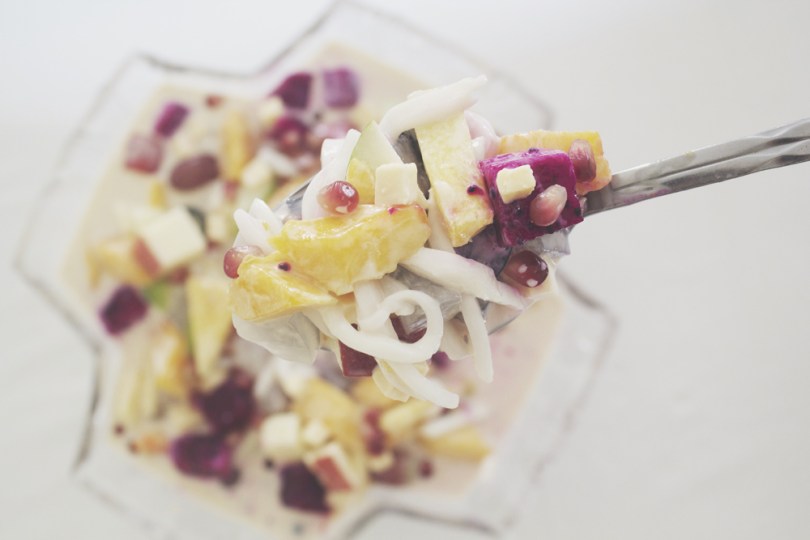
Fresh Fruit Salad

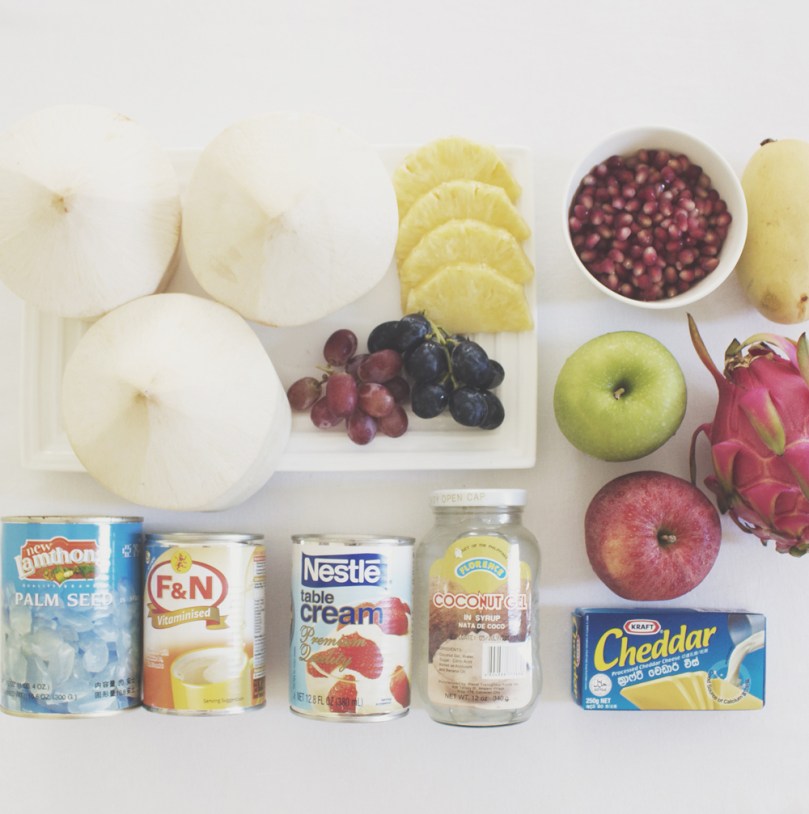
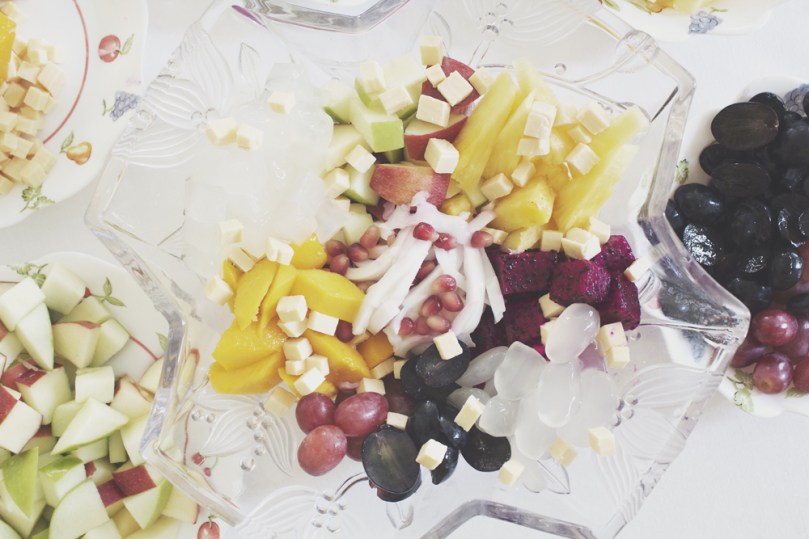
Anyway, today’s recipe is a classic dish that you will find on every Filipino’s table during Noche Buena (the eve of Christmas) and/or Media Noche (New Year’s eve) feasting celebrations. ‘Fruit Salad’ is a general term referring to a dish that is typically composed of an assortment of fruits, fresh or canned. The Filipino version of the fruit salad consists of these fruits, condensed milk, and table cream, making the dish a rich and sweet dessert. I personally don’t like the use of canned fruits just because of the amount of preservatives in them. Anyway, there are plenty of fresh fruits that can be bought at the local markets – and Philippine mangoes are in season right now so why substitute that for canned fruit cocktail?! However, buying a can of fruit cocktail is definitely cheaper for the average Filipino.

Here’s what you’d get if you use canned fruit cocktail to make your fruit salad; not as vibrant as the one above right? Also, by using fresh fruits, you get to play around not only with the type of fruit but with the many colours as well, for example vibrant green kiwis or bright orange mandarins/papayas? Take your pick! Just don’t forget to include bright yellow mangoes and definitely those luscious red dragonfruits.

Fruit Salad

Now, I’ve had a look at a few recipes online and none that I have come across add cheese in their fruit salads. From what I know, or I guess what my mom has told me is that, since this would normally be a dish served during Christmas and New Year’s time, a fruit salad would not be complete without the addition of pieces of queso de bola. Queso de Bola (translated: “ball of cheese”) is just Edam cheese, traditionally sold in spheres with a pale yellow interior and a coat of red paraffin wax.

Other than fruits, fresh or canned, and cheese, palm seeds and nata de coco can also be added. I love nata de coco; I’d always fish these out from the serving bowl! Nata de Coco, for those of you who don’t know, is produced by the fermentation of coconut water. It is translucent and has a jelly-like and chewy texture.

Fresh Fruit Salad Ingredients

PREP TIME 25 MINS | COOKING TIME | SERVES 8-10

INGREDIENTS

  • 3 young coconuts, flesh removed and shredded*
  • 1 can (380ml)  Nestlé cream
  • 1 can (570g) palm seeds, with syrup
  • 1 jar (340g) nata de coco, drained
  • 1 red dragonfruit, cut into chunks
  • 1 green apple, cut into chunks
  • 1 red apple, cut into chunks
  • 1 ripe Philippine mango, cut into chunks**
  • 1/2 block (125g) cheddar cheese, diced
  • 1/2 pineapple, cut into chunks
  • 1/2 large pomegranate, peeled and deseeded
  • 3 tbsp condensed milk
  • Handful of small black and red grapes

*The best thing about using fresh young coconut is that you get to have a nice tall glass of fresh coconut juice! The best thing in the world especially if you’re living right on the equator and experiencing high 30s all year round!

**You can use any other kinds of mango i.e. Kensington Pride mangoes, but honestly, Philippine mangoes are simply the best!

METHOD

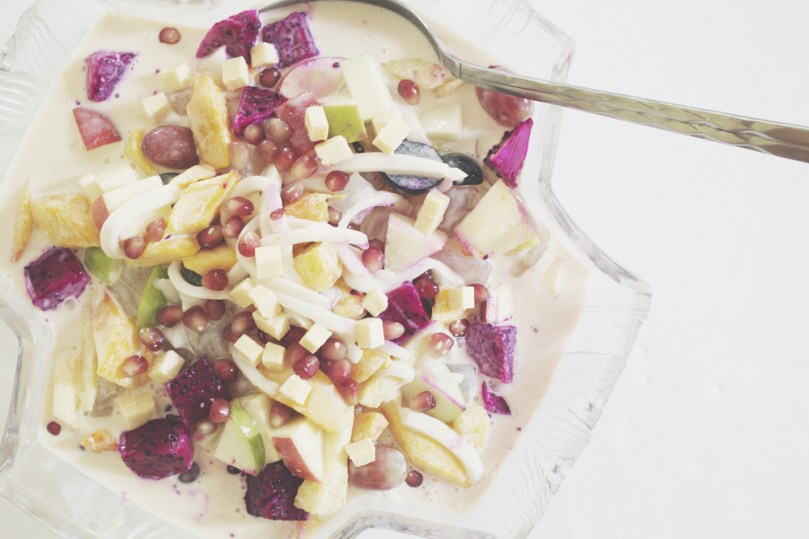
  1. Combine all the fruits (except the dragonfruit), cheese, palm seeds with syrup, and nata de coco in a large serving bowl. If you add the dragonfruit in now and mix everything together, its colour will bleed into the cream and make everything pink!
  2. Add the condensed milk and cream and mix well, being careful though so that the fruits still remain intact and do not get crushed when mixing. Once everything is mixed, top with the dragonfruit chunks.
  3. Chill in the fridge/freezer for at least three hours.
  4. Serve and enjoy!

Fresh Fruit Salad

Fresh Fruit Salad

BON APPÉTIT

– Ally xx

myTaste.com

Mesa Filipino Moderne - FRESH CATCH: Tilapia

Mesa Filipino Moderne

Hello Everyone and welcome back to an all new Review Sunday! I’ve got three more places from the Philippines that I want to touch on before I start reviewing a couple of places here in Brunei. I’ve actually visited quite a number of places in the Philippines, but I feel like I haven’t had the full dining experience yet in terms of what their menu has to offer. Then there are some other places that I was thinking of writing about, but when I look back at their food, it was all too similar and nothing special really.

Anyway, what I realised when dining out in the Philippines, food is always the same no matter where I go. For example, dishes like sisig, crispy pata, kare-kare, sinigang, laing, buko pandan, leche flan, and many other classic and famous Filipino dishes, though I imagine cooked slightly different to separate themselves from others, all taste quite similar no matter where we have it. In tagalog, I would normally say “nakakasawa”, if you eat the same food over and over you will say or have that feeling nakakasawa, but maybe its because I’ve been eating in the wrong places.

Mesa caught my eye as I was roaming around SM North Edsa with my sisters while my Mom was somewhere along Quezon Avenue doing medical checkups. We were looking for new places to eat, and when a saw ‘new’ I just mean nothing like Barrio Fiesta or Gerry’s Grill – not places that we have been to over and over again every time we visit the Philippines. I had never heard or encountered Mesa in my pervious trips, and what intrigued me was the modernity and interpretation of classic traditional Filipino dishes. I was definitely intrigued when I saw Ostrich on their menu even though I didn’t have any.
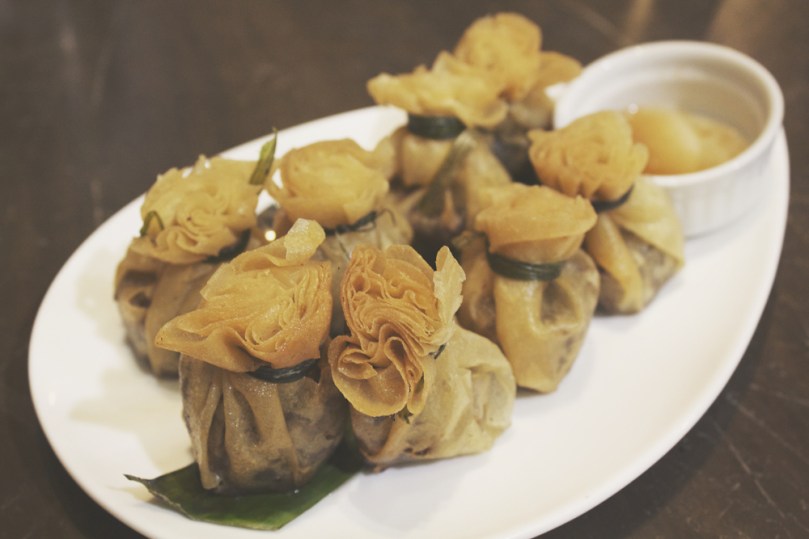
Mesa Filipino Moderne - SISIG: Sisig in a pouch
SISIG: Sisig in a pouch
Savoury pork sisig wrapped in a pouch (₱190.00)

As mentioned probably in a previous review, sisig is a dish that I never fail to have whenever I visit the Philippines. I was attracted to this dish because I’ve never had sisig this way before. It was a perfect way to start out our lunch at Mesa; the pouches had a very nice golden brown finish to them, and it gave each bite a nice crunch to the sisig filling inside. It was paired nicely with a side of spicy vinegar as well.
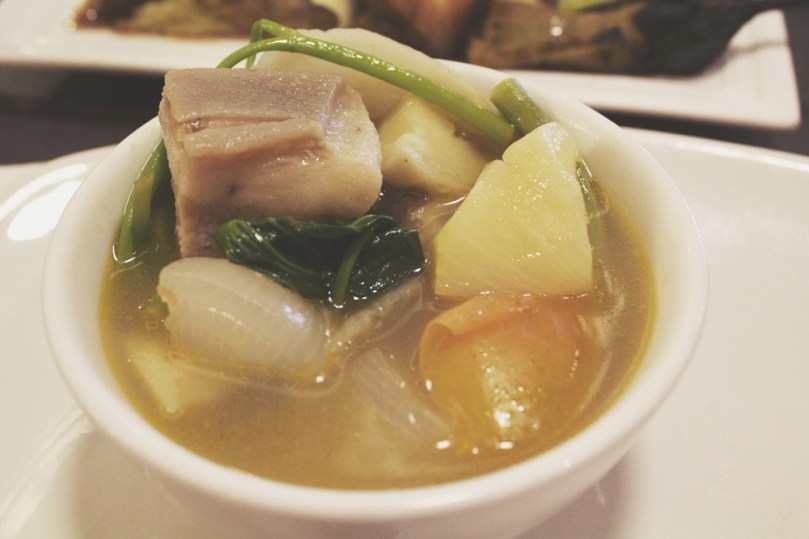
Mesa Filipino Moderne - SOUP: Sinigang na baboy in guava and pineapple
SOUP: Sinigang na baboy in guava and pineapple
Pork simmered in broth with guava and fresh pineapple; serves 4-5 (₱290.00)

What caught my eye with this dish as I was browsing the menu was the guava and pineapple part. I’ve never had sinigang with these two fruits before so I was indeed very intrigued to know how the strong flavours would blend together. It actually worked quite well to an extent. I say ‘extent’ because there was one time I had a whole heap of guava flavour in my spoon of soup and the taste overkilled. Nevertheless, an enjoyable dish.

Mesa Filipino Moderne - FRESH CATCH: Hito
FRESH CATCH: Hito
Crispy boneless with mangga salad (₱340.00)

The only thing that concerned me about this dish was where’s the mango salad? If you’re going to make mention “with” mango salad, I expect it to be of reasonable portioning as a side dish and not just “topped” over the fried fish. Slightly disappointing.

Mesa Filipino Moderne - FRESH CATCH: Tilapia
FRESH CATCH: Tilapia
Crispy boneless served with four sauces (₱340.00)

Well, just like the crispy boneless hito, nothing quite special about the four sauces that went with fried fish that in my opinion had not much flavour in the flesh itself. Verging on being overcooked? Quite possibly.
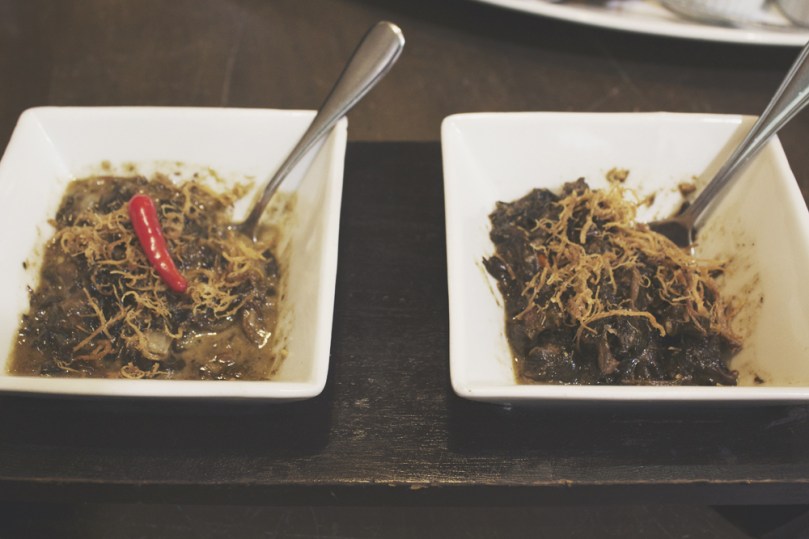
Mesa Filipino Moderne - VEGETABLES: Laing 2 ways
VEGETABLES: Laing 2 ways
Taro leaves, pork, shrimp paste, and coconut cream topped with adobo flakes, served original and crispy (₱170.00)

The taro, or also known as gabi in the Philippines, is low in saturated fat, sodium, and cholesterol, and in contrast, high in dietary fibre, vitamin E, vitamin B6, potassium, and manganese. The leaves, stems, and corms are all consumed and form part of the local cuisine, a dish known as Laing. Laing originated from the Bicol region, and no matter where you have it at, and no matter the way it is cooked, it always ends up looking like a pile of… 🙂 I’ve had my fair share from many eateries, and even home-cooked laing, and it always looks like this. But I assure you that it tastes so much better than it looks. I like how Mesa served this dish two ways – basically one with sauce and the other without. Both tasted pretty good and the adobo flakes on top added that extra flavour and crunch to the dish.

Mesa Filipino Moderne - MEAT: Pinatayong Manok
MEAT: Pinatayong Manok
“Standing” whole chicken carved right at your table (₱415.00)

Quite possibly one of the reasons why I stopped in front of the restaurant and had a look at their menu; I saw a picture of this dish and I immediately knew I wanted to eat that. It was basically a whole roasted chicken that didn’t particularly have any special taste to it in my opinion, but what I enjoyed was the way it was served to us. It was brought to our table “standing” and carved for us at our table. The chicken was cooked well and was very tender.
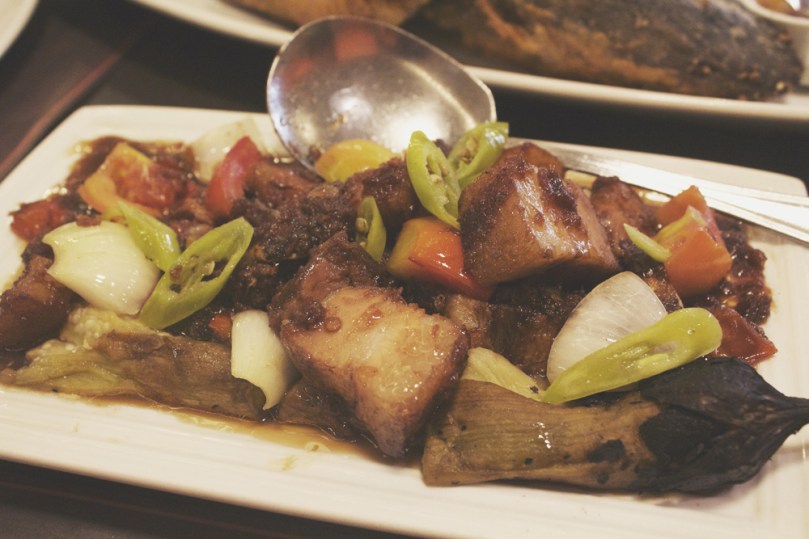
Mesa Filipino Moderne - MEAT: Pork Binagoongan
MEAT: Pork Binagoongan
Pan fried pork belly sautéed in shrimp paste (₱190.00)

This dish I enjoyed because I love the pairing of a well-cooked pork belly, shrimp paste, and grilled eggplant. This dish did not disappoint at all unlike the others.

Mesa Filipino Moderne - DESSERT: Pandan Macapuno Rumble
DESSERT: Pandan Macapuno Rumble (₱75.00)

I was intrigued to know what modern twist they would put on a classic buko pandan dessert. Nothing special to be honest except the fact that the coconut meat was set with the jelly? That’s all that I could point out that seemed different to the classic ones I’ve had multiple times. Other than that, flavour was good.
Mesa Filipino Moderne - DESSERT: Crispy Leche Flan
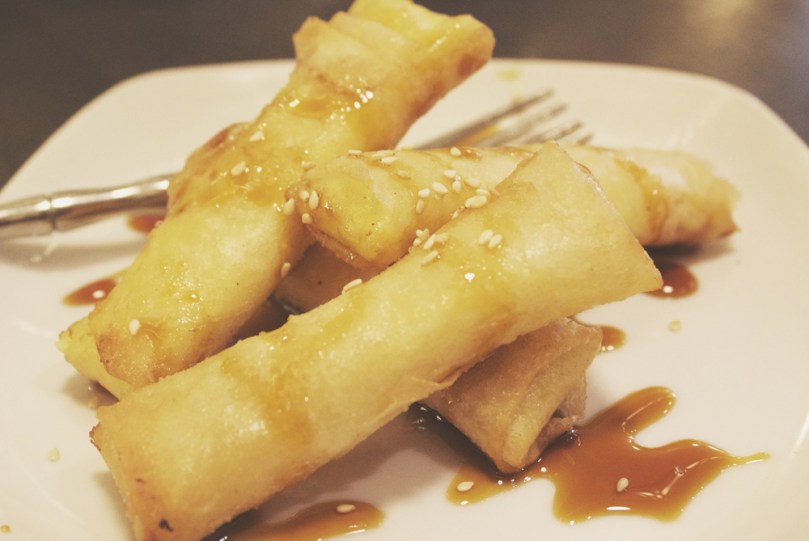
DESSERT: Crispy Leche Flan (₱70.00)

This was the dessert that I was most looking forward to only to be disappointed in the end – small, not so crispy rolls of flan that didn’t quite taste like flan in my opinion and more like steamed egg. I was disappointed only because I had a much better first experience with crispy leche flan when I was travelling the city of Lucena just a couple of days before I visited Mesa again.

Mesa Filipino Moderne is definitely a place to visit if you want to experience modern Filipino cooking at an affordable price. I say that it is affordable because the pricing of their dishes are quite reasonable for the portions you get, so definitely a good value for money indeed. But as I have mentioned in another review before, these prices are not very affordable for the average Filipino, so I guess the value for money on a more general scale wouldn’t be so good. The food I would rate no more than a 6 to be honest – at first glance I was very excited to experience modern Filipino cuisine, but after having dined and looked back at the dishes that I’ve had, I can’t say I was left excited to go back for more. The only dish that I really enjoyed was the pork sisig in a pouch. Everything else was mediocre. Service 8 out of 10; it was exceptional nor was it bad, and the ambience is a sure 10 for me.

Now that I look back at all the dishes that I’ve had and my small disappointments with each of the dishes I ordered, I wonder how they were able to achieve the Best Food Retailer award. I may be jumping into conclusions a bit early as I’ve only tried probably an eighth of the dishes they have on offer, but if I am off to a non-promising start with their menu, I can’t be sure on how the rest will unfold if I visited a few more times and trying other dishes. Anyway, my opinion is my opinion; it may be biased, it may be not. You may agree with me, you may not, that is, if you’ve dined at Mesa.

I’m not sure if there are other restaurants that are much better at modern Filipino cuisine, but this is the first step of my journey to finding out how far we can modernise classic dishes. There is one place I have yet to visit, but have been closely following their Instagram page, and it’s called Sarsá Kitchen+Bar. I must say that their Sinigang Fried Chicken looks very enticing. Maybe on my next adventure to the Philippines I’ll be able to drag some family members over to have some eats.

Mesa Filipino Moderne
3/F SM City North EDSA, Main Building
EDSA corner North Avenue
Quezon City, Metro Manila
Philippines

– Ally xx

Avocado & Roast Pumpkin, Kale Salad

Avocado & Roast Pumpkin, Kale Salad

Hello Everyone! Sorry for not getting this post up on Tuesday night (please forgive me) – it was quite a stressful day for me trying to get important things done. I hoped to have finished them by the evening so that I could move on and write this post for you, but it didn’t happen. Today I am a little bit more relaxed as I pretty much finished what I could do yesterday. So here is what was meant to go up for Tuesday’s post, today!

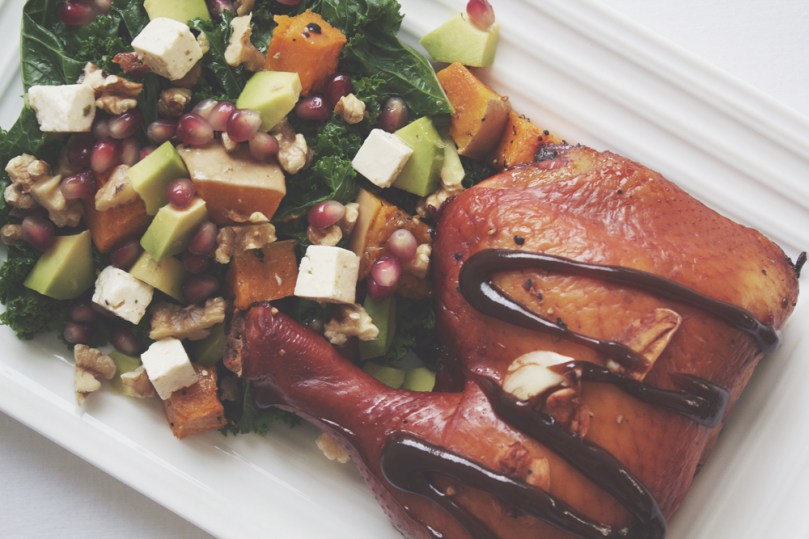
This recipe is one that started off a little bit more simpler than what you’ve seen above. It was one that I used to make a while back during my second year of University, and during that time avocados were not only in season, but cheap as well! I wanted to try out various recipes that used avocados and I came across a simple avocado and roast pumpkin mixed leaf salad. I would always pair it with marinated oven-baked chicken drumsticks or a whole chicken leg. I won’t post the marination recipe for our chicken on my blog as it’s a secret blend of ingredients that my mom came up with, but I mean, you can basically pair it with your own secret recipe or keep it simple with just the salad.

Avocado & Roast Pumpkin, Kale Salad

Over time I started to add a few extra ingredients here and there that I thought might jive well together in terms of flavour and texture. I added toasted walnuts, and then pomegranate seeds after I made the dish a few times with just the addition of the walnuts. There was also one time where our avocados were very overripe and basically couldn’t add it to the salad, and instead I added marinated feta cheese because that’s what I had in my fridge at the time that was sort of creamy in texture to substitute; of course flavour was no where near. Lastly, the supermarket didn’t have pre-bagged mixed leaf salad leaves so I had to go with what they did have on the shelves – kale! Quite a transformation from just an avocado and roast pumpkin mixed leaf salad to begin with I must say.

Avocado & Roast Pumpkin, Kale Salad Ingredients

PREP TIME 15 MINS | COOKING TIME 20 MINS | SERVES 4

INGREDIENTS

  • 2 small avocados, peeled, pitted, and cut into small chunks
  • 1 bunch kale, stems and leaves coarsely chopped
  • 1/2 medium-sized butternut pumpkin, cut into chunks
  • 1/2 large pomegranate, peeled and deseeded
  • Handful of walnuts, toasted and roughly chopped
  • Marinated feta cheese
  • Salt and ground pepper to taste

METHOD

  1. Preheat oven to 180C (350F or gas mark 4). Season the pumpkin with a bit of salt, ground pepper, and olive oil. Line a baking tray with foil and spread the pumpkin over the lined tray. Roast in the oven for about 20 minutes or until tender.
  2. Meanwhile, bring a pot of salted water to a boil. Once boiling, add in the kale and simmer for about 6-8 minutes. Drain and transfer to a serving plate.
  3. Top the kale with avocado, roasted pumpkin, feta, pomegranate seeds, and walnuts.
  4. Enjoy the salad as it is or as a side with your preferred choice of meat.

We had ours with Mama G’s Special Spicy Roast BBQ Whole Leg Chicken!

Avocado & Roast Pumpkin, Kale Salad with Roast Chicken

BON APPÉTIT

– Ally xx
myTaste.com